
JournalLife outsideData story
Video game addiction: the signs, the treatment, and a smart, fun way to get the same rush in real life
- Written byMahmoud Alsammar, Owner, Cyber City
- Fact-checked byRyan Alali · Reviewed

The 30-second version
Video game addiction is real: the WHO lists “gaming disorder” as lost control over gaming, gaming pushed ahead of everything else, and playing on despite the damage, usually for at least 12 months. It hits a small share of players, about 3% in a global review, and treatment works. To cut back, don’t just quit: swap game sessions for real-world thrills that hit the same buttons, like flying, riding and leveling up a skill.
- Teens who play video games 85% (97% of boys)
- Teen players who say gaming hurt their sleep 41%
- Gaming disorder worldwide (meta-analysis) 3.05% in a global review
- WHO time frame for the diagnosis 12 months , usually
- Sleep a teen needs 8 to 10 hours a night
Video game addiction starts with “one more match”
In one lineGames aren’t the enemy. The trouble starts when the game does its job so well that everything else loses.
It’s 2:47 a.m. You said one more match at 11. School or work starts in five hours, and you already know how tomorrow goes: foggy, cranky, counting the minutes until you can log back in. The real world feels gray next to the game. That’s the loop. If you searched for video game addiction, part of you wants out.
Or you’re the parent in the hallway at midnight, staring at the blue glow under the door, wondering if this is a phase or a problem.
First, the part nobody says: games are not the enemy. Pew Research found that 56% of teens who play say gaming has helped their problem-solving, and 47% say it has helped their friendships.3 Games are brilliant at what they do. The trouble starts when they do it so well that everything else loses. This guide is about balance: how to spot video game addiction, what treatment looks like, and how to get the same rush out here, in real life.
Is video game addiction real? What the WHO and the APA say
In one lineIt’s real, and it’s rare: lost control, gaming first, playing on through the damage, usually for 12 months.
Yes. In ICD-11, its official list of diseases, the World Health Organization names “gaming disorder” and defines it with three features:1
- Impaired control. You can’t stop when you planned to.
- Gaming goes first. It takes priority over other interests and daily life.
- You keep going despite the damage. Grades, work, sleep or relationships slide, and the playing continues.
The pattern has to seriously hurt your daily life, and it normally shows up over at least 12 months.1 A long weekend with a new release is not a diagnosis. The American Psychiatric Association’s manual, DSM-5-TR, lists Internet Gaming Disorder as a condition that needs more research.2 Different wording, same message: for some people, gaming stops being a hobby and starts running their life.
| Point | WHO (ICD-11) | APA (DSM-5-TR) |
|---|---|---|
| Name | Gaming disorder | Internet Gaming Disorder2 |
| Status | On the official list of diseases | A condition that needs more research2 |
| What it checks | 3 features: impaired control, gaming goes first, playing on despite the damage | 9 signs, from preoccupation to real losses2 |
| The line | Seriously hurts daily life | 5 or more signs in a year, with real damage or distress2 |
| Time frame | Normally at least 12 months | Within a year2 |
How many? Fewer than the headlines suggest. A review of 53 studies with 226,247 people in 17 countries put gaming disorder at 3.05% worldwide, and 1.96% in the studies with the strictest sampling. It was about 2.5 times more common in males.4 Most gamers are fine. The question is whether you, or your kid, are in the small group.
| Item | Value |
|---|---|
| People with gaming disorder worldwide | 3.05% |
226,247 people in 17 countries. 1.96% in the studies with the strictest sampling. Source4
Video game addiction symptoms: the nine signs to check
In one lineCount honestly: five or more of these nine signs in a year, with real damage, is the line the APA draws.
The APA lists nine signs. Five or more in a year, with real damage or distress, is the threshold it describes.2 Be honest as you read:
- Preoccupation: you think about the game when you’re not playing.
- Withdrawal: you feel sad, anxious or irritable when you can’t play.
- Tolerance: you need more and more game time to feel satisfied.
- Failed cutbacks: you’ve tried to play less, and it didn’t hold.
- Lost interests: things you used to love get dropped.
- Playing through problems: you keep going though you know it’s causing trouble.
- Hiding it: you downplay or lie about how long you play.
- Escaping moods: you game to get away from guilt or hopelessness.
- Real losses: gaming has risked or cost you a job, a relationship or school.
| Item | Value |
|---|---|
| Signs the APA lists | 9 |
| Signs that cross the line | 5 |
Five or more in a year, with real damage or distress. Source2
Two or three? A habit worth trimming. Five or more, and your life is taking hits? That’s a conversation for a doctor. More on that below.
When it’s time to call a doctor
Five or more signs, and your life is taking hits? Talk to a doctor or a licensed counselor. That’s a strong move, not a weak one.2
What video game addiction is costing you
In one lineSleep pays first: 41% of teen players say gaming hurt their sleep, and short sleep drags everything else down.
Your sleep
This is the big one. In Pew’s survey, 41% of teens who play said gaming has hurt how much sleep they get; only 5% said it helped. Among teens who say they play too much, it’s two thirds.3 A meta-analysis of 34 studies with 51,901 people found problematic gamers had about twice the odds of poor sleep quality and 2.6 times the odds of sleep problems, plus shorter sleep and more daytime sleepiness, with the shorter-sleep link strongest in teens.5
| Item | Value |
|---|---|
| Hurt their sleep | 41% |
| Helped their sleep | 5% |
Source3
Teens need 8 to 10 hours a night.6 In 2025, only about 1 in 4 U.S. high school students got even 8 hours on a school night.7 The CDC links short sleep in young people to weight gain, diabetes, mental health struggles, injuries and attention problems that drag down school.6 Every 3 a.m. raid gets paid for the next day.

Your grades, your mood, your world
21% of teen boys who play say gaming has hurt how well they do in school, and 39% of teens who say they play too much say the same.3 Then there’s the ninth sign: gaming to escape bad moods.2 It works for an hour. Then the problems are still there, plus less sleep. The sneakiest cost is the slow drift where everything outside feels flat. You don’t notice it day to day. You notice it a year later.
Why games hook you so hard (it isn’t because you’re weak)
In one lineGames feed real needs: getting better, choosing your path, being part of a squad. The fix is getting those out here too.
Go deeperThe 1998 brain-scan study
Games are engineered to feel amazing. In a 1998 brain-scan study in Nature, playing a video game released dopamine in the striatum, part of the brain’s reward system, and the release was bigger the better people played.9
Motivation researchers found another layer. Games feed three basic needs: competence (you’re getting better), autonomy (you choose your path) and relatedness (you’re part of a squad). In an online multiplayer community, each of the three predicted how much people enjoyed playing and how much they kept playing.8
| Need | In the game | Out here |
|---|---|---|
| Competence | You’re getting better | A skill curve that never ends: throttle, balance, lines |
| Autonomy | You choose your path | Pick your new main quest: fly, ride or hit the dirt |
| Relatedness | You’re part of a squad | The same friends, on a group ride |
Read that list again. None of it is bad. It’s what a good life is made of. The game just delivers it faster than anything else, so everything else starts to lose. The fix for video game addiction isn’t “stop wanting that.” It’s “get that somewhere else too.”
The life after: the same rush, in real life
In one lineReal thrills hit the same buttons a game does, and give back what a controller can’t: movement and real sleep.
Picture a Saturday that doesn’t vanish. Goggles on, you thread a drone through a gap between two trees, heart pounding like the final circle. A friend next to you is spotting and yelling. Later the crew rides e-bikes to the river, the same people you used to only hear on voice chat. You’re tired in the good way. You sleep. Sunday, you’re planning the next run.
Same progression, skill, speed and squad, with the volume up because it’s real.
Same progression, skill, speed and squad, with the volume up because it’s real. Bonus: the CDC says one session of moderate-to-vigorous activity can reduce short-term anxiety in adults, and regular activity can lower the risk of depression and anxiety and help you sleep better.14 Kids and teens 6 to 17 need 60 minutes of it a day.15 No controller gives you that.
How to stop playing video games so much: swap, don’t white-knuckle
In one lineDon’t quit cold turkey. Swap one session a week, protect your sleep, and make the real thing easy to start.
Cold turkey leaves a hole, and the game is the best hole-filler ever made. So don’t leave one.
Find your danger window
Name the window where an hour turns into five.
Swap one session a week first
One win you repeat beats a big promise you break by Thursday.
Set the end time before you press play
A real alarm, and stop at the end of a match.
Get the console out of the bedroom
Controllers and phones charge outside the bedroom.
Make the real thing easier to start
Batteries charged, bike by the door, helmet on the handlebar.
Bring your squad
Recruit the same friends for the real-world version.
1. Find your danger window
Video game addiction runs on a schedule: right after school, the long stretch after dinner, “just one” at 11 p.m. Name the window where an hour turns into five.
2. Swap one session a week first
Not every session. One. Give the night that hurts most a new mission: a flight, a ride, a trip to the dirt. One win you repeat beats a big promise you break by Thursday.
3. Set the end time before you press play
Set a real alarm, and stop at the end of a match, not in the middle. An unfinished round is a hook.
4. Get the console out of the bedroom
Sleep is where the damage lands, so protect it.5 Controllers and phones charge outside the bedroom. If it isn’t in reach at 1 a.m., the 1 a.m. session doesn’t happen.
5. Make the real thing easier to start
The game is one button away. Make your swap one step away: drone batteries charged, bike by the door, helmet on the handlebar.
6. Bring your squad
Relatedness keeps you playing,8 so recruit the same friends for the real-world version.
Try it · Your charging setup
Your swap-don’t-quit plan
00
Pick an answer above.
Sources 2, 5, 8 and 14 · our counter plan
The one rule that saves the most nights
Stop at the end of a match, not in the middle. An unfinished round is a hook.
Real-world thrills that hit the same buttons as your games
In one linePick the real-world version of what you love in games: the cockpit, the speed, or the squad.
Now the fun part of beating video game addiction: picking your new main quest.
| You love | Try | Know first |
|---|---|---|
| The cockpit view | First-person drone flying with goggles | Free TRUST test, register 250 grams or more, a visual observer next to you16 |
| Speed and skill trees | An electric dirt bike | A DMV green sticker for public OHV land in California19 |
| The squad | A group e-bike ride | Class 1 and 2 on OC Parks’ paved bikeways, 10 mph, helmets under 1821 |
Love the cockpit view? Fly FPV.
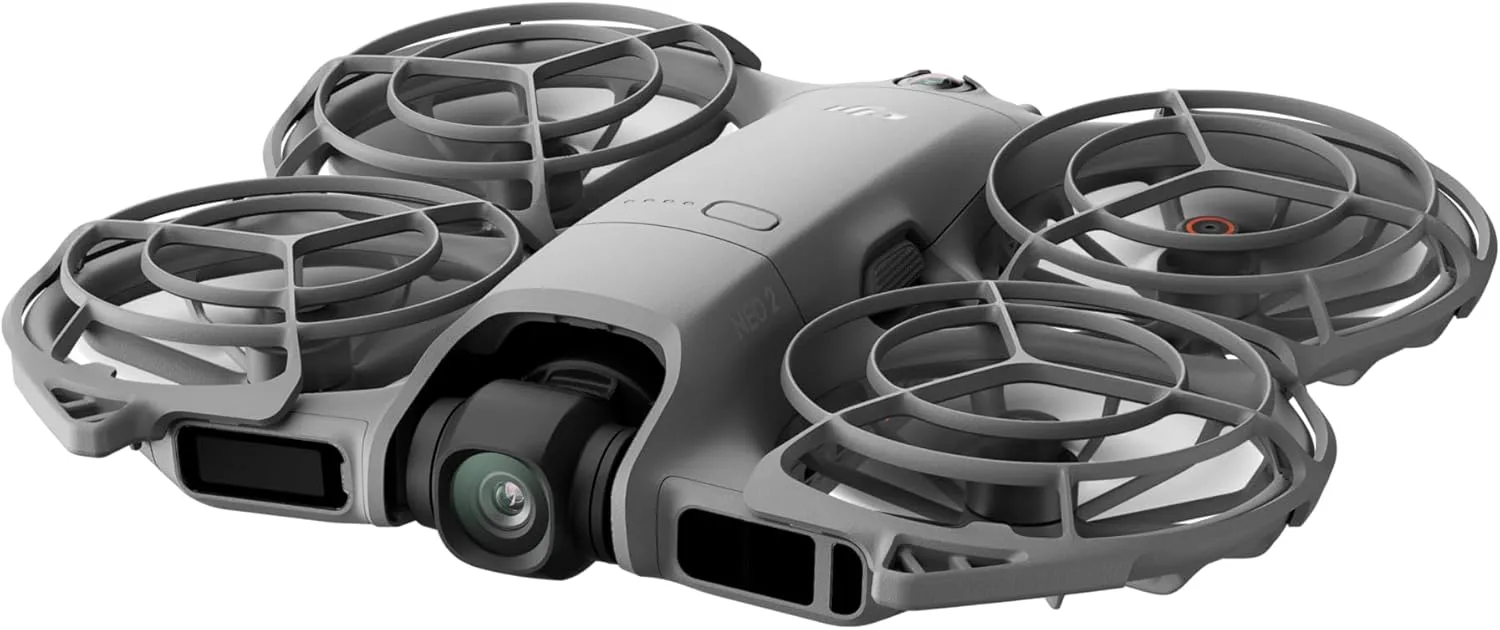
First-person drone flying is the closest thing to a pilot’s seat you can actually sit in. Our DJI Neo 2 Motion Fly More Combo comes with DJI Goggles N3 and the RC Motion 3, so you steer with your hand while you watch a live view inside the goggles. DJI lists the drone at 151 grams and up to about 19 minutes per battery,17 and it films in 4K, so you come home with footage, not just a high score.
Go deeperThe Avata 360, for a higher skill ceiling
Want a higher skill ceiling? The DJI Avata 360 has an integrated propeller guard, records 360-degree video up to 8K at 60 fps and flies about 23 minutes; DJI lists it at about 455 grams.18 Ours comes with the RC 2 screen controller, and DJI’s spec page lists Goggles 3 or N3 with the RC Motion 3, sold separately, for full goggle flying.18
Real aircraft, real rules. The FAA requires recreational flyers to pass the free TRUST test and carry proof, register any drone of 250 grams or more, and keep the drone in visual line of sight or use a visual observer right next to you.16 With goggles on, that observer is your friend from step 6. Start with our drone for beginners guide and check where you can fly a drone in Fullerton. We’re an authorized DJI dealer, so you can see both kits in person.
Try it · Before you fly
What applies to my flight in Fullerton?
00
Pick an answer above.
Sources 16 to 18 · FAA pages read October 17, 2026
Love speed and skill trees? Ride the dirt.
Into racing games? An electric dirt bike is the real-world upgrade: throttle, balance, lines, and a skill curve that never ends, with no gas and no engine roar. It lives on the dirt: in California, electric off-highway motorcycles need a DMV green sticker to ride public OHV land, which Vehicle Code Section 436.1 spells out from January 1, 2026.19 On private land, ride only with the owner’s permission.
Where? Hungry Valley SVRA, in the Tejon Pass along Interstate 5, has 19,000 acres and more than 130 miles of trails for every skill level.20 A whole open-world map. Read our electric dirt bike for adults guide, and for a teen, our electric dirt bike size by age chart, then see our e-motos. Helmet, gloves, boots and eye protection, every ride.
Love the squad? Ride together.
Turn voice chat into a group ride. Class 1 and Class 2 e-bikes are allowed on OC Parks’ paved regional bikeways, including the Santa Ana River Trail and the Coyote Creek Bikeway through Buena Park and La Habra, with a 10 mph limit and helmets under 18.21 The motor helps on hills, so the slowest rider still keeps up. Our guide on how to make friends as an adult shows how a weekly ride becomes a crew. Browse our e-bikes and book a test ride.
If your phone is the other half of the loop, read how to stop doomscrolling, and for a month of outside ideas, try how to touch grass.
Treatment for video game addiction: when, and what works
In one lineTreatment works: in 21 controlled trials, symptoms and gaming time fell, and the gains held 90 days later.
Straight talk: if gaming is wrecking your school, work or relationships, talk to a doctor or a licensed counselor. That’s a strong move, not a weak one. SAMHSA’s National Helpline, 1-800-662-4357, is free, confidential and open 24/7 in English and Spanish, and it refers callers to local treatment and support.12
The number that matters
21
controlled trials with 1,360 people: treatment for video game addiction cut symptoms and gaming time, and those gains held 90 days later.10
Go deeperWhat the treatment studies found
And treatment for video game addiction works. A 2025 meta-analysis of 21 controlled trials with 1,360 people found treatment cut gaming disorder symptoms and gaming time, with smaller drops in depression and anxiety, and the gains on symptoms and gaming time held 90 days later.10 Cognitive behavioral therapy (CBT) and other approaches, family therapy among them, worked about equally well, and teens responded more strongly than adults.10 An earlier review found CBT eased symptoms and depression in the short term.11 A therapist works on the why. Your real-world swaps give the hours you win back somewhere to go. Do both.
For parents: video game addiction or a teen who loves games?
In one linePlaying a lot isn’t the alarm. 85% of teens play; the nine signs are what to watch for.
85% of U.S. teens play video games, 97% of boys, and 41% play at least once a day.3 Only 14% of teens say they spend too much time gaming, 22% of boys.3 So playing a lot isn’t the alarm for video game addiction. The nine signs are.2
- Trade, don’t ban. “Saturday morning is a flying session, then you play” is a win on both sides.
- Guard the night. Teens need 8 to 10 hours, and sleep is what they say gaming hurts.63 Devices sleep in the kitchen.
- Give them a real skill tree. A drone, a dirt bike for legal OHV land, an e-bike for rides with friends.
- Get them moving: 60 minutes of moderate-to-vigorous activity a day.15
- Get help early. If the signs stack up, see your child’s doctor.
Start your real-world main quest in Fullerton
In one lineMake the first swapped session easy: try on drone goggles, ask about a dirt bike, or take an e-bike out.
The hardest part of breaking video game addiction is the first swapped session. Make it easy. Come see us at 932 W Orangethorpe Ave in Fullerton, open every day from 10 AM to 8 PM. Put on the goggles of a drone kit, ask which electric dirt bike fits your height, or take an e-bike for a test ride. Then pick a Saturday, call your squad, and play the one game with real-world graphics.
More questions people ask about video game addiction
What is video game addiction?
Is video game addiction real?
What are the signs of video game addiction?
Preoccupation, withdrawal, needing more time, failed cutbacks, lost interests, playing through problems, lying about time, gaming to escape moods, and real losses. Five or more in a year is the APA’s threshold.2
Is there a cure for video game addiction?
How do I stop video game addiction on my own?
Find your danger window, swap one session a week for something real, set a stop time and keep the console out of the bedroom. If it keeps failing, that’s one of the nine signs,2 and a counselor is your next step.
How many hours of gaming a day is too much?
Are ADHD and video game addiction linked?
They often show up together. A 2023 meta-analysis found a moderate link between ADHD and gaming disorder symptoms, and its authors say people with ADHD should know they are more vulnerable.13 If focus problems follow you everywhere, ask a doctor.
Are video games bad for you?
No. Video game addiction is the exception, not the rule: most teens who play say gaming helps their problem-solving, and nearly half say it helps their friendships.3 The issue is balance: keep the game, protect your sleep, and give real life at least one thing as fun as your favorite level.
Sources
- World Health Organization, Addictive behaviours: Gaming disorder (questions and answers on ICD-11; read October 17, 2026) (opens in a new tab)
- American Psychiatric Association, Internet Gaming (Internet Gaming Disorder in DSM-5-TR, the nine criteria; read October 17, 2026) (opens in a new tab)
- Pew Research Center, Teens and Video Games Today (survey of U.S. teens ages 13 to 17, September 26 to October 23, 2023; published May 9, 2024; read October 17, 2026) (opens in a new tab)
- Stevens, Dorstyn, Delfabbro and King, Global prevalence of gaming disorder: A systematic review and meta-analysis, Australian and New Zealand Journal of Psychiatry, 2021 (read October 17, 2026) (opens in a new tab)
- Kristensen et al., Problematic Gaming and Sleep: A Systematic Review and Meta-Analysis, Frontiers in Psychiatry, 2021 (read October 17, 2026) (opens in a new tab)
- CDC, Sleep and Health: how much sleep children and teens need (read October 17, 2026) (opens in a new tab)
- CDC, Youth Risk Behavior Survey, Youth Health in Focus: Sleep (2025 data; read October 17, 2026) (opens in a new tab)
- Ryan, Rigby and Przybylski, The Motivational Pull of Video Games: A Self-Determination Theory Approach, Motivation and Emotion, 2006 (read October 17, 2026) (opens in a new tab)
- Koepp et al., Evidence for striatal dopamine release during a video game, Nature, 1998 (read October 17, 2026) (opens in a new tab)
- Harpas et al., Treatment of gaming disorder: A systematic review and meta-analysis, Psychiatry Research, 2025 (read October 17, 2026) (opens in a new tab)
- Stevens, King, Dorstyn and Delfabbro, Cognitive-behavioral therapy for Internet gaming disorder: A systematic review and meta-analysis, Clinical Psychology and Psychotherapy, 2019 (read October 17, 2026) (opens in a new tab)
- SAMHSA, National Helpline: 1-800-662-HELP (4357), free, confidential, 24/7, in English and Spanish (read October 17, 2026) (opens in a new tab)
- Koncz et al., The emerging evidence on the association between symptoms of ADHD and gaming disorder: A systematic review and meta-analysis, Clinical Psychology Review, 2023 (read October 17, 2026) (opens in a new tab)
- CDC, Benefits of Physical Activity (read October 17, 2026) (opens in a new tab)
- CDC, Child Activity: An Overview (60 minutes a day for ages 6 to 17; read October 17, 2026) (opens in a new tab)
- Federal Aviation Administration, Recreational Flyers and Community-Based Organizations (read October 17, 2026) (opens in a new tab)
- DJI Neo 2, maker’s spec page and FAQ (goggles, weight, flight time; read October 17, 2026) (opens in a new tab)
- DJI Avata 360, maker’s spec page (read October 17, 2026) (opens in a new tab)
- California State Parks OHMVR Division, Off-Highway Motor Vehicle Information Bulletin 25-1: SB 586, Electric Off-Highway Motorcycles (December 8, 2025; read October 17, 2026) (opens in a new tab)
- California State Parks, Hungry Valley SVRA (read October 17, 2026) (opens in a new tab)
- OC Parks, E-bikes in OC Parks: Class 1 and 2 e-bikes on the paved regional bikeways (read October 17, 2026) (opens in a new tab)
Who wrote this
Written by
Mahmoud Alsammar
Owner, Cyber City
Runs Cyber City in Fullerton, CA, where the team sells e-bikes, scooters, drones and cameras.
Fact-checked by
Ryan Alali
Fact-checker
Checks every Journal article against the makers’ and the law’s own sources before it goes up.
Cyber City · Fullerton
Want a real-world rush that beats one more match?
Tell us what you ride or fly, and we answer it in the store, by phone or by email.
The store
DAILY 10 AM – 8 PM
932 W Orangethorpe Ave
Fullerton, CA 92832