JournalDronesField guide
Drone for beginners: the simple, fun guide from the first rule to your first amazing flight
- Written byMahmoud Alsammar, Owner, Cyber City
- Fact-checked byRyan Alali · Reviewed

The 30-second version
A drone for beginners starts with two questions: how much does it weigh, and why will you fly it? Flying for fun means passing the FAA’s free TRUST test; at 250 grams or more you also register the drone and broadcast Remote ID; any flight for a business falls under Part 107. Then the place and the practice: almost all of Fullerton sits in airport airspace where flights from 7 AM to 9 PM need LAANC authorization first, Disneyland’s no-fly zone and park rules apply at every hour, and your first flights stay low, slow and in sight.
- The weight line 250 g: under it and for fun, TRUST only; at or over it, register and use Remote ID
- Part 107 certificate, flying for a business 16 and older
- LAANC before each flight in Fullerton 7 AM to 9 PM
- Disneyland 3 NM no-fly zone, always
- DJI drones Not banned, as of Oct 10, 2026
Drone for beginners: why is your first drone still in the box?
In one lineOver 1.2 million people have passed TRUST without being pilots first: a drone for beginners takes six short steps.
You’ve seen the clips. The coastline from way up. The city lights in a slow orbit. The friend who suddenly films every trip like a movie. You want that. So you search for a drone for beginners, open five tabs, and hit a wall: grams, tests, apps, airspace, Remote ID. The box stays closed. Or you never buy the drone at all.
Here is the fear, said out loud: “I’ll crash it, or I’ll break some rule I didn’t know existed.” The second one is real. In the FAA’s eyes, a drone is an aircraft. Its page for recreational flyers says it with a smile: “Congratulations, you are an aviator!” The same page says people who break its rules, or fly in a dangerous way, may face FAA enforcement action.1 No wonder the box stays shut.
Now the good news. More than 1.2 million people have already cleared the first step: the FAA counts 1,226,168 TRUST certificates issued, and 837,513 drones registered, as of November 2025.21 They weren’t pilots either. They followed a short path. This guide is that path, in six steps, for anyone choosing a drone for beginners, the way we explain it every week at our drone counter in Fullerton.
| Item | Value |
|---|---|
| TRUST certificates issued | 1,226,168 |
| Drones registered | 837,513 |
Source21
Picture the payoff. A calm morning. You open the app, it says yes, you lift off, and the drone holds still in the air like it’s parked on glass. You nudge it up, tip the camera down, and your street turns into a map. Ten minutes later you land with a shot nobody else in your group chat has.
Here is the whole drone for beginners path in six lines:
- Weight: under 250 grams and flown only for fun, no FAA registration; at 250 grams or more, register it and use Remote ID.25
- Purpose: for fun, pass TRUST, the FAA’s free test; for a business, even unpaid, Part 107.13
- Place: in most of Fullerton, LAANC before each flight from 7 AM to 9 PM, never inside the Disneyland circle, and the landowner’s yes.7910
- The drone: weight, camera, obstacle sensing, flight time and controller, read on the maker’s spec page.
- Practice: in sight, low and slow, on a calm day, before any big shots.1
- Upkeep: battery habits and a warranty plan.
Each line gets its own section below, current as of October 10, 2026, and we update it when the rules change. Two have full guides of their own: where you can fly a drone in Fullerton, and whether DJI is banned in the US. Here mostly for the pictures? Our best camera drone guide sorts the drones we carry by what you want to shoot.
Step 1: why does weight matter so much for a drone for beginners?
In one line250 grams is the line: under it and flown only for fun, no registration; every other drone is registered and uses Remote ID.
Weight is the first number to read on the spec sheet of any drone for beginners, because the FAA draws a hard line at 250 grams, or 0.55 pounds. Under that line and flown only for fun, you don’t register it. Every other drone gets registered, including any drone flown for work, whatever it weighs.2
Go deeperHow registration and Remote ID work
Registration is quick and online, at the FAA’s DroneZone. The owner must be 13 or older, or someone 13 or older registers the drone for them. You label the drone with the registration number and carry the certificate, on paper or on your phone, every time you fly.2
Remote ID rides along with registration. Drones that must be registered, or already are, must meet the FAA’s Remote ID rule: in flight, the drone broadcasts its identification and location. It can be built in or added as a broadcast module, and the FAA’s list of accepted declarations of compliance shows which models qualify.5
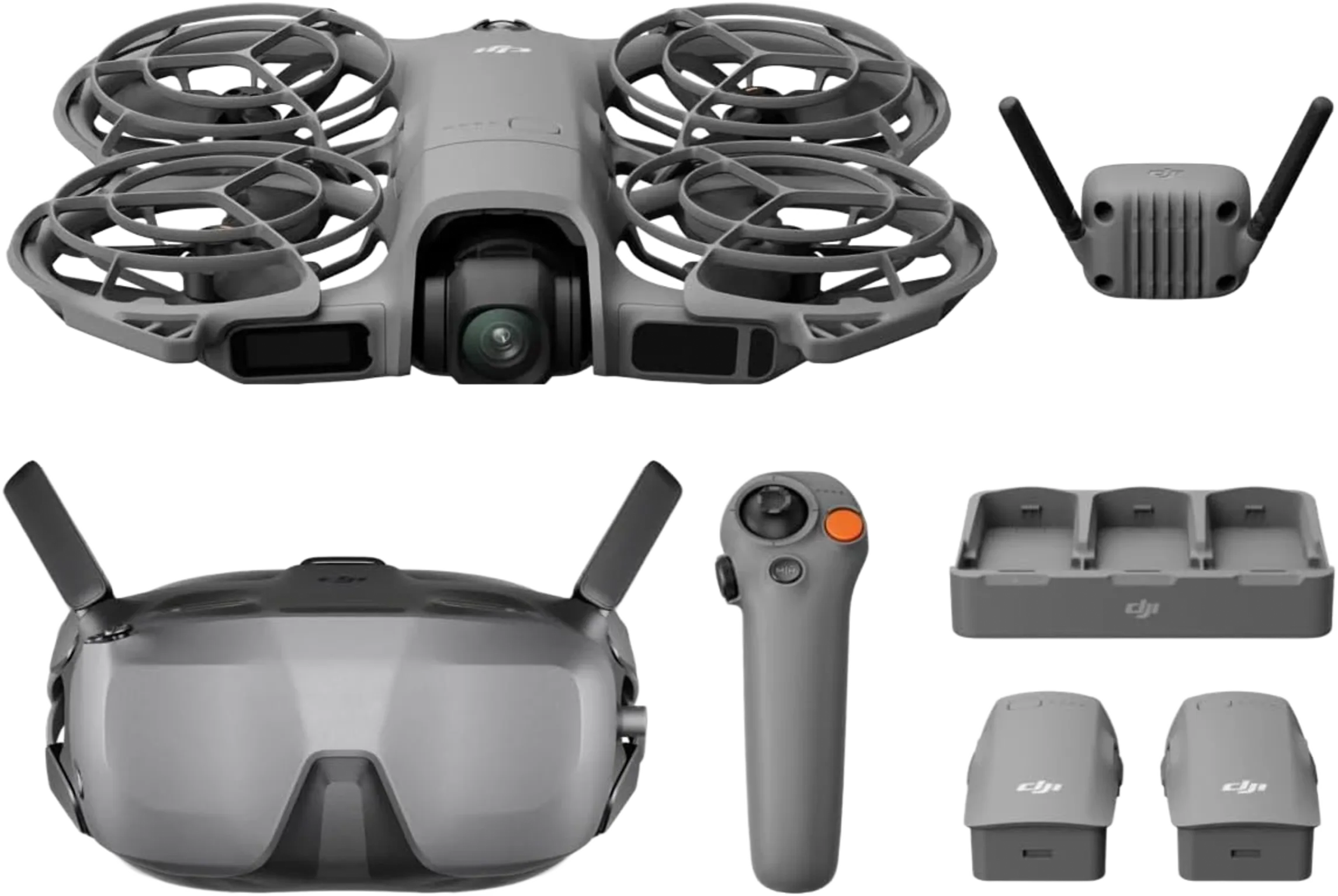
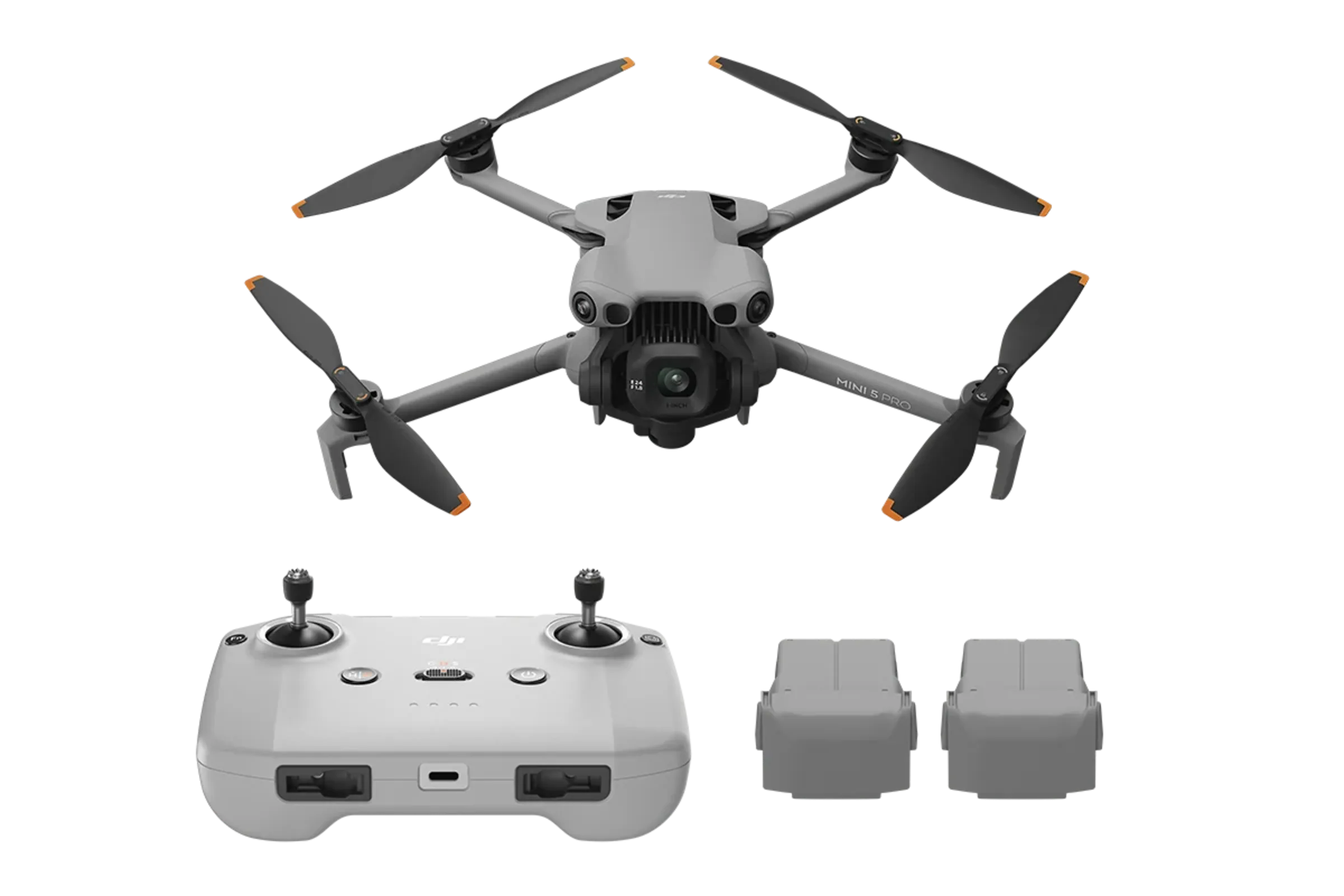
Here is where three drones we carry land on that line, straight from DJI’s own spec pages. The DJI Neo 2 is listed at 151 g, or 160 g with its digital transceiver.17 The DJI Mini 5 Pro is listed at 249.9 g, with a note that the actual weight is about 249.9 g, give or take 4 g.16 The DJI Mavic 4 Pro is listed at about 1,063 g.18
One catch worth knowing: DJI asks Mini 5 Pro owners to check local rules on registration before flying with either its standard battery or its larger Intelligent Flight Battery Plus.16 So weigh it with the battery you will actually fly. Any doubt? Register it. One registration covers all your recreational drones.2
And light never means rule-free. Under 250 grams, TRUST, the airspace rules and the Disneyland no-fly zone still apply to every drone for beginners, as our Fullerton flying guide explains.110 What the line under 250 grams saves you is one step: registration. Not the rest.
Step 2: flying for fun or for work, TRUST or Part 107?
In one lineFlying for fun means the free TRUST test; any flight for a business, paid or not, falls under Part 107.
The FAA runs two sets of rules for small drones: Part 107 for work or business, and a limited exception in the law for flying purely for fun.1 Almost everyone shopping for a drone for beginners fits the second one. Its key step is TRUST, The Recreational UAS Safety Test.
TRUST is free, online, and built for you to pass: through any FAA-approved test administrator, you correct every answer to 100% before your certificate is issued. Save or print that certificate, because the administrators keep no record; lose it and you take the test again.3 The law asks you to carry proof when you fly.1 Congress set no minimum age for TRUST,4 so a parent and a young pilot can take it side by side. The FAA’s TRUST page lists the administrators.
Fun or work isn’t about money. The FAA writes that compensation, or the lack of it, does not decide whether a flight is recreational. Its examples of non-recreational flights: taking photos to help sell a property, and filming a high school football game for the school’s website.1 Its advice is short and smart: when in doubt, assume Part 107.1
From the FAA
When in doubt, assume Part 107: that is the FAA’s own advice.1
Part 107 means a Remote Pilot Certificate. To get one, you must be at least 16, able to read, write, speak and understand English, and pass the FAA’s knowledge test at an approved testing center.6 A Fullerton example: your cousin runs a café and asks you to film its patio for the café’s page. Paid or not, that is a work flight.16
| What | TRUST (for fun) | Part 107 (for work) |
|---|---|---|
| Who it fits | Flying purely for fun1 | Work or business, paid or not1 |
| Minimum age | None set by Congress4 | 166 |
| The test | Free and online, every answer corrected to 100% before the certificate3 | The FAA’s knowledge test at an approved testing center6 |
| What you get | A TRUST certificate to save and carry; the administrators keep no record31 | A Remote Pilot Certificate6 |
| Registration | $5 for all your recreational drones, three years; none under 250 g flown only for fun2 | $5 per drone, three years2 |
Dreaming of drone work one day? Great plan. Learn on your drone for beginners for fun under TRUST, and study for Part 107 when the work is real. The FAA’s recreational flyers page lays out both paths.1
Step 3: where can a drone for beginners fly near Fullerton?
In one lineIn most of Fullerton, get LAANC first from 7 AM to 9 PM; the Disneyland circle and the landowner can say no at any hour.
Plot twist for Fullerton pilots: almost all of the city lies inside the Class D airspace of Fullerton Municipal Airport, which the FAA Chart Supplement lists as active from 7 AM to 9 PM local time, all year.9 During those hours, a flight there needs FAA authorization first. Recreational flyers get it through LAANC, even with the smallest drone for beginners.17
Go deeperHow LAANC works, and the ceilings near our store
LAANC is easier than it sounds. You send the request through an FAA-approved app, and approved requests come back in near real time. When we read the FAA’s facility map (effective September 3, 2026), the grid over our store showed a 250 ft ceiling and the grid just west of it 150 ft; your app shows your exact spot. LAANC gives authorizations only: you still check notices to pilots, the weather and every airspace restriction.7
| Item | Value |
|---|---|
| Grid over our store | 250 ft |
| Grid just west of it | 150 ft |
Source7
Some places say no at every hour. FAA NOTAM FDC 4/3635 bars all aircraft, unmanned ones included, within 3 nautical miles of Disneyland, from the surface to 3,000 ft.10 By our own measurement from its center point, that circle begins about 0.7 mile south of our store at 932 W Orangethorpe Ave. Not a gray area. A hard no.
The circle that always says no
3
nautical miles around Disneyland, from the surface to 3,000 ft: no aircraft, unmanned ones included, at any hour.10
The ground gets a vote too. OC Parks prohibits “Radio-controlled models, including drones” in its regional parks.11 City parks, schools, malls and business lots set their own rules, so ask the owner before you take off. Open sky is not permission: the airspace, the Disneyland circle and the landowner all have to say yes.
Checking a spot takes a minute. Use an app from the FAA’s B4UFLY program; the apps show controlled airspace, temporary flight restrictions and where recreational flyers can and cannot fly.8 Our full guide, where can I fly my drone in Fullerton, walks through a LAANC request step by step. Planning a weekend out? Our things to do in Orange County outside guide flags where drones stay home.
Open the app
An app from the FAA’s B4UFLY program shows controlled airspace and flight restrictions.
Check the circle
Make sure the spot is outside the Disneyland no-fly zone.
Ask LAANC
From 7 AM to 9 PM in most of Fullerton, send the request in the app first.
Ask the owner
Parks, schools, malls and business lots set their own rules.
Run your own flight through the check below.
Try it · Before you fly
What applies to my flight in Fullerton?
00
Pick an answer above.
Sources 1, 2, 5, 6, 7, 9 and 10
Nothing you enter is sent anywhere, and your FAA-approved app keeps the final word for your exact spot.
Step 4: is DJI banned, or can you still buy a DJI drone for beginners?
In one lineNot banned as of October 10, 2026: models the FCC authorized before December 22, 2025 can still be sold and used.
No, as of October 10, 2026. On December 22, 2025, the FCC added foreign-produced drones and their critical components to its Covered List, so it no longer authorizes new foreign-made models. Its fact sheet says the action does not prohibit the import, sale or use of existing models it authorized earlier.13
Already own one? The FCC put it plainly: consumers can continue to use any drone they have already lawfully purchased.13 Buying one? Models authorized before that date can still be sold. That is why we carry DJI drones such as the Neo 2, the Mini 5 Pro and the Mavic 4 Pro, as an authorized DJI dealer. The flying rules are the same for DJI drones as for any drone of the same weight and use.
Go deeperThe two FCC items in the headlines
Two FCC items keep making headlines, so here they are, straight. FCC Public Notice DA 26-758 proposes stopping the import and marketing of some earlier-authorized foreign drones by feature, LiDAR sensors among them, and DJI’s spec pages list forward-facing LiDAR on the Mini 5 Pro, Neo 2 and Mavic 4 Pro.14161718 It is a proposal, not adopted when we checked on October 10, 2026, and drones people already own stay legal under it.14 Separately, FCC 26-50, a general device rule, took effect on October 13, 2026: it blocks new authorizations for devices with key components from Covered List companies and leaves earlier-authorized equipment alone.15
| Date | FCC item | What it does |
|---|---|---|
| December 22, 2025 | Foreign-produced drones added to the Covered List | No new foreign-made models authorized; models authorized earlier can still be imported, sold and used13 |
| July 21, 2026 | Public Notice DA 26-758 | A proposal, not adopted when we checked on October 10, 2026; drones people already own stay legal under it14 |
| October 13, 2026 | FCC 26-50 takes effect | Blocks new authorizations for devices with key components from Covered List companies; earlier-authorized equipment left alone15 |
Want every date and document? Our guide Is DJI banned? lays out each step with the FCC’s own papers, and we update it when something moves. Pick your case below to see where a drone stands.
Try it · Where it stands
What do the FCC rules mean for this drone?
00
Pick an answer above.
Sources 13, 14 and 15 · as of October 10, 2026
Saw a headline screaming that DJI drones are banned? Check its date and the FCC document behind it, listed at the foot of our DJI guide.
Step 5: how do you choose a drone for beginners?
In one lineCompare five things on the maker’s spec page: weight, camera, obstacle sensing, flight time and controller.
Forget the hype. Choosing a drone for beginners comes down to five things on the maker’s spec page: weight, camera, obstacle sensing, flight time and controller. Price matters too, but we keep it out of these guides. The spec sheet is where a real comparison starts.
Weight decides your paperwork, and makers also list how much wind each drone can take. DJI lists a maximum wind speed resistance of 10.7 m/s, about 24 mph, for the Neo 2, and 12 m/s, about 27 mph, for the Mini 5 Pro.1716 Those are the maker’s limits, not targets. A drone for beginners learns on calm days.
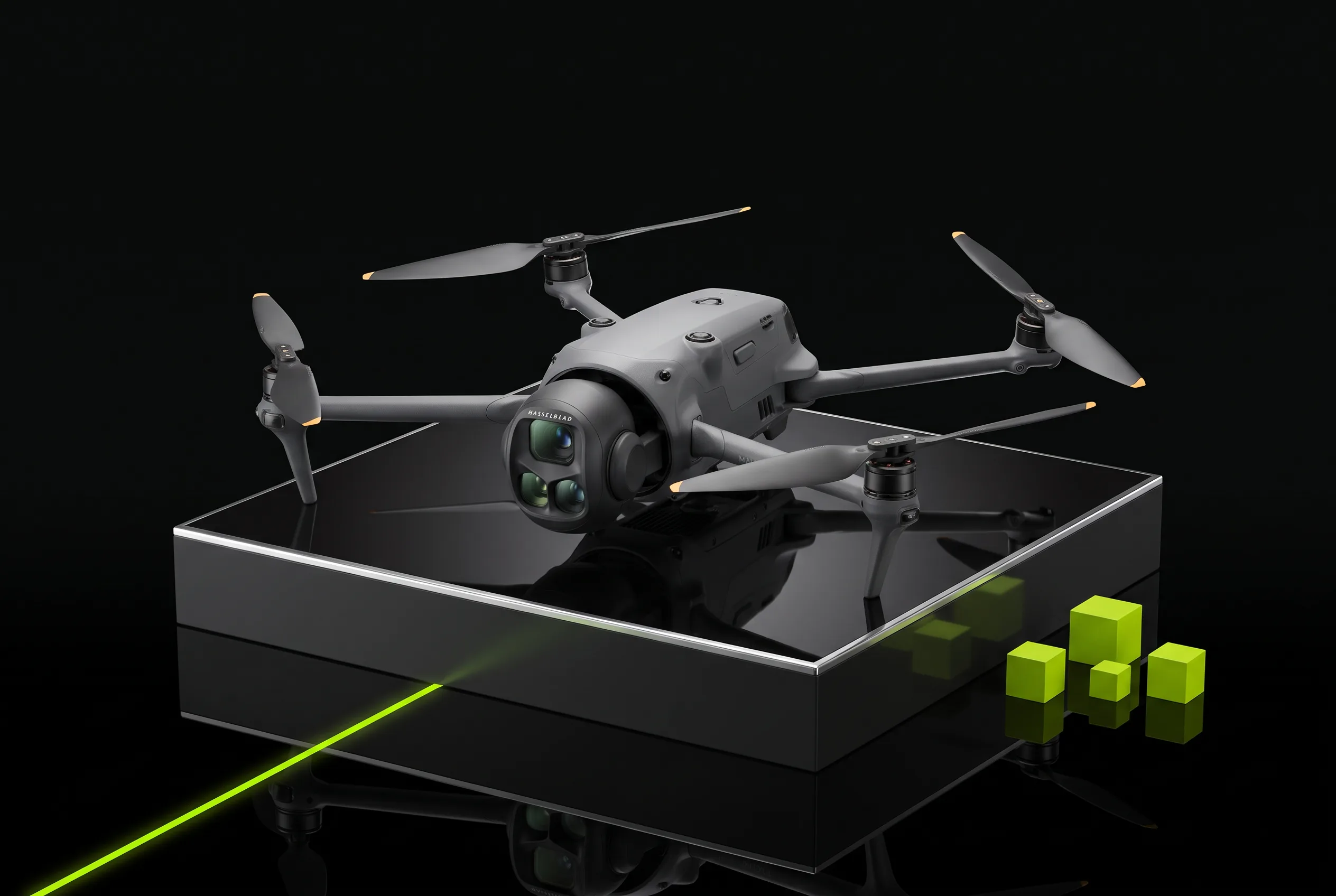
Camera: decide what you want to make. DJI lists a 1/2-inch CMOS sensor on the Neo 2, a 1-inch, 50 MP sensor on the Mini 5 Pro, and three cameras on the Mavic 4 Pro, led by a 4/3 CMOS Hasselblad camera of 100 MP.171618 Bigger sensor, more room for sunsets and city lights.
Obstacle sensing is a new pilot’s best friend. DJI lists an omnidirectional vision system, forward-facing LiDAR and a downward infrared sensor on both the Mini 5 Pro and the Neo 2.1617 It works within the ranges and speeds the maker lists, so treat it as a backup for your eyes, never a replacement.
Flight time: DJI lists about 19 minutes for the Neo 2 (about 17 with propeller guards), 36 minutes for the Mini 5 Pro on its standard battery and 51 minutes for the Mavic 4 Pro, measured in windless test conditions, and says actual experience may vary.171618 Plan real flights shorter than the headline number, and land with battery to spare.
Controller: the product name tells you what is in the box. The Mini 5 Pro Fly More Combo we carry names the DJI RC-N3, and DJI’s spec pages list the other controllers each drone works with.161718
| Spec | DJI Neo 2 | DJI Mini 5 Pro | DJI Mavic 4 Pro |
|---|---|---|---|
| Weight | 151 g (160 g with its digital transceiver)17 | About 249.9 g, give or take 4 g16 | About 1,063 g18 |
| Camera | 1/2-inch CMOS sensor17 | 1-inch, 50 MP sensor16 | Three cameras, led by a 4/3 CMOS Hasselblad camera of 100 MP18 |
| Max wind speed resistance | 10.7 m/s, about 24 mph17 | 12 m/s, about 27 mph16 | On DJI’s spec page |
| Obstacle sensing | Omnidirectional vision, forward-facing LiDAR, downward infrared17 | Omnidirectional vision, forward-facing LiDAR, downward infrared16 | Forward-facing LiDAR listed18 |
| Flight time (windless tests) | About 19 min (about 17 with propeller guards)17 | 36 min on the standard battery16 | 51 min18 |
| Battery | 11.5 Wh17 | 19.52 Wh16 | 95.3 Wh18 |
Put it together. A light drone for beginners suits you if you want to learn fast and film everyday moments with fewer steps. A heavier camera drone such as the Mavic 4 Pro suits a pilot ready for registration, Remote ID and a bigger machine. Want great footage without flying at all? A handheld DJI Osmo Pocket 3 or one of our other cameras skips the flying rules entirely.
Shot quality is the whole point for you? Our best camera drone guide goes deep on sensors and shots. Then line up the DJI drones we carry on our drones page, and come see them at the store: we walk you through each spec sheet, side by side.
Step 6: how should your first flights with a drone for beginners go?
In one lineFly in sight, low and slow, on a calm day in the slowest mode, and practice take-off, hover and landing before the shots.
The FAA’s rules for recreational flyers double as a first-flight plan for a drone for beginners. Keep the drone within your visual line of sight, or use a visual observer standing next to you. Give way to other aircraft; the FAA reminds pilots that other aircraft can and do fly low, not just near airports. In uncontrolled Class G airspace, stay at or below 400 feet; in controlled airspace, fly only with authorization, at or below the authorized altitude.1
Look up
Other aircraft can and do fly low, not just near airports: give way to them every time.1
Most first-time pilots tell us their big worry is crashing or losing the drone in week one. Beat it with a boring plan: a calm morning, an open space where the owner says yes, the app open on the spot, and a short, close first flight. Start in the slowest flight mode the maker lists, called Cine, or C mode, on the Neo 2 and Mini 5 Pro.1617
Drone setup tips for your first flight
Our drone setup tips, from the counter and from experience rather than a rule: practice take-off, hover and landing until they bore you. Then slow lines and turns. Only then the shots. Charge the batteries the evening before, check the propellers for chips, and update the app at home, where the Wi-Fi is good. Boring practice is how you get the exciting footage.
The evening before
Charge the batteries, check the propellers for chips, and update the app at home.
Hover
Take-off, hover and landing, until they bore you.
Move
Slow lines and turns.
Shoot
Only then, the shots.
Boring practice is how you get the exciting footage.
Learn from other pilots too. The FAA asks recreational flyers to follow the safety guidelines of an FAA-recognized community-based organization, and suggests joining one.1 Indoors is a different case, since the FAA says its rules apply to flights outdoors in the national airspace.12 A big indoor space can suit take-off and landing practice if its owner agrees.
Tick each line before your first flight. The ticks stay in your browser, and nothing is sent anywhere.
Try it · Your charging setup
Before your first flight
00
Pick an answer above.
Sources 1, 2, 3, 5, 7, 8 and 10 · our counter list
Every line ticked? Then you are not “someday” anymore. You are a pilot with a drone for beginners, a plan, and a calm morning waiting.
How do you charge, store and travel with the batteries of a drone for beginners?
In one lineLet a warm pack cool into DJI’s 41° to 104° F charging range, and fly with spare batteries in carry-on bags only.
Batteries are where a drone for beginners asks for real respect. They are lithium-ion, and the FAA explains why they deserve care: any lithium-ion battery can overheat into what it calls thermal runaway, which can happen if a battery is damaged, overheated, exposed to water, overcharged or packed badly, and sometimes from a manufacturing defect.20
DJI lists a charging temperature of 41° to 104° F for the Neo 2 and Mini 5 Pro batteries, and an operating range of 14° to 104° F.1716 So after a flight, or an afternoon in a hot car, let the pack cool back into that range before you charge it.
DJI says one Mini 5 Pro battery charges in about 69 minutes through the drone with the DJI 65W Portable Charger, or about 46 minutes on the charging hub, and three Neo 2 batteries charge in about 68 minutes on theirs.1617 The remote counts too: DJI lists the RC-N3 at about 3.5 hours without charging a phone, and 1.5 hours while it charges one.16
Taking your drone for beginners on vacation? Under the FAA’s PackSafe rules, spare lithium-ion batteries travel in carry-on bags only, terminals protected, and without airline approval each spare is limited to 100 watt-hours.20 DJI lists 11.5 Wh for a Neo 2 battery, 19.52 Wh for a Mini 5 Pro battery and 95.3 Wh for a Mavic 4 Pro battery.171618 Airlines may set stricter limits, so check with yours.20
At home, give your drone for beginners the habits of any lithium-ion pack: the maker’s charger, a hard surface in view, unplug when full, and never charge a swollen or damaged battery. Our e-bike battery guide goes deeper on charging, and batteries, cases and other extras are on our drone accessories page.
What about the warranty for a drone for beginners?
In one lineDJI Care Refresh is not sold for US purchases: ask about the maker’s warranty, and keep the box, serial and receipt together.
Plan for the warranty before you need it. DJI’s FAQ says DJI Care Refresh is not sold for US purchases.19 So before you buy any drone for beginners, ask what the maker’s warranty covers, for how long, and how to make a claim.
Keep the box, the serial number and the receipt together; you will want them if you ever make a warranty claim. If the drone is registered, label it with your registration number, as the FAA requires; its Part 107 page notes that the label helps in case a drone gets lost or stolen.26
Hard landing? Your drone for beginners acting strange? Start with the maker, and keep your proof of purchase handy. Spare propellers, batteries and cases for DJI drones are on our drone accessories page.
Is a drone for beginners a good gift?
In one lineA drone for beginners lands best as a gift when the weight check, charging and app update are done before the big day.
A great one, for someone who will learn the rules with it. Searches for a drone for beginners peak around Black Friday and Christmas, and the gift lands better when the paperwork is done before the big day.
Check the weight first. DJI lists the Neo 2 at 151 g, under the 250 g line, and the Mini 5 Pro at 249.9 g, give or take about 4 g: close enough to weigh with its battery and register if in doubt.17162 A camera drone of 250 g or more means registration and Remote ID from the first flight.25
Leave TRUST for the new pilot: it is their test, and they carry the proof. A parent can take it alongside, since Congress set no minimum age.34 Charge every battery, update the app at home, and put a note in the box: pass TRUST, register at 250 g or more, open the app before take-off. That note turns a box into a first flight.
Our guide to cool gifts for teens compares a beginner drone with a pocket camera and a ride. Still deciding? Browse our common questions, or talk to a person before you visit. If the right gift this year is a camera instead of a drone, we will tell you.
Get your drone for beginners at our Fullerton drone counter
In one lineTell us what you want to film and where you will fly, and we match you with a drone that fits your rules, skills and shot.
Reading is the slow way. Talking to people who sell drones every day is the fast way. Come to Cyber City, 932 W Orangethorpe Ave in Fullerton, open every day from 10 AM to 8 PM. Tell us what you want to film and where you plan to fly, and we match you with a drone for beginners that fits your rules, your skills and your shot.
We are an authorized DJI dealer, and every DJI drone and accessory we carry is on our drones page and our brands page. Prefer the couch? Order online and pick it up free in Fullerton, or have it shipped anywhere in the US. Questions first? Call (657) 445-7230. Your first flight is closer than you think.
More questions people ask about a drone for beginners
What is a good beginner drone to buy?
One that fits the rules from day one and what you want to film. For a drone for beginners, start with weight: under 250 grams and flown for fun, you skip registration, though TRUST and the airspace rules still apply.21 Then compare camera, obstacle sensing and flight time on the spec page.1716 No single drone suits everyone, so compare the Neo 2 and the Mini 5 Pro side by side with us at the store.
What age should a kid get a drone?
For flying for fun, we found no minimum age in the FAA rules: Congress set none for TRUST, the test every recreational flyer takes.4 Registration has one: the owner must be 13 or older, or someone 13 or older registers the drone.2 A Part 107 certificate, for work, starts at 16.6 So the real question is readiness: can your child follow the rules and keep the drone in sight? A light drone for beginners, a parent taking TRUST alongside, and short flights in an open space with permission make an easy, happy start.
Are cheap drones worth buying?
We keep prices out of these guides, so here is what to check at any price. Look for an FCC ID on the label, the box or the spec page; since December 22, 2025, the FCC has not authorized new foreign-made models.13 At 250 grams or more, check that the drone meets Remote ID on the FAA’s list of accepted declarations of compliance.5 Then read the spec sheet on satellite positioning, obstacle sensing and flight time. A drone for beginners with clear answers deserves a closer look; one without them deserves a hard question.
How much does it cost to register a drone?
For recreational flyers, $5. The FAA says one recreational registration covers all the drones in your inventory and lasts three years; under Part 107, it is $5 per drone, also for three years.2 You register online at the FAA’s DroneZone with your contact details, the make and model and a card. A drone under 250 grams flown only for fun doesn’t need it, as the FAA’s registration page explains.2
Sources
- FAA, recreational flyers (the rules for flying for fun; read October 10, 2026) (opens in a new tab)
- FAA, how to register your drone (250 grams or more; read October 10, 2026) (opens in a new tab)
- FAA, The Recreational UAS Safety Test (TRUST) (opens in a new tab)
- FAA FAQ, the minimum age to take TRUST (opens in a new tab)
- FAA, Remote Identification of drones (opens in a new tab)
- FAA, certificated remote pilots and Part 107 (opens in a new tab)
- FAA, LAANC and UAS facility map ceilings (store-area grids read October 1, 2026; map effective September 3, 2026) (opens in a new tab)
- FAA, B4UFLY (FAA-approved apps that show where you can fly) (opens in a new tab)
- FAA Chart Supplement Southwest, Fullerton Municipal (edition September 3 to October 29, 2026) (opens in a new tab)
- FAA NOTAM FDC 4/3635, Disneyland (in effect since October 8, 2015) (opens in a new tab)
- OC Parks, regional park rules (opens in a new tab)
- FAA FAQ, drone operations conducted indoors only (opens in a new tab)
- FCC fact sheet on foreign-produced drones and the Covered List (December 22, 2025) (opens in a new tab)
- FCC Public Notice DA 26-758, PS Docket 26-189 (July 21, 2026: a proposal, not adopted) (opens in a new tab)
- Federal Register 2026-18535, FCC 26-50 (final rule, effective October 13, 2026) (opens in a new tab)
- DJI Mini 5 Pro, maker’s spec page (read October 10, 2026) (opens in a new tab)
- DJI Neo 2, maker’s spec page (read October 10, 2026) (opens in a new tab)
- DJI Mavic 4 Pro, maker’s spec page (read October 10, 2026) (opens in a new tab)
- DJI Care Refresh FAQ (not sold for US purchases) (opens in a new tab)
- FAA PackSafe, lithium batteries (read October 10, 2026) (opens in a new tab)
- FAA, Drones by the Numbers (as of November 2025): 837,513 drones registered and 1,226,168 TRUST certificates issued (read October 17, 2026) (opens in a new tab)
Drone rules and specs change, and FAA maps refresh on October 29, 2026: check the sources and an FAA-approved app before every flight.
Who wrote this
Written by
Mahmoud Alsammar
Owner, Cyber City
Runs Cyber City in Fullerton, CA, where the team sells e-bikes, scooters, drones and cameras.
Fact-checked by
Ryan Alali
Fact-checker
Checks every Journal article against the makers’ and the law’s own sources before it goes up.
Cyber City · Fullerton
Want help picking your first drone?
Tell us what you ride or fly, and we answer it in the store, by phone or by email.
The store
DAILY 10 AM – 8 PM
932 W Orangethorpe Ave
Fullerton, CA 92832