JournalDronesBento
Best camera drone for you: the simple guide to the shot from above everyone asks about
- Written byMahmoud Alsammar, Owner, Cyber City
- Fact-checked byRyan Alali · Reviewed
The 30-second version
The answer
The best camera drone for you is the one that matches what you shoot and how much flying you want to learn. Read four things on the spec sheet: sensor size (bigger gathers more light), obstacle sensing, wind rating and weight. Under 250 grams and flown for fun, you pass the FAA’s free TRUST test and skip registration; at 250 grams or more you also register for $5 and broadcast Remote ID. Then pick by use: a palm-size drone for easy clips, a sub-250 g travel drone for photos, a 360 drone for action, a triple-camera drone for serious work.
The FAA weight line
250
g: under it and flown for fun, TRUST only, no registration
250 g or more
$5
to register, for 3 years, plus Remote ID
TRUST certificates issued
1,226,168
as of November 2025 (FAA)
Lightest DJI we carry
151
g, the Neo 2
Biggest sensor we carry
100
MP 4/3 Hasselblad, Mavic 4 Pro
Why do all your photos look like everyone else’s?
In one lineYour photos look like everyone’s because they’re shot from the same height. The fix is a new angle, not a new phone.
Scroll back through your last trip. The beach. The sunset. The group shot where somebody blinked. Now scroll through your friends’ trips. Same beach. Same sunset. Same blink. That is the problem the best camera drone for you is built to solve.
That’s not a talent problem. It’s an angle problem. Pew Research says 91% of U.S. adults own a smartphone.1 So almost everyone is standing in the same spot, at the same height, pointing the same lens. Your photos look like theirs because, from five and a half feet off the ground, they are theirs.
| Item | Value |
|---|---|
| Own a smartphone | 91% |
Pew Research Center, 2025 survey Source1
The fix isn’t a better phone. It’s a new point of view. Lift the camera 100 feet, turn it straight down, and the same beach becomes a pattern of waves, towels and tiny people. That’s what a camera drone does. This guide shows you what makes the best camera drone for you, the FAA rules in one tight section, and the DJI drones we carry in Fullerton, sorted by what you want to shoot.
The two fears that keep people grounded
In one lineCrashing and breaking a rule are the two fears, and both shrink fast once you know obstacle sensing and the one-page rules.
We hear them at the drone counter every week, from people shopping for the best camera drone.
Fear one: “I’ll crash it.” You picture your new drone in a tree, in the ocean, in a neighbor’s pool. A camera drone is not a cheap toy, and nobody wants to learn on a machine that costs as much as a phone.
Fear two: “I’ll break some rule.” Drones are aircraft. The FAA says so with a grin: “Congratulations, you are an aviator!” It also says pilots who break its rules or fly in a dangerous way may face FAA enforcement action.3 That sounds scary when you don’t know the rules.
So you wait. Another trip, another camera roll that looks like everyone’s. Here’s the thing: both fears shrink fast once you know what to look for. Modern camera drones sense obstacles around them, and the rules for flying for fun fit on one page. More than 1.2 million people have already passed the FAA’s recreational test, TRUST: the FAA counts 1,226,168 TRUST certificates issued as of November 2025.2 They figured it out. So will you, with the best camera drone for the way you shoot.
The number that matters
1,226,168
TRUST certificates issued as of November 2025. More than 1.2 million people already passed the test you are worried about.2
Picture the shot people ask about
In one lineThe birthday from above, the car on a long highway, the coastline rising into frame: the shots people ask about.
Your kid’s birthday in the backyard, filmed from above as the cake comes out. A road trip where the car is a tiny dot on a long ribbon of highway. A beach day where the camera rises slowly from your feet until the whole coastline fits in the frame.
You post it. Within an hour somebody asks the question every drone pilot loves: “Wait, how did you get that?”
That’s the goal of the best camera drone. Not specs for the sake of specs. A shot nobody else in the group could take, from a drone easy enough that you actually take it out. Let’s get you there.
That’s the goal of the best camera drone. Not specs for the sake of specs. A shot nobody else in the group could take, from a drone easy enough that you actually take it out.
What makes the best camera drone for photography?
In one lineFive spec lines decide the best camera drone: sensor size, obstacle sensing, wind rating, weight and flight time.
Forget the marketing words. Five lines on the maker’s spec page decide whether a drone takes great photos and stays easy to fly, which is what the best camera drone has to do. Here they are, with numbers from DJI’s own spec pages for the drones we carry.
1. Sensor size: the light bucket
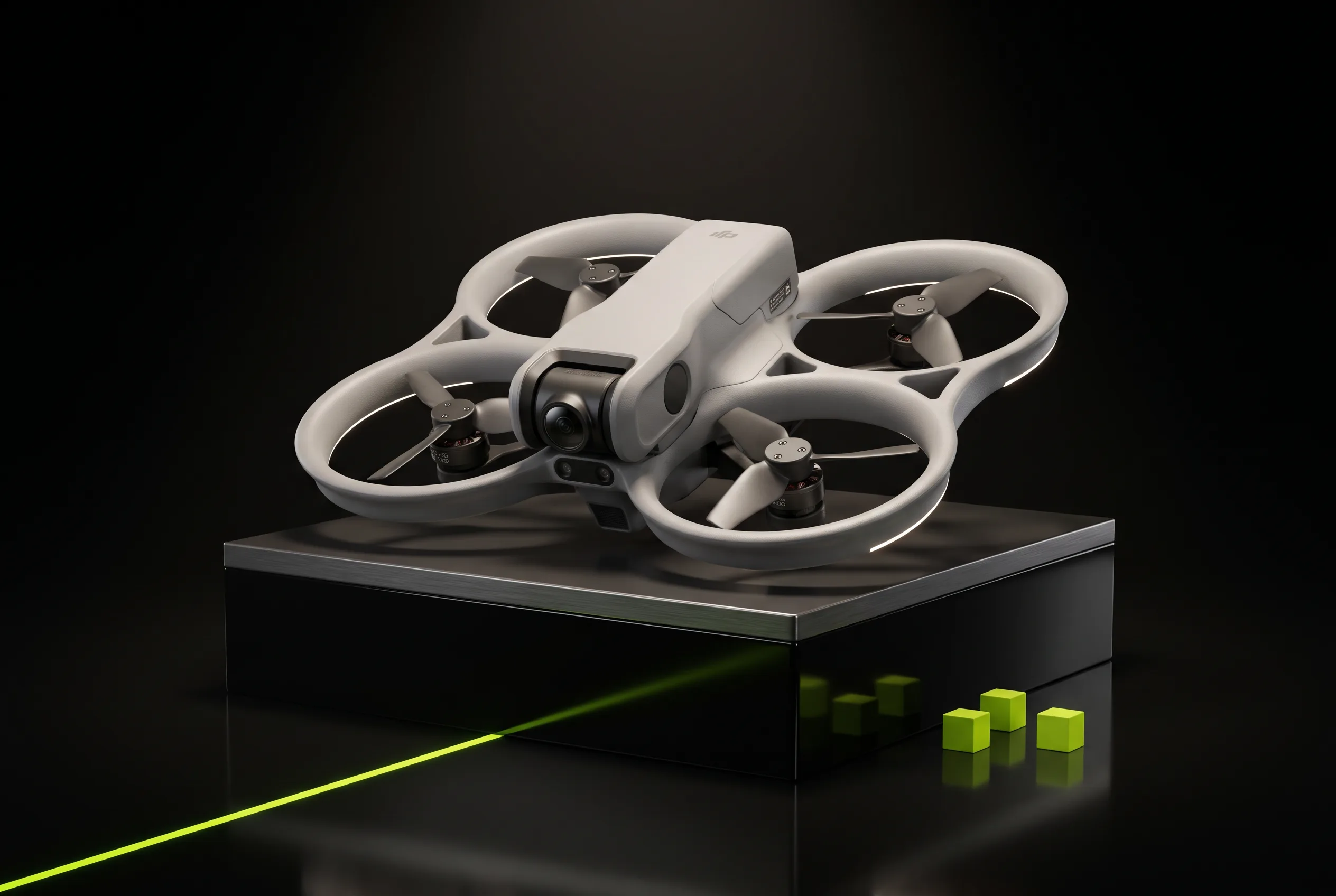
The sensor is the chip that catches light. Bigger sensor, more light, cleaner photos at sunrise, sunset and in shade. This is the single line that separates a fun clip camera from the best drone for photography. DJI lists a 1/2-inch sensor on the Neo 2, a 1-inch, 50 MP sensor on the Mini 5 Pro, two 1/1.1-inch, 64 MP sensors on the Avata 360, and a 4/3 Hasselblad camera of 100 MP on the Mavic 4 Pro, backed by two tele cameras.11121314 If photos are the point, start your best camera drone shortlist at 1-inch.
2. Obstacle sensing: your crash insurance
This is the answer to fear one, and a must on any best camera drone. DJI lists an all-around vision system, a forward-facing LiDAR and a downward infrared sensor on the Neo 2, the Mini 5 Pro, the Avata 360 and the Mavic 4 Pro.11121314 Sensing works within the ranges and speeds the maker lists, so it backs up your eyes; it doesn’t replace them. Still, for an easy to fly drone with camera, this is the feature that lets a beginner relax.
3. Wind rating: Orange County is breezy
Wind pushes a small drone around and blurs your shots. DJI lists a maximum wind speed resistance of 10.7 m/s, about 24 mph, for the Neo 2 and the Avata 360, and 12 m/s, about 27 mph, for the Mini 5 Pro and the Mavic 4 Pro.11131214 Those are the limits, not targets. Even the best camera drone shoots sharper in calm air, so fly calm mornings while you learn.
4. Weight: the 250-gram line
The FAA draws a line at 250 grams, or 0.55 pounds. Under it, flown only for fun, no registration. At 250 grams or more, you register.5 DJI lists the Neo 2 at 151 g, the Mini 5 Pro at 249.9 g (give or take about 4 g, so weigh it with your battery), the Avata 360 at about 455 g and the Mavic 4 Pro at about 1,063 g.11121314 Lighter also means it fits in a jacket pocket, which means it actually comes on the trip, and the best camera drone is the one you bring.
5. Flight time and batteries
A great shot often needs a second try. DJI lists about 19 minutes on the Neo 2, 36 minutes on the Mini 5 Pro with its standard battery, about 23 minutes on the Avata 360 and 51 minutes on the Mavic 4 Pro, all measured in windless test conditions.11121314 Real flights run shorter. That’s why the Fly More combo exists, and we’ll get to it below.
| Drone | Sensor | Weight | Wind rating | Flight time |
|---|---|---|---|---|
| DJI Neo 2 | 1/2-inch, 12 MP | 151 g | 10.7 m/s, about 24 mph | about 19 min |
| DJI Mini 5 Pro | 1-inch, 50 MP | 249.9 g | 12 m/s, about 27 mph | up to 36 min |
| DJI Avata 360 | two 1/1.1-inch, 64 MP | about 455 g | 10.7 m/s, about 24 mph | about 23 min |
| DJI Mavic 4 Pro | 4/3 Hasselblad, 100 MP, plus 2 tele | about 1,063 g | 12 m/s, about 27 mph | up to 51 min |
The FAA basics in one minute
In one lineFlying for fun: pass TRUST, register at 250 g or more, broadcast Remote ID, stay in sight and at or below 400 feet.
Here’s fear two, handled, whichever best camera drone you pick. If you fly for fun, these are the moves:3
- Take TRUST. The FAA’s Recreational UAS Safety Test is free and online, and every question can be corrected to 100% before you get your certificate. Save it: the test administrators keep no record.4 Carry proof when you fly.3
- Register at 250 grams or more. It’s $5 at FAA DroneZone, covers all your recreational drones, and lasts three years. The owner must be 13 or older, or someone 13 or older registers for them.5 Mark the registration number on the outside of the drone.3
- Broadcast Remote ID. Any drone that must be registered also has to broadcast its identification and location in flight.6
- Stay in sight and low. Keep the drone where you can see it, give way to other aircraft, and stay at or below 400 feet in uncontrolled airspace.3
- Ask before you fly near an airport. Controlled airspace around airports needs FAA authorization first, which you get through LAANC in an approved app, often in near real time.7
| Rule | Under 250 g, for fun | 250 g or more |
|---|---|---|
| Pass TRUST, free and online | Yes | Yes |
| Register at FAA DroneZone | No | Yes: $5, 3 years, all your recreational drones |
| Registration number on the outside | No | Yes |
| Broadcast Remote ID | No | Yes |
| Stay in sight, at or below 400 feet | Yes | Yes |
| LAANC near an airport | When the spot needs it | When the spot needs it |
Go deeperFullerton’s airport, the app and the parks
Fullerton has its own airport, Fullerton Municipal, so a lot of town sits in that airspace. Open an FAA-approved B4UFLY app before every flight: it shows where recreational flyers can and cannot fly, plus temporary flight restrictions.8 And the ground has rules too: OC Parks prohibits “radio-controlled models, including drones” in its regional parks.9
Our full guide, where can I fly my drone in Fullerton, walks through a LAANC request step by step and maps the Disneyland no-fly zone. Flying for a business, even unpaid, is a different set of rules; our drone for beginners guide covers that and the whole first-drone path. Try your own flight in the check below.
Try it · Before you fly
What applies to my flight in Fullerton?
00
Pick an answer above.
Sources 3 to 8 · FAA pages read October 17, 2026
Nothing you enter is sent anywhere. Your FAA-approved app keeps the final word for your exact spot.
Wait, isn’t DJI banned?
In one lineNo: models the FCC authorized before December 22, 2025 can still be sold, and you can keep flying the drone you bought.
No. On December 22, 2025, the FCC added foreign-produced drones to its Covered List, which stops new models from getting FCC authorization. The FCC’s own fact sheet says the update “does not prohibit the import, sale, or use” of existing models it authorized before, and that consumers can keep using any drone they already lawfully bought.10 That’s why we can still carry DJI drones like the Neo 2, the Mini 5 Pro, the Avata 360 and the Mavic 4 Pro.
Headlines move faster than the facts. Our guide Is DJI banned? tracks each FCC step with dates and documents, and we update it when anything changes.
The best camera drone for what you shoot: the DJI drones we carry
In one linePick by what you shoot: Neo 2 for easy clips, Mini 5 Pro for travel photos, Avata 360 for action, Mavic 4 Pro for serious work.
We’re an authorized DJI dealer in Fullerton, so here’s how the DJI drones on our shelf line up. Not one “best camera drone” for everyone. The right one for what you want to make.
Best for easy clips with zero learning curve: DJI Neo 2
- 151 g, under the 250-gram line, with a 1/2-inch sensor and 12 MP photos.11
- All-around vision, forward LiDAR and a downward infrared sensor.11
- About 19 minutes per battery, or about 17 with propeller guards.11
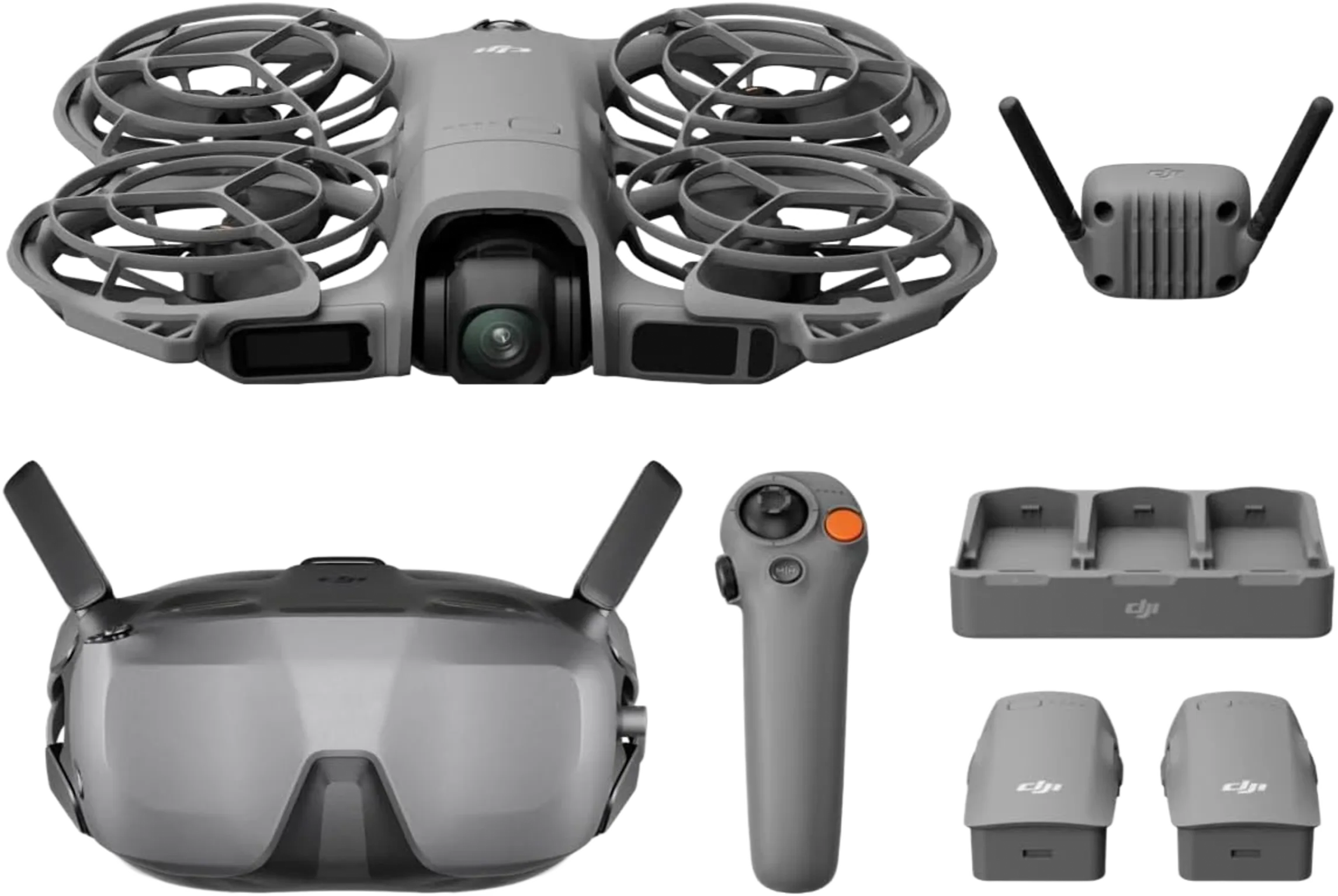
It launches from your open hand and can follow you. The Motion Fly More Combo we carry adds DJI Goggles N3, the RC Motion 3 controller, three batteries and a charging hub, so you can fly first-person with a wave of your hand. Pick it if you want fun clips now and the rules kept simple: the best camera drone for zero learning curve. See the DJI Neo 2 Motion Fly More Combo.
Best for travel photos under 250 g: DJI Mini 5 Pro
- 249.9 g with the standard battery, give or take about 4 g, with a 1-inch, 50 MP sensor.12
- All-around sensing with forward LiDAR, and a 12 m/s wind rating.12
- Up to 36 minutes on the standard battery.12
This is the one most people mean when they say “I need a drone that takes great photos but is easy to use.” Big sensor, small body, folds into a bag: the best camera drone we carry for travel under 250 g. Weigh it with the battery you fly, and register if in doubt.125 See the DJI Mini 5 Pro Fly More Combo (RC-N3).
Best for action and 360 video: DJI Avata 360
- About 455 g, so registration and Remote ID apply.1356
- Two 1/1.1-inch, 64 MP sensors that capture everything around the drone.13
- All-around vision, forward LiDAR, and about 23 minutes of flight.13
Fly first, frame later: you pick the angle after the flight. The guard is built into the frame, which makes it a good fit for tight, low, fast shots. See the DJI Avata 360 Fly More Combo (RC 2).
Best for serious photographers: DJI Mavic 4 Pro
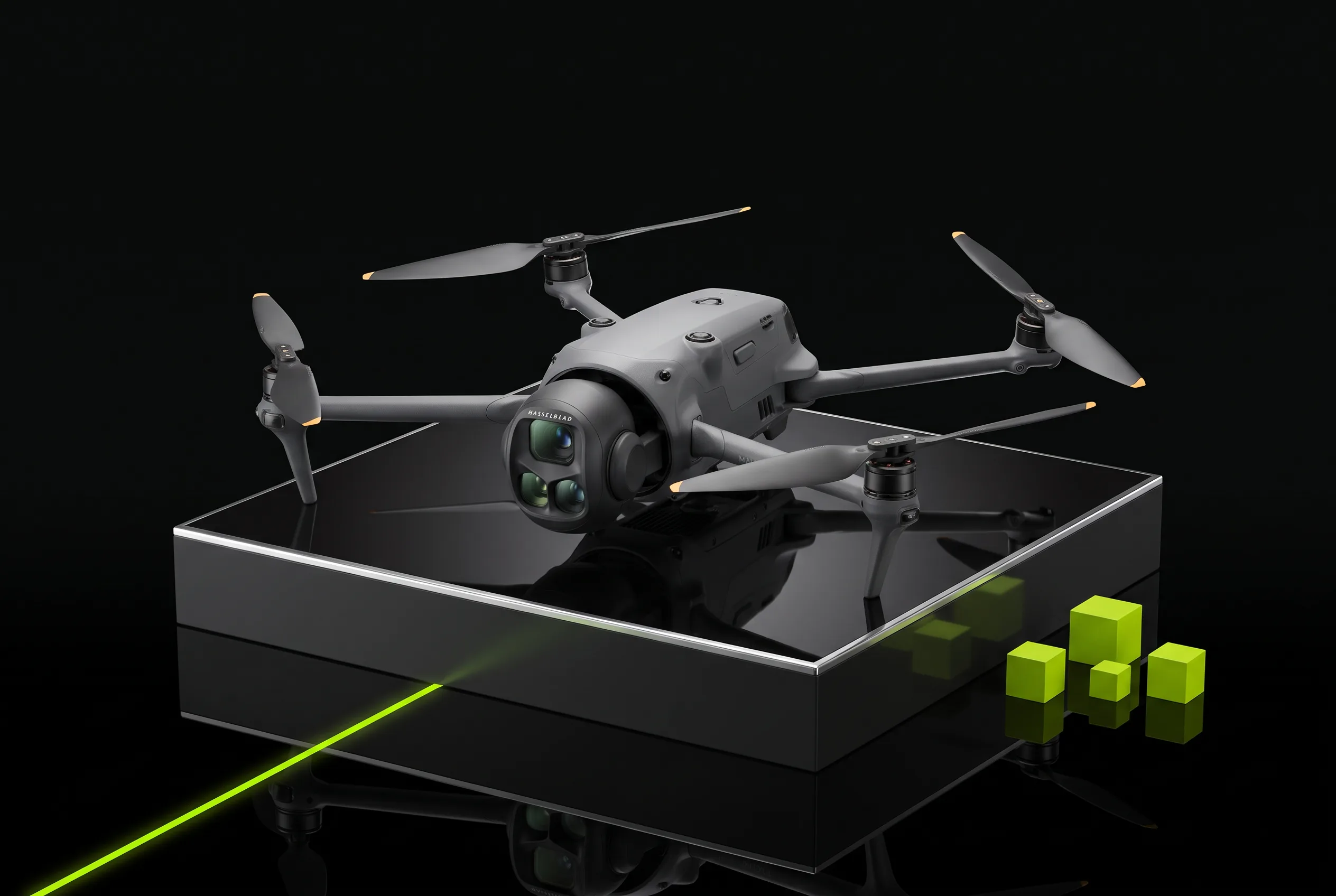
- A 4/3 Hasselblad camera of 100 MP, plus a 48 MP medium tele and a 50 MP tele camera.14
- All-around binocular vision with forward LiDAR, and a 12 m/s wind rating.14
- Up to 51 minutes of flight; about 1,063 g, so it’s registered and Remote ID from day one.1456
It’s not a first drone and doesn’t pretend to be. It’s the best camera drone we carry for clients, real estate, cars and portraits from the air. See the DJI Mavic 4 Pro.
We also carry Skyrover drones. Compare everything side by side on our drones page, and see every maker on our brands page.
Why a Fly More combo is worth a look
Go deeperWhat the Mini 5 Pro and Avata 360 kits add
Flight time is the bottleneck for great photos, even on the best camera drone. A Fly More combo turns one flight into a session. The Mini 5 Pro kit we carry adds three standard batteries, a two-way charging hub, an ND filter set, spare propellers and a shoulder bag. The Avata 360 kit adds the RC 2 screen controller, three batteries and a charging hub. Spare propellers, cases and more batteries live on our drone accessories page.
Easy to fly drone with camera: your first week
In one lineTake off, hover, land, again, on a calm morning in the slowest mode. The great shots come after the boring practice.
Even the best camera drone needs a plan for its first week. Here’s ours, from the counter, not from a rulebook:
Day one, at home
Charge every battery, update the app on good Wi-Fi, and pass TRUST.4
Practice the boring stuff
Take off, hover, land. Again. Then slow lines and turns. Only then, shots.
Keep it close and in sight
The way the FAA asks.3
Then go get the shot
The slow rise from your feet, the straight-down beach, the dot of a car on a long road.
Try it · Your charging setup
Before your first camera drone flight
00
Pick an answer above.
Sources 3 to 8 · our counter list
Hold them before you choose
In one lineHold a Mini 5 Pro next to a Mavic 4 Pro before you choose: weight and sensor size make sense in your hand.
Specs on a screen only go so far when you choose the best camera drone. Come feel the weight of a Mini 5 Pro next to a Mavic 4 Pro, look at the sensor sizes for yourself, and ask us to walk you through each spec sheet. We’re at 932 W Orangethorpe Ave in Fullerton, open every day from 10 AM to 8 PM, and you can call us at (657) 445-7230.
Buying it as a gift? Our guide to cool gifts for teens compares a drone with a pocket camera and a ride. Want to spread the cost? See lease-to-own. Have a question first? Talk to a person.
More questions people ask about the best camera drone
Which drone has the best camera quality?
Among the drones we carry, the biggest sensor sits on the Mavic 4 Pro: a 4/3 Hasselblad camera of 100 MP, plus two tele cameras.14 Camera quality starts with sensor size, so for most people a 1-inch sensor, like the one on the Mini 5 Pro, already looks like a leap from a phone.12 The best camera drone for you balances that sensor against weight, rules and how often you’ll actually fly it.
Which camera drone is the best for beginners?
The best drone for beginners with camera is light, senses obstacles, and has a slow mode. The Neo 2 at 151 g and the Mini 5 Pro at 249.9 g both stay near or under the 250-gram line, and both list all-around sensing with forward LiDAR.11125 Pick the Neo 2 for easy clips, the Mini 5 Pro if photos matter most.
What are the top 3 drones to buy?
What should I look for when buying a drone?
Is there a better drone than DJI?
The best camera drone is about fit, not logos. Read the same five spec lines on any brand and compare them side by side. Look for an FCC ID too: since December 22, 2025, the FCC hasn’t authorized new foreign-made drone models, while earlier-authorized models can still be sold.10 We also carry Skyrover drones, so you can compare in the store.
Are DJI drones now illegal, and will they be banned in 2026?
Can the FAA know you flew a DJI drone?
If your drone must be registered, it must also broadcast Remote ID: its identification and location in flight, which other parties can receive. The FAA says Remote ID helps it and law enforcement locate the control station when a drone seems to fly unsafely or where it isn’t allowed.6 That goes for any brand, not just DJI. Fly by the rules and Remote ID is just your drone saying hello, whichever best camera drone you fly.
Sources
- Pew Research Center, Mobile Fact Sheet: 91% of U.S. adults own a smartphone (survey of February 5 to June 18, 2025; read October 17, 2026) (opens in a new tab)
- FAA, Drones by the Numbers (as of November 2025): registrations and TRUST certificates issued (read October 17, 2026) (opens in a new tab)
- FAA, Recreational Flyers and Community-Based Organizations: the rules for flying for fun (read October 17, 2026) (opens in a new tab)
- FAA, The Recreational UAS Safety Test (TRUST): free, online, keep your certificate (read October 17, 2026) (opens in a new tab)
- FAA, How to Register Your Drone: 250 grams, $5, three years, age 13 (read October 17, 2026) (opens in a new tab)
- FAA, Remote Identification of Drones (read October 17, 2026) (opens in a new tab)
- FAA, UAS Data Exchange (LAANC): authorization to fly in controlled airspace around airports (read October 17, 2026) (opens in a new tab)
- FAA, B4UFLY: the approved apps that show where recreational flyers can and cannot fly (read October 17, 2026) (opens in a new tab)
- OC Parks, Regional Park Rules: radio-controlled models, including drones, prohibited (read October 17, 2026) (opens in a new tab)
- FCC fact sheet, Covered List update for foreign-produced drones (December 22, 2025; read October 17, 2026) (opens in a new tab)
- DJI Neo 2, maker’s spec page (read October 17, 2026) (opens in a new tab)
- DJI Mini 5 Pro, maker’s spec page (read October 17, 2026) (opens in a new tab)
- DJI Avata 360, maker’s spec page (read October 17, 2026) (opens in a new tab)
- DJI Mavic 4 Pro, maker’s spec page (read October 17, 2026) (opens in a new tab)
Reviewed October 17, 2026. The FAA rules here are a short summary of the FAA pages listed, and makers update their specs: check the sources and an FAA-approved app before every flight.
Who wrote this
Written by
Mahmoud Alsammar
Owner, Cyber City
Runs Cyber City in Fullerton, CA, where the team sells e-bikes, scooters, drones and cameras.
Fact-checked by
Ryan Alali
Fact-checker
Checks every Journal article against the makers’ and the law’s own sources before it goes up.
Cyber City · Fullerton
Not sure which camera drone fits what you shoot?
Tell us what you ride or fly, and we answer it in the store, by phone or by email.
The store
DAILY 10 AM – 8 PM
932 W Orangethorpe Ave
Fullerton, CA 92832