
JournalOwning & careField guide
E-bike repair made simple: the smart, stress-free way to fix what breaks and keep riding happy
- Written byMahmoud Alsammar, Owner, Cyber City
- Fact-checked byRyan Alali · Reviewed
The 30-second version
E-bike repair comes down to the same few jobs: tires, brakes, the battery and its charger, then motors, controllers and wiring. Catch them early and they stay small. Get a written estimate before any work begins, with labor and parts as separate lines, and weigh it against the price of a new ride: at about half of new, think twice.
- Estimate In writing, before any work begins
- The bill Labor plus parts; big parts cost the most
- Scooter repair Quoted for your model
- Repair or replace? About half of new: think twice
- Old batteries Never in the trash in California
E-bike repair: when your ride quits on you
In one lineSmall problems grow while you wait; good e-bike repair tells you the price first and gets you riding.
Your e-bike won’t turn on. Or the brakes scream every time you stop. Or the battery that used to get you to work and back now dies halfway home, right where the hill starts. You need e-bike repair, and you need it from someone who tells you the price before touching a single bolt.
Here is what staying stuck really costs you. The ride you paid good money for sits in the garage collecting dust. You are back in the car, back in traffic, back to feeding a gas tank. And the small problem keeps growing while you wait: a soft brake turns into a scary stop, a slow leak turns into a ruined tire, a tired battery turns into a battery bill.
The federal safety files say the same thing in numbers. In the CPSC’s in-depth incident investigations, fire and brake problems sit at the top of what goes wrong with e-bikes and e-scooters.1 Those are exactly the parts this guide tells you how to check.
Now picture the other version. Brakes that bite on the first squeeze. Tires that hold air all week. A battery that charges clean and goes the distance. You know what a job should cost before it starts, and the bike is back under you in days, not a month. That is the whole point of good e-bike repair: you ride, you forget about it, you ride again.
So here is everything, part by part: what breaks, what you can check at home in minutes, what California law says about batteries and brakes, and how to judge a repair quote before you say yes.
The 5 things e-bike repair fixes most
In one lineTires, brakes, battery and charger, motor and wiring, chain: the same five jobs, and most warn you first.
E-bike repair is not mysterious. The same five parts come up again and again in the questions riders bring to our counter, on e-bikes and electric scooters alike, and most of them warn you before they quit:
- Tires and tubes: flats, slow leaks and tread worn smooth.
- Brakes: pads wear and cables stretch, so every stop gets longer before you notice.
- Battery and charger: less range, a charger light that never changes, or a battery that won’t take a charge.
- Motor, controller and wiring: a ride that cuts out, won’t power on, or flashes an error code.
- Chain and shifting: on e-bikes with gears, a chain that skips or shifts late.
That list comes from riders’ questions at our counter, not from a lab: there are no official failure-rate numbers. Whoever does the work, ask for an estimate before it begins.
Want to go deeper on one part? Read what electric scooter repair costs and our e-bike battery guide. Still shopping? Our electric scooter buying guide and e-bikes to stay away from show you how to buy a ride that keeps every future e-bike repair small.
One rule runs through all of it: the parts that keep you rolling and stopping, you can check at home. The inside of a battery pack stays closed, always. Start with the CPSC’s own list, the same checks we start with on the bench: the handlebars, brakes, throttle, bell, lights, tires, cables and frame.2 A quick look before you ride beats a long e-bike repair later.
Flat tire? Start your e-bike repair with the tire you have
In one lineKnow your tire type, keep it at the printed PSI, and replace a cut or worn tire instead of patching it.
Nothing wrecks a morning like a flat. The fix depends on the kind of tire under you, so know it before it lets you down. Air-filled tires ride softer and can go flat. Honeycomb tires hold no air at all: Hiboy says the ones on the S2 Pro never go flat.15 Some designs make a tire change easier, like the split wheel Hiboy uses on the S2R Plus.16 We are an authorized Hiboy dealer, so ask us about either one.
On air-filled tires, pressure is most of the story. Heybike tells riders to check for cuts, cracks and embedded debris and to inflate to the recommended PSI, because a soft tire makes the motor work harder and cuts your range.17 Hiboy’s weekly scooter list says the same: a pump with a gauge, the maker’s PSI, and a new tire once the tread is worn.14 The right number is printed on the tire or in your manual. Two minutes with a pump is the cheapest e-bike repair there is.
Two minutes with a pump is the cheapest e-bike repair there is.
A simple rule: a tire that needs air every few days has a slow leak, and pumping it only hides the problem. A cut sidewall or a tread worn smooth? That calls for a new tire, not a patch.
On a lot of e-bikes the rear wheel carries the hub motor, so it comes off with a cable attached. Don’t want to wrestle a wheel with wires in it? A shop that works on e-bikes can swap the tire or tube, and it is usually one of the smallest e-bike repair bills there is. Ask for the labor and the parts as separate lines, and you ride home on a tire you can trust.
Brakes: the e-bike repair you never put off
In one lineA brake must be able to skid the wheel, and on an e-bike the motor must cut out when you brake.
Brakes wear slowly, so you barely notice until a stop takes a car length longer than it should. That is why brake trouble shows up so often in the federal files: in the CPSC’s in-depth investigations of e-scooter incidents, brake problems came up in 40 of 189, second only to fire hazards.1
| Item | Value |
|---|---|
| E-scooter incidents investigated | 189 |
| Brake problems among them | 40 |
Source1
California sets the bar in plain words. A bicycle on a roadway needs a brake that can make one braked wheel skid on dry, level, clean pavement, and a motorized scooter needs a brake that can do the same.78 For e-bikes, the equipment rule goes further: the motor must disengage or stop when the brakes are applied, or run through a switch that cuts it.6 So a brake job on an e-bike can include the motor cut-off sensor in the lever, not just the pads. A good e-bike repair shop checks both.
- Heybike: check brake pads at least once a month, and before longer rides squeeze both levers to confirm the bike stops smoothly without pulling to one side.17
- Hiboy: if brakes feel weak or noisy, check pad thickness, rotor cleanliness and cable tension, and replace pads worn below 1.5 mm.14
- Hiboy again: if braking distance increases noticeably, don’t ride until it is fixed.14
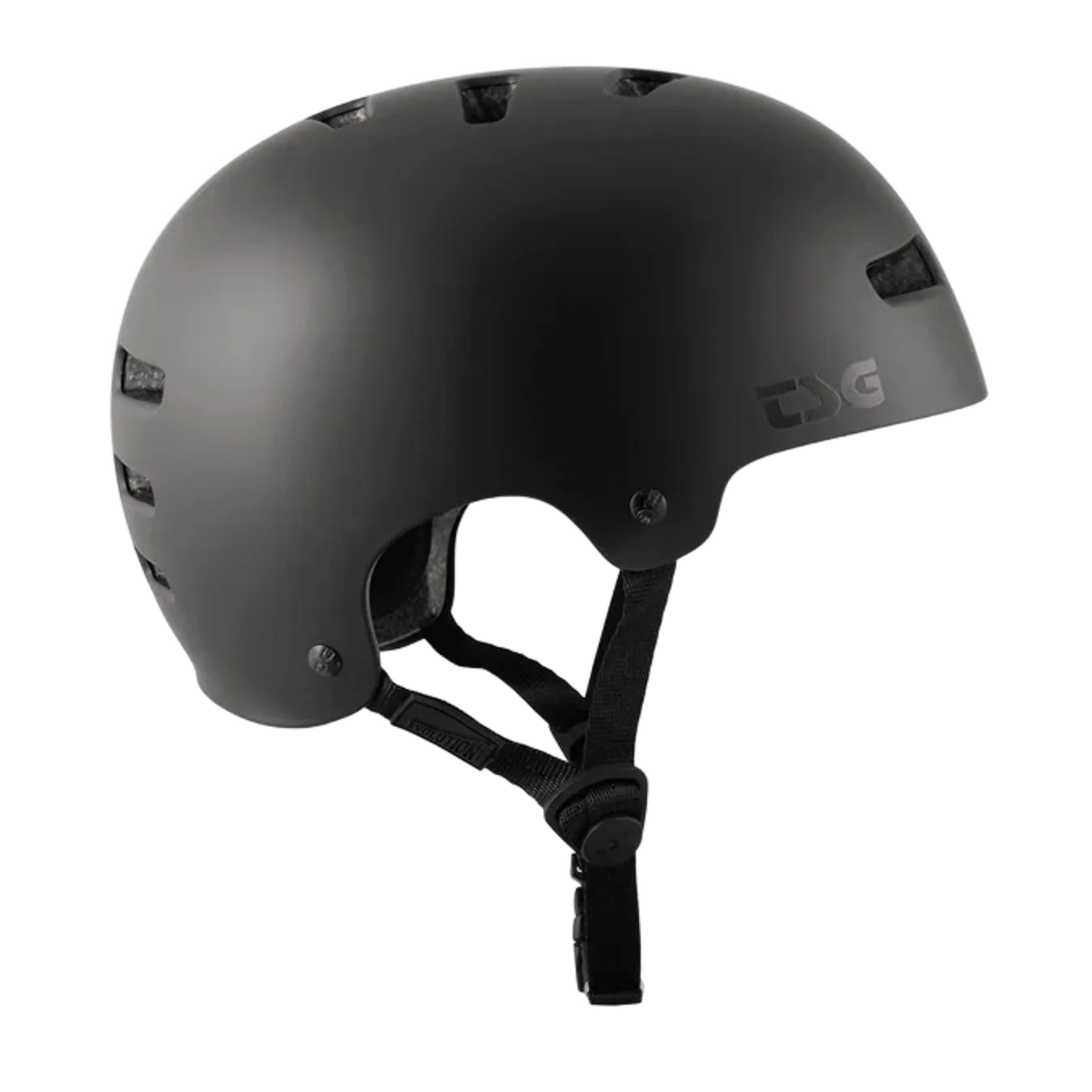
The signs your brakes need a shop today: a lever that pulls almost to the grip, a squeal or grind that cleaning doesn’t fix, a rotor that rubs, or oil on the pads. A brake adjustment or a pad swap is one of the cheapest jobs a shop does, and a small price for stopping when you mean to. A helmet is the other half of stopping well: see our helmets, like the TSG Evolution, and ask us to check the fit while you are in.
Battery and charger labels: the e-bike repair you avoid by buying right
In one lineBuy a battery and charger with a lab mark on them, and stay home while the battery charges.
The smartest battery e-bike repair is the one you never need, and it starts with the label. Three UL standards cover most of what you will see. UL Solutions names them: UL 2849 for the electrical systems of e-bikes, UL 2272 for the electrical systems of personal e-mobility devices such as e-scooters, and UL 2271 for batteries used in light electric vehicles.3
Since January 1, 2026, California’s SB 1271 turns those standards into rules for sellers. Here is what that means for you:4
- An e-bike’s battery must be tested by an accredited lab to a standard referenced in UL 2849 or EN 15194.4
- A motorized scooter’s battery must be tested to UL 2272.4
- A replacement battery sold on its own is tested too: to UL 2271 for a scooter, or to a UL 2849 or EN 15194 battery standard for an e-bike.4
- A charger sold for a particular e-bike, scooter or battery must be certified for use with it.4
- The lab’s name or mark and the standard must be fixed on the product, its charger or its battery, except on a secondhand sale, and the maker or seller must give you a copy of the test report if you ask.4
| Standard | What UL says it covers | What SB 1271 asks |
|---|---|---|
| UL 2849 | The electrical systems of e-bikes3 | An e-bike battery tested to a standard referenced in UL 2849 or EN 151944 |
| UL 2272 | The electrical systems of personal e-mobility devices such as e-scooters3 | A motorized scooter’s battery tested to UL 22724 |
| UL 2271 | Batteries used in light electric vehicles3 | A replacement scooter battery sold on its own, tested to UL 22714 |
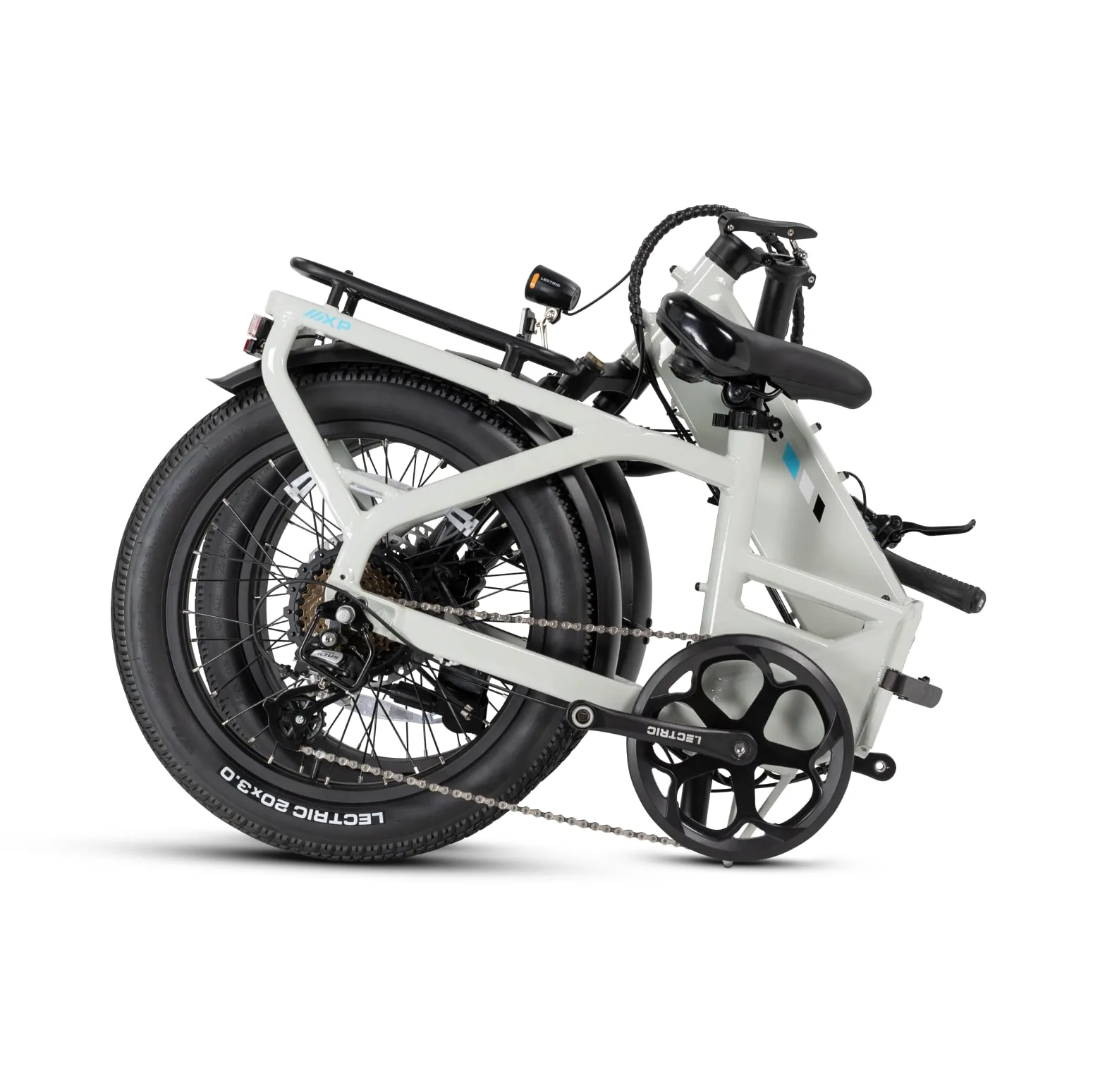
On a maker’s page it looks like this: Lectric says the XP4’s battery is certified to UL 2271 and the bike to UL 2849.19 Come in and ask us to show you the mark on the battery of any ride we carry. It takes ten seconds.
Charging habits matter just as much as labels. The CPSC asks you to be present while it charges, never to charge it while you sleep or are away, to use only the charger provided or recommended by the maker, and to unplug it when it is done.2 Here is why: of the 145 e-bike incidents the CPSC investigated, 106 involved fire, and 62 of those fires started while the e-bike was charging.1 NFPA adds the rest: don’t charge below 32°F or above 105°F, and charge on a flat, dry spot away from children, direct sunlight and liquids, where the bike can’t fall over.12
A charge takes the battery’s watt-hours divided by the charger’s watts, so you can plan to be home for it. Try yours:
Try it · Charge time
How long until it’s full?
00
Pick an answer above.
Volts × amps = charger watts · be present while it charges (source 2)
Our e-bike battery guide covers what a charge costs and the charging habits that keep a battery healthy. If a battery feels weaker than it should, have it tested by the maker or a qualified shop before you ride far on it.
Swollen or damaged battery? Stop, step back, call
In one lineA swollen, hot, leaking or soaked battery: stop, move it away if it is safe, and call 911.
Stop using it and stop charging it. Right now. NFPA lists the signs of a problem: an odor, a change in color, too much heat, a change in shape, leaking, or odd noises. If it is safe to do so, move it away from anything that can catch fire, and call 911.12 A swollen case, a crack after a fall or a battery that got soaked belongs on that list too.
Never open a battery pack, and never buy one rebuilt by someone you don’t know. The CPSC warns against any pack modified or reworked by unqualified people, or built with repurposed or used cells.2 Its count for 2017 to 2024 shows what cheap work costs: 7 of the 19 e-bike battery-fire deaths were associated with homemade battery packs or bike repair shops.1 So when a battery needs more than an inspection, the answer is a tested replacement, not new cells stuffed into the old case. That is the line we hold on every battery e-bike repair.
The number that matters
7
of the 19 e-bike battery-fire deaths the CPSC counted from 2017 to 2024 were tied to homemade battery packs or bike repair shops.1
Never open the pack
Never open a battery pack, and never buy one rebuilt by someone you don’t know. A tested replacement is the fix.2
If it is cool and not smoking, keep it outdoors on concrete, away from anything that burns, and call the maker or a qualified shop before you charge or ride it again.
Go deeperWhat to do with a battery that is finished
When a battery is finished, California law keeps it out of the bin. DTSC says old batteries may not go in the trash or in household recycling bins: it is prohibited by law.9 CalRecycle lists all batteries, rechargeable and single-use, among the items banned from the trash, recycling and organics bins.10 Until you drop it off, DTSC asks you to keep it in a safe, dry place, out of the reach of children and away from flammable materials, with tape over the terminals.9
In Orange County that is easy. OC Waste & Recycling takes household hazardous waste, batteries included, free for county residents at four collection centers, among them Anaheim at 1071 N. Blue Gum Street. They open 9 AM to 3 PM, Tuesday through Saturday, and close on major holidays and in rainy weather.11 Call ahead with a large or damaged pack. DTSC also points to Call2Recycle’s drop-off locator.9 And check for a recall: if your battery or ride is under one, the CPSC asks you to follow the disposal steps in its press release, and you can report a battery problem on SaferProducts.gov.2
Motors, controllers and wiring: e-bike repair for the “it just died” moment
In one lineKeep water away from the electronics, and treat an error code as a clue, not a diagnosis.
This is where e-bike repair gets confusing, because one complaint can have several causes. “It won’t turn on” can be a loose connector, a blown fuse, a tired battery or a failed controller. Hiboy’s checklist for a scooter that won’t power on looks at the charge and the charger light, then a loose battery connection, moisture around the charging port, and a blown fuse or damaged cable. If the display stays blank after charging and drying, Hiboy points at internal wiring or the controller and says to seek service.14 That is your cue to book an e-bike repair.
Water is the quiet killer of electronics. Hiboy asks owners to clean with a soft brush and a damp cloth, and to skip pressure washers, soaking and water aimed at the ports.14 Heybike says the same for e-bikes: no high-pressure water on bearings or electrical areas, and connectors kept clean and dry.17 Put the hose down and grab a rag, and you skip a whole category of e-bike repair.
These are the jobs where a diagnosis comes first: a shop tests the motor, the controller and the wiring before it replaces anything. The part is usually the bigger share of the bill, so ask for the diagnosis, the labor and the parts as separate lines, and get the estimate before the work. You see the number first, every time.
Go deeperWhy a faster e-bike stops being an e-bike
One change to skip: making an e-bike faster. California says a person may not modify an e-bike to change its speed capability unless it still meets the e-bike definition and its class label is replaced to match.6 A vehicle modified to go over 20 mph on motor power alone, or to have more than 750 watts, is not an e-bike under the Vehicle Code.5 Push it past those lines and the e-bike rules stop applying to your ride. The classes are laid out in California e-bike laws, and e-bike or electric motorcycle shows exactly where the line falls.
What does an error code on the display mean?
An error code is the controller telling you which part it suspects. The catch: codes differ by maker and by model. On Hiboy’s main list, E1 means an electronic brake error, E2 a throttle error, E3 a communication problem between the display and the controller, and E5 low-voltage protection: charge the scooter for a while, and if E5 is still there, the battery needs replacing.13 Yet in the same guide, the S2 Lite’s own list gives E3 as an electronic brake error.13
| Code | On Hiboy’s main list |
|---|---|
| E1 | Electronic brake error |
| E2 | Throttle error |
| E3 | A communication problem between the display and the controller (the S2 Lite’s own list: electronic brake error) |
| E5 | Low-voltage protection: charge it for a while; if E5 is still there, the battery needs replacing |
So treat a code as a starting point, not a diagnosis. Write down the code, your model and what you were doing, check your own manual, and bring that note to your e-bike repair. It saves time on the bench. If the code involves the brakes or the battery, don’t clear it and ride on.
Before you book
Write down the code, your model and what you were doing, check your manual, and bring that note to your e-bike repair.
Is e-bike repair worth it, or is it time for a new ride?
In one lineAt about half the price of a new ride or more, think twice before you pay for the repair.
Start with one comparison: the repair estimate against the price of a new ride like yours. Our rule of thumb: at about half of new or more, think twice. That is our rule, not a law, and plenty of repairs above that line still make sense. Run your own numbers:
- The battery: a big repair on a ride with a tired battery may be followed by a battery bill.
- Parts: some models use common parts, others parts only the maker sells.
- The fit: if you have outgrown its range or speed, the money may do more in a ride that fits.
- The warranty: if it is still under the maker’s warranty, check with the maker before you pay anyone.
Example: a controller replacement on a two-year-old e-bike with a healthy battery is usually money well spent. On an older bike whose battery fades halfway home, compare first. If replacing wins, that is good news too: look at our e-bikes and electric scooters, browse the brands we carry, and feel the difference on a test ride. Want to spread the cost? See how lease-to-own works. For scooters, our guide to electric scooter repair cost walks through the same choice.
The care schedule that keeps e-bike repair rare
In one lineQuick checks before rides and one yearly tune-up keep a big e-bike repair rare.
A short routine beats a big repair, every time. Heybike’s maintenance guide gives the baseline: quick daily checks of the brakes, tire pressure, battery charge and chain; weekly checks of the brakes, shifting, chain and tires; a monthly look at the chain, cables, wheels and bearings; a six-month check of the pads, drivetrain, bolts, spokes, lights and frame; and a yearly service for everyday commuters, or every 18 to 24 months for casual riders.17
| When | What to check |
|---|---|
| Every day, before you ride | Brakes, tire pressure, battery charge and chain |
| Every week | Brakes, shifting, chain and tires |
| Every month | Chain, cables, wheels and bearings |
| Every six months | Pads, drivetrain, bolts, spokes, lights and frame |
| Every year | A service for everyday commuters (every 18 to 24 months for casual riders) |
The short version: follow the maker’s manual, and if you ride every day, have the brakes, tires and bolts looked at every few months. For scooters, Hiboy suggests about 30 seconds of checks before every ride, then a weekly clean and tire check.14 One tune-up a year at a shop that works on e-bikes is the simplest e-bike repair plan there is: you hand it over, it comes back dialed.
Here it is as one list. The ticks stay in your browser, and nothing is sent anywhere.
Try it · Your charging setup
Your e-bike and scooter care routine
00
Pick an answer above.
Sources 2, 14 and 17 · our counter list
How do you store an e-bike or scooter in the heat?
In one lineCharge and store the battery cool, about 50 to 77°F, and never leave it in a hot car trunk.
Heat is what a Fullerton summer brings, and heat is hard on batteries. Hiboy says high heat speeds up a battery’s chemical aging and suggests charging and storing it between 10 and 25°C, about 50 to 77°F, when possible; in summer, avoid charging in the heat and let the battery cool first.14 NFPA asks you to keep batteries at room temperature when possible, stored away from anything that can catch fire.12
Go deeperWhat the makers say about heat and storage
Lectric, based in Phoenix, knows heat. It says extreme temperatures affect a battery’s performance and lifespan, that it may drain faster in excessive heat, and that it is best stored indoors at moderate temperatures, disconnected from the bike if the bike allows it.18 Heybike adds: no long hours in direct sun, and a dry, secure space.17 For weeks off, Hiboy suggests about 60 to 70% charge, indoors, checked every 4 to 6 weeks, since scooters stored fully empty or fully charged age faster.14
Our own habit: never leave a battery in a car trunk on a hot day, and bring a removable battery inside, as the S2R Plus allows.16 Do that and the heat never becomes an e-bike repair.
How to get an e-bike repaired without the runaround
In one lineWrite down the problem, find a shop that works on your e-bike, and get the estimate before any e-bike repair begins.
Four steps keep any e-bike repair simple, wherever you take it:
Write down what’s wrong.
A line or two is enough; the brand, the model and any error code help.
Find a shop that works on e-bikes.
Not every bike shop takes e-bikes or their batteries, so call first and name your model.
Estimate first.
Labor and parts as separate lines, before any work begins.
Ask about parts.
A part that has to be ordered can take longer, so ask before the work starts.
Bought it on a website with no shop behind it? Check the maker’s support page first: many direct-to-consumer brands ship parts or name service partners, and work under warranty may cost you nothing. Keep the receipt handy, because it is the first thing a warranty claim asks for.
What to take to any shop: the charger, the battery key if it has one, your note on the problem and any error code, and the receipt if the ride is new. Need a part? We have parts for many e-bike models, so ask about yours, or browse our parts and accessories. Questions first? Read our common questions or talk to a person.
What e-bike repair costs, and what moves the price
In one lineLabor is the small line on most e-bike repair bills; batteries, motors and controllers are the big ones.
Every shop sets its own prices, so no single list fits everyone. What you can count on is how the bill is built: a labor charge for the job, the parts on top, and often a diagnosis fee when the fault isn’t obvious.
- Small jobs, such as a brake adjustment, a pad swap or a new tube: mostly labor, and the smallest bills.
- A yearly tune-up: one price for a full check, usually less than paying for the same jobs one by one.
- Diagnosis of the motor, controller or wiring: a fee to find the fault before anything is replaced.
- Big parts, such as a battery, a motor or a controller: the part usually costs more than the labor, so the quote climbs fast.
- Electric scooters: built differently from e-bikes, so electric scooter repair is usually quoted model by model.
The fine print, straight up: the final price depends on the bike’s model, its condition, the parts it needs and how complex the e-bike repair is. Get the number in writing before you say yes, and run it through the repair-or-replace check above. If the numbers say replace, look at our e-bikes and feel the difference on a test ride.
More questions people ask about e-bike repair
How much does e-bike repair cost?
It depends on the job. Small fixes like a brake adjustment or a new tube are mostly labor and the smallest bills; a battery, a motor or a controller costs the most because of the part. Ask for a written estimate, with labor and parts as separate lines, before any e-bike repair begins.
Where can I get an e-bike repaired?
Start with the maker: many brands list service partners or send parts under warranty. Then call a local bike shop that works on e-bikes, name the brand and the model, and ask whether it handles your battery and motor. Cyber City focuses on selling e-bikes, parts and accessories, so if the repair doesn’t add up, we can help you choose the next ride.
Can I get an e-bike or scooter repaired if I bought it online?
Yes, but check first. Many online brands handle warranty work through their own support, so start there. When you call a shop, give the brand and the model, so it can say up front whether parts can be found for it. That saves you a trip if a part simply isn’t available for your model.
How often should an e-bike be serviced?
Follow the maker’s manual first. If you ride every day, have the brakes, tires and bolts looked at every few months. Heybike suggests a yearly service for everyday commuters and every 18 to 24 months for casual riders, with quick checks in between.17
Can I put a cheaper replacement battery on my e-bike?
Not one without a lab mark. In California, a replacement battery for an e-bike must be tested by an accredited lab to a UL 2849 or EN 15194 battery standard, with the lab’s mark on it and a test report on request.4 The CPSC asks for a battery tested and approved for your device and confirmed as suitable by its maker.2 A pack with no lab name and no report is the wrong place to save money.
Can a shop make my e-bike faster?
Only inside the lines. Under California law, changing an e-bike’s speed capability is allowed only if it still meets the e-bike definition and its class label is replaced to match, and a ride modified to go over 20 mph on motor power alone, or over 750 watts, is not an e-bike.65 Our e-bike repair bench keeps your ride legal.
Sources
- U.S. Consumer Product Safety Commission, Micromobility Products-Related Deaths, Injuries and Hazard Patterns 2017–2024 (April 2026) (opens in a new tab)
- U.S. Consumer Product Safety Commission, Micromobility Information Center: e-bikes, e-scooters and hoverboards (read October 14, 2026) (opens in a new tab)
- UL Solutions, personal e-mobility evaluation, testing and certification (UL 2272, UL 2849 and UL 2271) (opens in a new tab)
- SB 1271 (2024), chaptered text: Health and Safety Code Sections 26300 to 26305, battery and charger testing for e-bikes, scooters and storage batteries (in force since January 1, 2026) (opens in a new tab)
- California Vehicle Code Section 312.5 (what an e-bike is, and the modified vehicles that are not e-bikes), as reproduced by California Public Law (opens in a new tab)
- California Vehicle Code Section 24016 (e-bike equipment, the motor cutting out when you brake, no speed tampering), as reproduced by California Public Law (opens in a new tab)
- California Vehicle Code Section 21201 (bicycle brakes, lights and reflectors), as reproduced by California Public Law (opens in a new tab)
- California Vehicle Code Section 21235 (the scooter rider’s rules, the brake included) (opens in a new tab)
- California Department of Toxic Substances Control, Universal Waste: Batteries (last updated December 26, 2024) (opens in a new tab)
- CalRecycle, Wastes Banned From the Trash (batteries, rechargeable and single-use) (opens in a new tab)
- OC Waste & Recycling, Household Hazardous Waste (free drop-off for Orange County residents) (opens in a new tab)
- National Fire Protection Association, Lithium-Ion Battery Safety tip sheet (2025) (opens in a new tab)
- Hiboy troubleshooting guide: error codes by model (read October 14, 2026) (opens in a new tab)
- Hiboy, Electric Scooter Maintenance Tips: Safety, Performance & Longevity (read October 14, 2026) (opens in a new tab)
- Hiboy S2 Pro electric scooter, maker’s product page (read October 14, 2026) (opens in a new tab)
- Hiboy S2R Plus electric scooter, maker’s product page (read October 14, 2026) (opens in a new tab)
- Heybike, Electric Bike Maintenance Guide: Care Tips & Service Schedule (February 12, 2026) (opens in a new tab)
- Lectric eBikes, frequently asked questions: battery storage, hot and cold weather (read October 14, 2026) (opens in a new tab)
- Lectric XP4 750 Step-Thru, maker’s product page: a battery certified to UL 2271, a bike certified to UL 2849 (read October 14, 2026) (opens in a new tab)
Updated November 18, 2026. The law parts summarize the sections cited, as reviewed October 17, 2026.
Who wrote this
Written by
Mahmoud Alsammar
Owner, Cyber City
Runs Cyber City in Fullerton, CA, where the team sells e-bikes, scooters, drones and cameras.
Fact-checked by
Ryan Alali
Fact-checker
Checks every Journal article against the makers’ and the law’s own sources before it goes up.
Cyber City · Fullerton
Not sure if it’s worth fixing?
Tell us what you ride or fly, and we answer it in the store, by phone or by email.
The store
DAILY 10 AM – 8 PM
932 W Orangethorpe Ave
Fullerton, CA 92832