
JournalBuying adviceField guide
E-bikes to stay away from: 6 proven red flags that save you from a costly mistake
- Written byMahmoud Alsammar, Owner, Cyber City
- Fact-checked byRyan Alali · Reviewed
The 30-second version
The e-bikes to stay away from are the ones whose seller can’t show a battery lab report, that aren’t really e-bikes (a motor over 750 watts, or help past their class speed), that carry no class label, or that nobody stands behind. Before you pay, ask for four things: the class label, the battery’s lab report, a written warranty, and a lock plan. Miss one and walk away.
- Motor 750 watts or less
- E-bike help stops at 20 mph , or 28 mph on Class 3
- Battery lab report Yours on request, since 2026
- Injured riders in a helmet 40% (CPSC, 2017 to 2024)
- Class label On the frame
E-bikes to stay away from: the mistake that costs you twice
In one lineThe e-bikes to stay away from fail a few plain tests you can check yourself, at a counter, in minutes.
It looked like a steal. Big motor, big battery, a price that made the local shop look silly. Then the box shows up. The brakes rub. The display flickers by week six. The battery charges in your kitchen at night and you lie awake wondering about it. And when you finally call for help, the answer is “ship it back.” That is how the e-bikes to stay away from get you: not on day one, but on day forty.
Here is the cost nobody puts in the listing. Weeks without your ride. A part nobody sells. A battery with no paperwork that you no longer trust. And the money you saved, gone, plus the money you spend buying again. Cheap turns expensive fast.
Good news: the e-bikes to stay away from aren’t a secret list of brands. They fail a few plain tests. Nobody can show you a battery lab report. The motor or speed is past what California calls an e-bike. There is no class label. Or nobody stands behind it after you buy.16 You can check every one of them yourself, at a counter, in minutes.
We hear this question more than almost any other, and our answer never changes: judge the bike and the seller, not the logo. A big name with no paperwork is a worse buy than a plain one with everything in order. Here are the six red flags we walk people through:
Judge the bike and the seller, not the logo. A big name with no paperwork is a worse buy than a plain one with everything in order.
- No battery lab report, or a seller who goes quiet when you ask for it.1
- A motor over 750 watts, or help that keeps going past 20 mph (Class 1 and 2) or 28 mph (Class 3).6
- No class label on the frame.6
- Sold with a kit or setting that pushes it past its class.5
- No written warranty, and no answer to “who stands behind this?”
- No plan to lock it, and no record of its serial number.
Why spot e-bikes to stay away from by behavior, not brand? Because the same name can sell one bike that passes every test and another that fails half of them, and because a list of names goes stale in a season. These tests stay true however the market moves.
| Red flag | What to check at the counter |
|---|---|
| 1 · No battery lab report | The lab’s name, and the test report if you ask1 |
| 2 · Not really an e-bike | A motor of 750 watts or less, with help that stops at 20 mph, or 28 mph for Class 36 |
| 3 · No class label | The label on the frame6 |
| 4 · A kit or setting past its class | No “unlocked” or “off-road” mode on offer5 |
| 5 · Nobody behind it | A written warranty, and parts you can buy |
| 6 · No lock plan | A lock through the frame, and a photo of the serial number |
Red flag 1: is the battery tested, and can you prove it?
In one lineSince January 1, 2026, a California seller must show the battery lab’s name and give you the test report if you ask.
Start with the battery, because that is where the worst stories begin. Since January 1, 2026, sellers in California must show the name or logo of the accredited lab that tested an e-bike’s battery, and give you a copy of the test report if you ask.1 That is the law under SB 1271. Use it.
Why it matters: in the CPSC’s count for 2017 to 2024, 19 of the 310 e-bike deaths happened in 13 battery fires.2 Batteries are not the most common harm, but a fire at home is the one that keeps people up at night.
The number behind the battery check
19
of the 310 e-bike deaths in the CPSC’s count for 2017 to 2024 happened in 13 battery fires.2
There is no federal battery standard yet. The CPSC published a proposed standard in June 2026, and oral comments on it are set for October 21, 2026.34 It is a proposal, not a final rule. So if a seller tells you a federal standard already covers their bike, that seller just joined the e-bikes to stay away from.
The first of the e-bikes to stay away from is the one whose seller goes silent when you ask for the report. A bike sold in California should have one on request, no drama. For charging habits that let you sleep easy, read our e-bike battery guide.
When you get the report, read two things: the lab’s name, and the model it covers. The model on the report should match the battery on the bike in front of you. Different battery, or no model at all? Ask why before you go one step further.
The same test applies later. A replacement battery should come with its own report on request, just like the bike did.1 A cheap pack with no paperwork can turn a good bike into one of the e-bikes to stay away from overnight.
Red flags 2 to 4: is it really an e-bike, or something faster?
In one lineOver 750 watts, or help past 20 mph (Class 1 and 2) or 28 mph (Class 3), and it is not an e-bike in California.
California law calls something an e-bike only if it has working pedals and a motor of 750 watts or less, with help that stops at 20 mph for Class 1 and 2, or 28 mph for Class 3.6 The class goes on a label on the frame.6 Anything past those lines is not an e-bike, whatever the box screams.
That changes everything, because the rules change with it. A bike over the line may count as a moped or a motorcycle, with licenses and registration. California also bans selling devices that push a bike past its class (AB 1774).5 Our guide to the line between an e-bike and an electric motorcycle lays it out with real numbers.
Go deeperThe newer California rules, 2026 and 2027
How do you check it in a store? Ask to see the class label on the frame, then the motor’s rated watts on the spec sheet, not just the ad. If the ad says one thing and the label says another, trust neither until someone explains. A good seller is happy to show you both, right there.
At the counter
Ask for the class label on the frame and the motor’s rated watts on the spec sheet. A good seller shows you both, right there.
Watch for settings, too. A bike that leaves the store as a Class 2 but has an “unlocked” or “off-road” mode the seller offers to switch on belongs with the e-bikes to stay away from, because that switch is exactly what California’s class rules are about.56
Not sure where a bike falls? Answer three questions and see its class in seconds.
Try it · Class finder
Which class is this e-bike?
00
Pick an answer above.
Source 6 · the maker’s label on the frame shows the class
Real life: a neighbor in Anaheim shows off a bike he bought online that “does 35 on the throttle.” Whatever the listing called it, that is past every e-bike class in California, so if you want e-bike rules it sits right among the e-bikes to stay away from.6 For the full rules on classes, ages and helmets, see California e-bike laws.

What do the safety numbers say about riding an e-bike?
In one lineCrashes with motor vehicles and control problems top the CPSC’s list, and only 40% of injured riders wore a helmet.
The CPSC’s report covers 2017 to 2024. It counts 533 deaths across micromobility products, 310 of them on e-bikes, and about 155,200 e-bike emergency-room visits.2 The top hazards it names are crashes with motor vehicles and problems controlling the bike.2
Two details from the injury study jump out. Only 40% of the injured riders wore a helmet, and 15% were going 20 mph or faster.2 Read the full CPSC report yourself.
| Item | Value |
|---|---|
| Wore a helmet | 40% |
Source2
Go deeperWho must wear a helmet on an e-bike in California
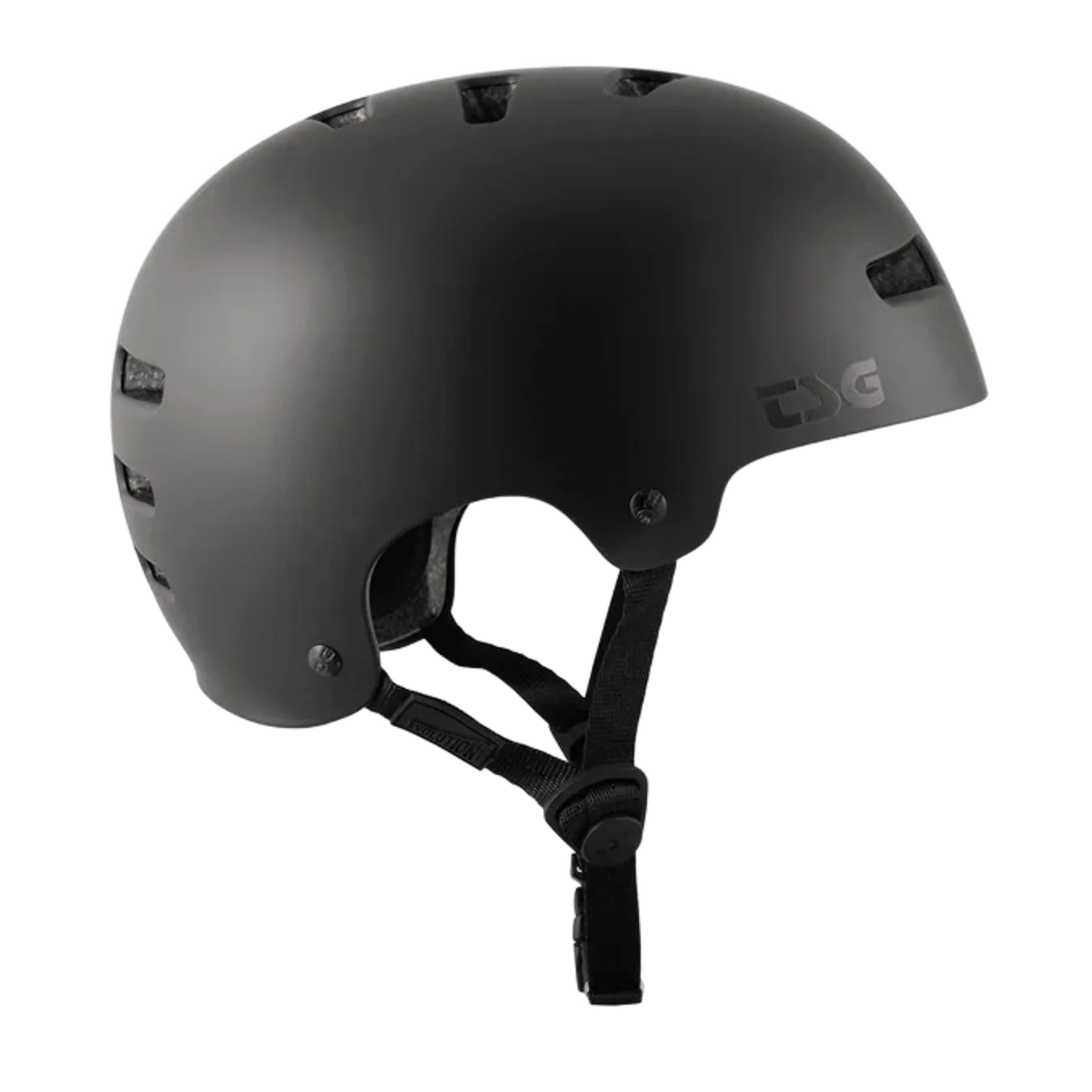
Even a bike that is nowhere near the e-bikes to stay away from can’t erase those numbers. What you control is your gear and your speed. Grab a helmet from our helmets, like the TSG Evolution, and ride at a speed that leaves you room to stop. That is how you turn a fun bike into a fun bike for years.
Red flag 5: who stands behind it when something breaks?
In one lineA bike nobody stands behind belongs with the e-bikes to stay away from: ask about the warranty before you pay.
This is the question online sellers most often can’t answer, and it is the one that hurts most. A bike that arrives in a box can still arrive with a fault. If the answer is “ship it back,” you could lose your ride for weeks.
Wherever you buy, ask before you pay, not after the first flat. Our guide on where to buy an e-bike puts the maker’s website head to head with a local store, warranty included.
Same with parts. Ask whether the brake pads, tires and chargers are standard sizes you can find. A bike built from parts nobody stocks lands in the e-bikes to stay away from, even if it rides beautifully on day one.
Picture two commuters in Placentia with the same online bike. Six weeks in, the rear brake squeals and the display flickers. One bought from an authorized dealer, with the warranty in writing: a clear claim and a straight answer. The other has a support ticket and a long wait. Same bike. Very different year. That is the quiet way e-bikes to stay away from cost you.
Running costs: where e-bikes to stay away from hide the bill
In one lineCharging is about a penny a mile or less; tires, brakes, adjustments and one day a battery are the real bill.
Charging is the cheap part: about a penny a mile or less at Southern California Edison’s home rates, as our battery guide works out. The real costs over time are tires, brakes, adjustments and, one day, the battery.
Ask what those cost before you buy, and from whom. A seller who can’t tell you where the parts come from has just put it on your list of e-bikes to stay away from.
Ask one more money question, in writing: what does the maker’s warranty cover, and who handles a claim? A warranty that means shipping a heavy bike across the country is worth less than it sounds. And ask what a replacement battery would cost and whether it can be ordered, so the day it wears out is a plan, not a surprise.
Two costs people miss. There is no state discount to count on now: California’s e-bike voucher project ended in December 2025.8 And some renters or homeowners policies may exclude e-bikes, so check your policy before you assume you are covered.10
Red flag 6: how do I keep it from being stolen?
In one lineLock the frame to something solid, and photograph the serial number and the bike the day you bring it home.
Theft is a real cost, and a plan beats a gut punch. A bike you can’t lock well at the places you go is, for you, one of the e-bikes to stay away from. Lock the frame, not just a wheel, to something solid. Write down the serial number and photograph it and the bike the day you bring it home.
Keep your receipt with those photos. If the bike is ever stolen, the serial number and the receipt are the first things you will be asked for. Ask us and we will show you where the serial number is on the bike you choose.
Go deeperWhere the bike sleeps, and where it parks
Think about where the bike sleeps. A bike in a locked garage or inside your home is a different risk from one chained outside every night. With a removable battery, take it in with you: you protect the most expensive part and charge it where you can see it.
A lock plan also means a parking plan. Before you buy, picture the rack at work, at school or at the train station. Nowhere solid to lock the frame? A folding bike that comes inside with you may be the smarter pick.
How do I spot e-bikes to stay away from before I pay?
In one lineFive checks at the counter rule out the e-bikes to stay away from: label, watts, battery papers, warranty and lock.
See the class label
On the frame.6
Check the motor
750 watts or less, with help that stops at 20 mph, or 28 mph for Class 3.6
Ask for the battery papers
The lab’s name, and the test report.1
Ask who stands behind it
A written warranty, with parts you can find.
Plan the lock
A lock through the frame, and a photo of the serial number.
Take this checklist with you, to us or anywhere else. Every line is something you can see or ask for at the counter. The ticks stay in your browser.
Try it · Your charging setup
Before you pay
00
Pick an answer above.
Sources 1, 5, 6 and 10
A bike that passes all twelve is not one of the e-bikes to stay away from. It is a bike you can ride for years. Start with the Lectric XP4 750 Step-Thru, the Lectric XP Lite 2 or the Macfox X1S, or browse all our e-bikes. Thinking of riding to work? Read can an e-bike replace a car and our e-bike commute guide.
Best of all, skip the guessing. Come to 932 W Orangethorpe Ave in Fullerton, any day from 10 AM to 8 PM, and ask for a test ride. We will show you the label, the battery papers and the serial number on the spot. Then you ride it, and you know.
Electric bike common problems in 2026, and which ones are red flags
In one lineMost electric bike common problems are wear and loose connections; the red flags are the faults nobody can explain.
Search for electric bike common problems and you get a long, scary list. Here is the short version: most of it is wear and loose connections, and only a few problems should stop a purchase. The difference is whether someone can explain the fault and stand behind the bike.
| Problem | What it usually is | A red flag when buying? |
|---|---|---|
| Battery won’t charge, or range drops | The charger, a connector, or a battery that is wearing out | Yes, if the seller can’t show the battery lab report1 |
| An error code on the display | The bike reporting a fault in the brakes, throttle, motor or wiring | Yes, if nobody can tell you what the codes mean |
| The motor cuts out | A brake cutoff, a loose plug, or a low battery | No, if the maker can trace it |
| Brakes rub or squeal | Pads and rotors that need adjusting | No, that is normal wear |
| A flat tire | A puncture or a worn tube | Only if nobody stocks that tire size |
| Trouble after rain | Water in a connector or the display | Yes, if the maker gives no water rating |
Start with the simple checks. A bike that suddenly won’t power on often needs a battery reset or its connectors reseated; our guide on how to reset an e-bike battery walks through it safely. Rode home in the rain and now the display acts up? Read are e-bikes waterproof before you plug anything in.
An error code is the bike telling you what is wrong, not a death sentence. Each maker uses its own codes; for one example, see our Yozma IN 10 error codes guide. If a code keeps coming back on clean wiring, or a connector looks burnt, stop riding and get it checked.
Crashes with motor vehicles and problems controlling the bike top the CPSC’s list of e-bike hazards, so brakes and tires are never small problems, even when the part is cheap.2
Before you buy
Ask the seller who handles each of these problems. A clear answer for every line keeps a bike off the list of e-bikes to stay away from.
More questions people ask about e-bikes to stay away from
Is it better to buy an e-bike online or in a store?
Either can work. The e-bikes to stay away from are sold in both places, so the bike must pass the same checks. The battery-testing rules apply to any seller in California: the lab’s name shown, and the test report if you ask.1 The class label goes on the frame wherever you buy.6 What changes is what happens after the sale. A bike that arrives in a box can still arrive with a fault, and “ship it back” can mean weeks without it. So ask the question online sellers most often can’t answer: who stands behind this if it breaks?
Can an e-bike go 70 mph?
Not as an e-bike, in California. The law calls something an e-bike only if it has working pedals and a motor of 750 watts or less, with help that stops at 20 mph for Class 1 and 2, or 28 mph for Class 3.6 A ride that goes 70 mph is past every class, so other rules apply: it may count as a moped or a motorcycle, with licenses and registration. Selling a device that pushes an e-bike past its class is banned under AB 1774,5 and from January 1, 2027, ads for electric mopeds and motorcycles may not call them e-bikes.7 Our guide to the e-bike or electric motorcycle line has the numbers.
How much does an e-bike battery cost to replace?
It depends on the bike, the battery and who makes it, so there is no one number. Ask the seller before you buy what a replacement would cost and whether it can be ordered, so the day the battery wears out is just another errand. Then ask the same question you asked about the bike: a replacement battery should come with its own lab report on request, as the bike did.1 A cheap pack with no paperwork can turn a good bike into one of the e-bikes to stay away from. Our e-bike battery guide covers what to check on a new one and how to charge it at home.
What is the average lifespan of an e-bike?
There is no official figure, and we will not invent one. What we can tell you is what cuts a bike’s life short, and it is the same list that marks the e-bikes to stay away from. Every battery wears out one day, so a replacement you can actually get, with its lab report, belongs in the plan.1 Tires, brake pads and chargers wear and need replacing, so a bike built from parts nobody stocks can be finished long before its frame is. And when nobody stands behind a bike, a small fault can keep it off the road for weeks. That is why the checklist above asks about the battery, standard parts and the warranty. Get the maker’s warranty in writing.
Sources
- SB 1271 (2024), e-bike battery testing: the lab’s name and the report on request (in force since January 1, 2026) (opens in a new tab)
- U.S. Consumer Product Safety Commission, Micromobility Products-Related Deaths, Injuries and Hazard Patterns 2017–2024 (April 2026) (opens in a new tab)
- CPSC proposed lithium-ion battery standard, Federal Register, June 24, 2026 (proposed rule) (opens in a new tab)
- CPSC oral-comment notice for the proposed battery standard, Federal Register, October 5, 2026 (opens in a new tab)
- AB 1774 (2024), devices that push an e-bike past its class (opens in a new tab)
- California Vehicle Code Section 312.5 (what an e-bike is, the three classes, the label) (opens in a new tab)
- SB 1167, ads for electric mopeds and motorcycles (from January 1, 2027) (opens in a new tab)
- California Air Resources Board, California E-Bike Incentive Project (opens in a new tab)
- AB 965 (2025), Vehicle Code Section 21212.5 (no Class 3 sales to riders under 16) (opens in a new tab)
- Progressive, e-bike insurance page (renters and homeowners policies may exclude e-bikes) (opens in a new tab)
- California Vehicle Code Section 21212 (helmets under 18) (opens in a new tab)
- California Vehicle Code Section 21213 (Class 3: age 16, helmets) (opens in a new tab)
The laws here are summarized from the bills and Vehicle Code sections listed, as read on October 10, 2026.
Who wrote this
Written by
Mahmoud Alsammar
Owner, Cyber City
Runs Cyber City in Fullerton, CA, where the team sells e-bikes, scooters, drones and cameras.
Fact-checked by
Ryan Alali
Fact-checker
Checks every Journal article against the makers’ and the law’s own sources before it goes up.
Cyber City · Fullerton
Want a second look before you buy?
Tell us what you ride or fly, and we answer it in the store, by phone or by email.
The store
DAILY 10 AM – 8 PM
932 W Orangethorpe Ave
Fullerton, CA 92832