
JournalCommutingBento
E-bike commute in Orange County: the smart, fun way to skip the 91 and keep the money
- Written byMahmoud Alsammar, Owner, Cyber City
- Fact-checked byRyan Alali · Reviewed
The 30-second version
The answer
An e-bike commute works best for trips up to about 10 miles each way, in town, where you can lock up at the other end. Orange County gas sat at $6.2012 a gallon on October 16, 2026, the average commute here is 26.7 minutes each way, and L.A.-area drivers lost 87 hours to traffic in 2025. On an e-bike you pedal with help up to 20 mph (28 on a Class 3), skip the parking hunt, and get your daily exercise on the way to work.
OC regular gas
$6.2012
a gallon (AAA, Oct 16, 2026)
Average OC commute
26.7 minutes
each way (Census)
L.A. traffic, 2025
87 hours
lost per driver (INRIX)
New car, a year
$12,863
(AAA)
Realistic e-bike commute
10 miles
or less each way, in town
Your commute is eating your life. An e-bike commute takes it back.
In one lineYou pay for the drive in gas, car payments, lost hours and skipped workouts. An e-bike commute takes them back.
You know the drill. The 91 is red before you finish your coffee. The 57 is a parking lot with lane lines. You crawl, you brake, you check the clock, you crawl again. Then you circle the lot for a spot, walk in already tired, and do the whole thing backward at five, wondering if an e-bike commute could be any worse.
Here is the part nobody says out loud: you pay for that. In gas, in car payments, in hours you never get back, and in the workout you keep promising yourself you’ll fit in “once things calm down.” They never calm down.
An e-bike commute flips the script. Same distance, same city, but you roll past the stopped traffic on a bike lane, park at the front door, and show up awake. This guide gives you the real numbers, how far an electric bike commute actually works, the California rules in one tight section, and the commuter e-bikes we carry in Fullerton.
What does driving to work really cost you in Orange County?
In one lineGas alone is about $1,190 a year by our math. Owning the car is $12,863. The drive takes about 214 hours a year.
Let’s put numbers on the pain. Every figure below comes from a source you can open yourself.
Gas: $6 a gallon is the new normal
On October 16, 2026, AAA put regular gas in Orange County at $6.2012 a gallon, against a national average of $4.3271.1 The federal numbers agree: the U.S. Energy Information Administration had California regular at $6.104 for the week of October 12.2 You are paying about 43% more per gallon than the average American driver.
Go deeperHow we got $1,190 a year in gas
Our math, so you can check it: a 20-mile round trip in a car that gets 25 mpg burns 0.8 gallons a day. At $6.2012, that is about $4.96 a day. Over 240 workdays, about $1,190 a year, just in gas, just to get to work and back.1
The car itself: $1,071.92 a month
Gas is the small bill. AAA puts the full cost of owning a new car at $12,863 a year, or $1,071.92 a month, and depreciation alone at $4,422 a year.3 And AAA ran that study with gas at $4.152 a gallon.3 Orange County pays almost 50% more than that at the pump,1 so for us the fuel part of that number is low.
Traffic: 87 hours a year in park
INRIX’s 2025 Global Traffic Scorecard ranks Los Angeles 10th in the world and 4th in the U.S., with 87 hours lost per driver.45 That is more than two full 40-hour work weeks, sitting still. The typical U.S. driver lost 49 hours, which INRIX values at $894 in lost time.45 L.A.-area drivers lose almost twice that.
| Item | Value |
|---|---|
| Los Angeles area | 87hrs |
| Typical U.S. driver | 49hrs |
Each square is one hour sitting still. Source4
Time: 26.7 minutes each way, every day
The Census Bureau puts the average Orange County commute at 26.7 minutes each way.6 Our math again: two trips a day, 240 workdays a year, comes to about 214 hours behind the wheel. That is a part-time job you never applied for.
The number that matters
214 hours
a year behind the wheel, by our math: the Census average of 26.7 minutes each way, two trips a day, 240 workdays.6
So the real bill for driving to work is gas, plus a car payment, plus your time, plus your health. Now let’s look at the e-bike commute side.
What does an e-bike commute feel like instead?
In one lineE-bikers ride farther than regular cyclists, and two 15-minute rides a day cover the CDC’s 150 weekly minutes.
Picture Monday, day one of your e-bike commute. You roll out of the garage, click into pedal assist, and the motor pushes with every pedal stroke. The bike lane is moving while the lane next to you isn’t. You hit a little hill and barely notice it. You lock up 20 feet from the door, at a spot nobody else wanted, and walk in with your head clear.
That is the desire, and it is grounded in what riders actually do. A seven-city study of more than 10,000 people found that e-bikers took longer trips than regular cyclists, 9.4 km against 4.8 km, and that people who swapped car trips for e-bike trips gained about 550 MET minutes of activity a week.11 Translation: the motor doesn’t make you lazy. It makes you ride farther and more often.
| Item | Value |
|---|---|
| E-bikers | 9.4km |
| Regular cyclists | 4.8km |
A seven-city study of more than 10,000 people. Source11
The motor doesn’t make you lazy. It makes you ride farther and more often.
The CDC says adults need at least 150 minutes of moderate activity a week, and suggests 30 minutes a day, five days a week.12 A 15-minute e-bike commute each way hits that target on your way to work. No gym membership, no 5 AM alarm, no excuses. The CDC also lists better sleep, lower risk of heart disease and type 2 diabetes, and fewer symptoms of depression and anxiety among what regular activity helps with.13
| Item | Value |
|---|---|
| Minutes of riding in a workweek | 150min |
150 minutes a week: the CDC’s minimum of moderate activity, done on the way to work. Source12
And the money? Your e-bike commute runs on electricity measured in cents. If it lets you sell a second car, or never buy one, you stop that $1,071.92 monthly bill.3 That is money back every single month.
Try it · Car or e-bike
What would I save in a year?
00
Pick an answer above.
Sources 1 and 3 · every assumption shown and yours to change
Want the full breakdown, keep-the-car versus drop-the-car? Our guide can an e-bike replace a car runs every number, assumption by assumption.
How far can you realistically e-bike commute?
In one line5 to 10 miles each way is the sweet spot. For range, plan on two thirds of the maker’s number.
An e-bike commute goes further than you think, shorter than the box says. Here is the counter rule we give people in the store.
- Up to 5 miles each way: easy. Most people do it in normal clothes, with a light effort.
- 5 to 10 miles each way: the sweet spot for an e-bike commute. Long enough to kill the drive, short enough to stay fun.
- 10 to 15 miles each way: doable, especially on a Class 3 or with a long-range battery. Plan your charging.
- Over 15 miles each way: think e-bike plus train. More on that below.
For time, our in-town rule is an average of 12 to 15 mph once you count lights and stop signs. A Class 1 or Class 2 e-bike stops helping at 20 mph, and a Class 3 at 28 mph.7 So a 10-mile e-bike commute takes about 40 to 50 minutes, door to door, with no parking hunt at the end. Compare that with INRIX’s clock for the last mile into downtown Los Angeles: 17 mph in a car.4
For range, plan on about two thirds of the maker’s number. Makers test with light riders on low assist: Hiboy rates the EX9 at 62 miles with pedal assist for a 143 lb rider.16 Real riders, real hills and real headwinds use more. Check your own trip on a bike we carry:
Counter rule: range
Take the maker’s range and plan on two thirds of it. If that still covers your round trip with room to spare, the bike fits your commute.
Try it · Trip check
Will this e-bike make my round trip?
00
Pick an answer above.
Makers’ range figures · our two-thirds counter rule
Too far? Add the train
Live in Fullerton, work in L.A.? Ride to the Fullerton station and take Metrolink. Its rules allow e-bikes with pedals and the maker’s own sealed battery, in the bike areas, with size limits; space is first come, first served.15 On that e-bike commute, the bike handles both short ends, the train handles the long middle.
Where to ride in Orange County
Go deeperThe Santa Ana River Trail as a commute route
OC Parks describes the Santa Ana River Trail as a continuous 29-mile trail through seven cities, from Green River Golf Course to Huntington Beach, and says its regional trails offer commuting opportunities as well as recreation.14 If your job sits near the river, that is a car-free spine for your e-bike commute. Trail managers can set their own e-bike rules, so check the signs at each entrance.10
The California e-bike commute rules, in one minute
In one lineClass 1 and 2 stop helping at 20 mph, Class 3 at 28 with riders 16 and up in a helmet. Under 18, always a helmet.
Short version, for every e-bike commute. California law defines an e-bike as a bicycle with working pedals and a motor of 750 watts or less, and sorts them into three classes.7
| Class | How the motor helps | Help stops at | Who rides |
|---|---|---|---|
| Class 1 | Only while you pedal | 20 mph | A helmet for every rider under 189 |
| Class 2 | Can move on the throttle alone | 20 mph | A helmet for every rider under 189 |
| Class 3 | Pedal assist only, with a speedometer | 28 mph | 16 and older, every rider in a helmet8 |
- Class 1: the motor helps only while you pedal, and stops at 20 mph.7
- Class 2: it can move on the throttle alone, and stops helping at 20 mph.7
- Class 3: pedal assist only, stops at 28 mph, and has a speedometer.7 Riders must be 16 or older and wear a helmet.8
- Under 18 on any bike: a fitted, fastened helmet on streets and bike paths.9
- The label: every e-bike should carry a permanent label with its class, top assisted speed and motor watts.7
- No cheats: a vehicle modified to go over 20 mph on motor power alone, or over 750 watts, is not an e-bike under the law.7
No cheats
A vehicle modified to go over 20 mph on motor power alone, or over 750 watts, is not an e-bike under the law.7
Wear a helmet on every e-bike commute anyway, at any age; we carry helmets for every class. The full rulebook, with local rules and where you can ride, is in our California e-bike laws guide.
What to look for in an e-bike for commuting
In one lineBuy for day 200: range you trust, a removable battery, hydraulic brakes, built-in lights and parts you can order.
Skip the spec-sheet bragging. These are the things that make an e-bike commute easy on day 200, not just day one.
- Range you can trust: two thirds of the maker’s number should cover your round trip with room to spare.
- A removable battery: charge it at your desk or in the kitchen, not in the garage only.
- Hydraulic disc brakes: you will stop a hundred times a week in traffic. Every model below has them.16171819
- Lights you can’t forget: built-in lights turn a dark winter evening into a non-event.
- Weight that fits your stairs: if you carry it up to an apartment, every pound counts.
- A rack and fenders: your laptop rides on the bike, not on your sweaty back.
- Battery testing: look for UL 2849 for the electrical system and UL 2271 for the battery.
- Fit: stand over it in the store. A step-through frame is easier in work clothes.
- Parts you can order: tires and brake pads wear, so pick a bike whose parts are easy to find.
Want to know which bikes to avoid? Our guide to e-bikes to stay away from covers the red flags.
Best e-bikes for city commuting: the ones we carry, by fit
In one lineThe right commuter e-bike fits your trip, your body and your stairs. Ride two before you decide.
Ask an AI or a forum for the “best e-bikes for city commuting” and you get a top ten. The truth is simpler: the right one is the one that fits your trip, your body and your stairs. Here are the commuter e-bikes we carry, and who each one fits, with the makers’ own numbers.
Hiboy EX9: the all-day commuter
- Class 3, per Hiboy: 20 mph by default, adjustable to 28 mph with pedal assist where rules allow.16
- 750 W motor (1,000 W peak) with a dual-sided torque sensor, so the help follows how hard you pedal.16
- Removable 48 V 11.6 Ah battery, rated 62 miles with pedal assist for a 143 lb rider.16
- 26 x 2.5-inch tires, front shocks, hydraulic disc brakes, riders 4’9” to 6’5”, up to 330 lb.16
Fits you if your e-bike commute is 8 to 15 miles each way and you want speed on the open stretches. Class 3 means 16 and up, with a helmet.8 We are an authorized Hiboy dealer. See the Hiboy EX9.
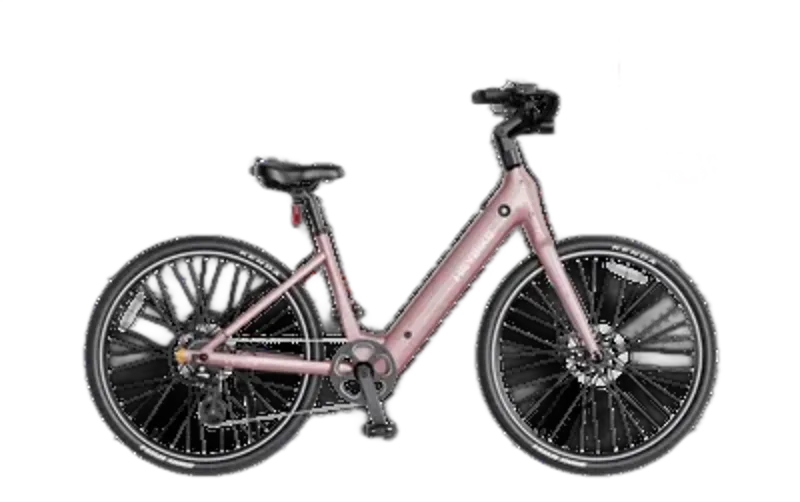
Heybike Venus: the light one for stairs
- 45 lb without the battery, on Heybike’s page, with a 750 W motor and 70 Nm of torque.17
- Up to 85 miles of maker-rated range and a 28 mph top speed; you switch between Class 2 and Class 3 in the app.17
- A headlight and built-in turn signals, hydraulic brakes, and UL 2849 and UL 2271 certification.17
- A low step-through frame for riders 4’11” to 6’2”.17
Fits you if you carry the bike upstairs or into an office, and want lights and signals without add-ons. See the Heybike Venus.
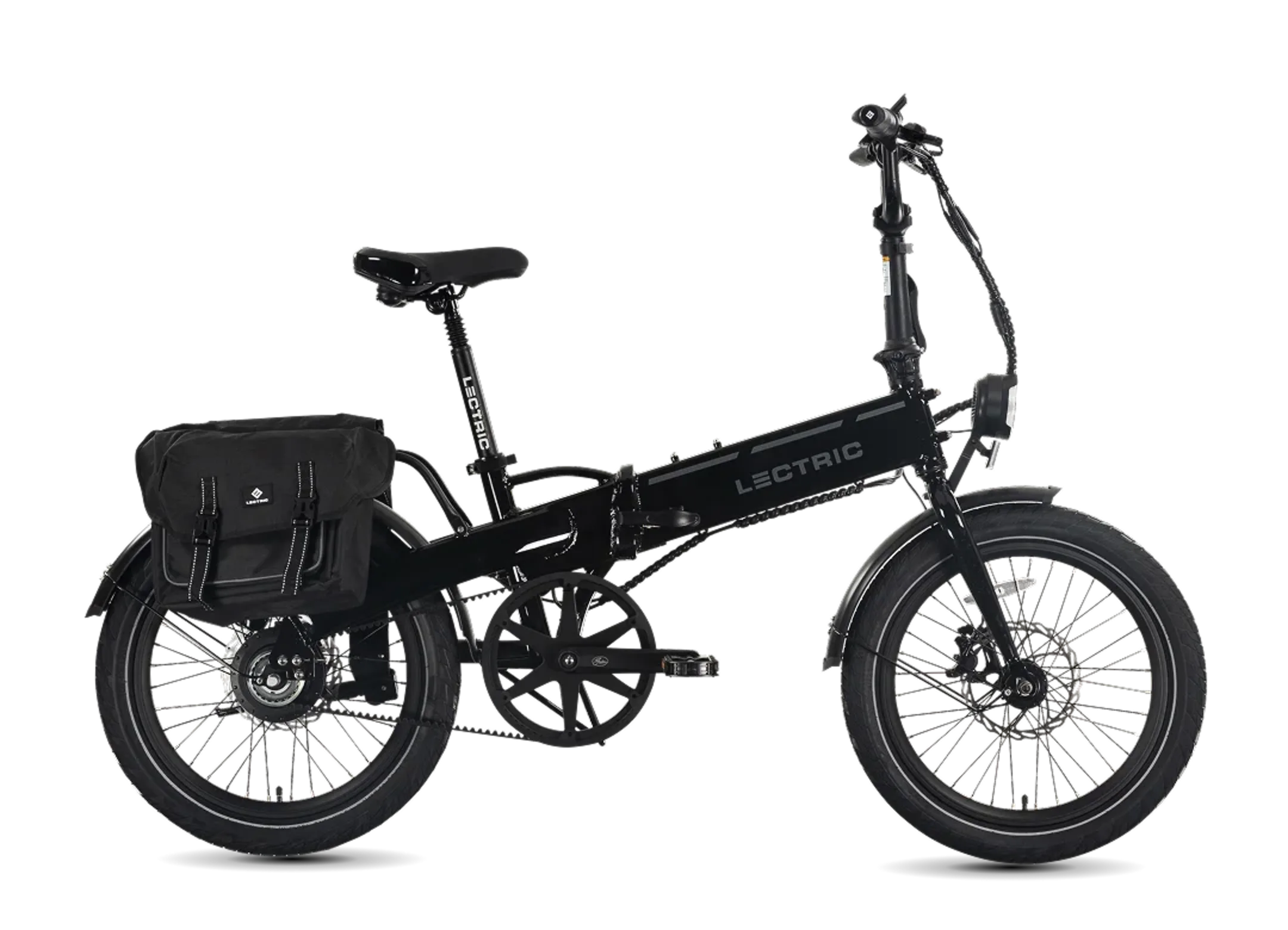
Lectric XP Lite 2: fold it, train it, store it
- Folds; 41 lb with its 7 lb battery out, per Lectric.18
- 20 mph top speed, Class 1 or 2, and up to 45 miles on the standard battery or 80 on the long-range one.18
- Hydraulic disc brakes, UL 2849 and UL 2271, riders 4’8” to 6’2”, payload 275 lb.18
Fits you if your e-bike commute includes Metrolink, a small apartment or a car trunk. See the Lectric XP Lite 2.
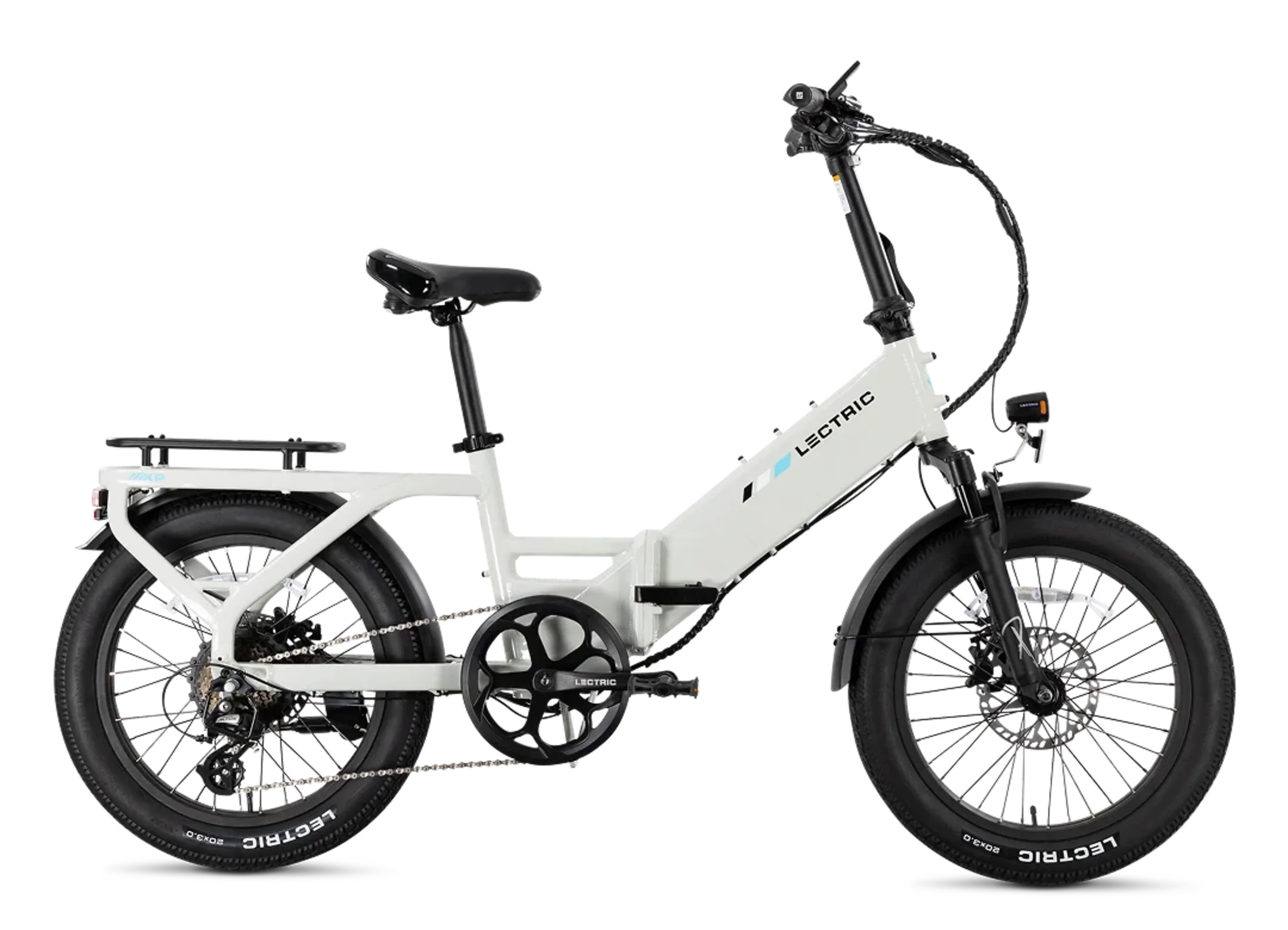
Lectric XP4 750 Step-Thru: the cargo commuter
- Folds, with a 750 W motor, 28 mph top speed and up to 85 miles of range on its 840 Wh battery.19
- A 330 lb payload, a rear rack and a step-through frame.19
- Battery certified to UL 2271, bike to UL 2849.19
Fits you if the commute ends with groceries, a gym bag or a kid’s backpack. See the Lectric XP4 750 Step-Thru.
| E-bike | Class and top speed | Weight | Fits you if |
|---|---|---|---|
| Hiboy EX916 | Class 3: 20 mph by default, 28 with pedal assist where rules allow | Not listed here | Your e-bike commute is 8 to 15 miles each way |
| Heybike Venus17 | Class 2 or 3, set in the app; 28 mph top | 45 lb without the battery | You carry it upstairs or into an office |
| Lectric XP Lite 218 | Class 1 or 2; 20 mph top | 41 lb with the battery out | Metrolink, a small apartment or a car trunk |
| Lectric XP4 750 Step-Thru19 | 28 mph top | Not listed here | Groceries, a gym bag or a kid’s backpack |
Every model, side by side, is on our e-bikes page. Prefer to stand? An electric scooter can cover a short last mile: see our electric scooters.
Try it · Your charging setup
Before your first e-bike commute
00
Pick an answer above.
Sources 7 to 9, 15 · our counter list
Start your e-bike commute with a test ride in Fullerton
In one lineFeel the motor on a real Fullerton street before you choose: ask for a test ride and we call you to confirm.
Reading about it is the slow way. Riding it is the fast way. Come to Cyber City, 932 W Orangethorpe Ave in Fullerton, open every day from 10 AM to 8 PM, and feel what the motor does on a real street. Ask for a test ride: tell us your commute and which bikes you want to try, and we call you to confirm the time.
Ask for a test ride
Tell us your commute and which bikes you want to try.
We call you
We call you to confirm the time.
Come to Fullerton
932 W Orangethorpe Ave, open every day from 10 AM to 8 PM.
Ride a real street
Feel what the motor does before you decide.
Paying it off over time? Our lease-to-own page shows how it works. Questions first? Call (657) 445-7230. Your first e-bike commute is closer than your next tank of gas.
More questions people ask about the e-bike commute
Are e-bikes good for commuting?
Yes, for trips up to about 10 miles each way in town. The motor flattens hills and headwinds, you put in less effort than on a regular bike, and you skip the parking hunt. In a study of more than 10,000 people, e-bikers rode farther per trip than regular cyclists.11
What is the downside of e-bikes for commuting?
Weight, theft, rain and charging. E-bikes are heavier than regular bikes, so stairs and car racks take planning. They need a solid lock and a safe place at work. Heavy rain calls for a backup plan. And you have to remember to charge; a removable battery makes that easy. None of it is a deal-breaker once you plan for it.
How far can you commute on an e-bike?
Most people are comfortable with up to 10 miles each way, and 15 is doable with a long-range battery or a Class 3. For range, plan on two thirds of the maker’s number; that is our counter rule, because makers test with light riders on low assist.16
How long does it take to go 20 miles on an e-bike?
What is the best e-bike for daily commutes?
What is the average lifespan of an e-bike?
It depends on how you ride, store and charge it, and the battery is usually the part that ages first. Tires, chains and brake pads wear on any bike, so check them often. Our e-bike battery guide shows how to make the battery last.
Is a 30-minute bike commute too long?
Will I lose weight biking 20 minutes a day?
Sources
- AAA gas prices, California: state average $6.2180, Orange County $6.2012, national $4.3271, prices as of October 16, 2026 (read October 17, 2026) (opens in a new tab)
- U.S. Energy Information Administration, California weekly retail gasoline prices, regular, all formulations (read October 17, 2026) (opens in a new tab)
- AAA, “New vehicle ownership costs hit $12,863 annually” (September 2026; read October 17, 2026) (opens in a new tab)
- INRIX 2025 Global Traffic Scorecard, city ranking and the cost of congestion (read October 17, 2026) (opens in a new tab)
- INRIX, “Congestion Up, Fatalities Down: What the 2025 INRIX Global Traffic Scorecard Reveals” (read October 17, 2026) (opens in a new tab)
- U.S. Census Bureau QuickFacts, Orange County, California: mean travel time to work, 2020–2024 (read October 17, 2026) (opens in a new tab)
- California Vehicle Code Section 312.5 (what an e-bike is, the three classes, the label; read October 17, 2026) (opens in a new tab)
- California Vehicle Code Section 21213 (Class 3: age 16 and a helmet; read October 17, 2026) (opens in a new tab)
- California Vehicle Code Section 21212 (helmets for riders under 18; read October 17, 2026) (opens in a new tab)
- California Vehicle Code Section 21207.5 (local rules for e-bikes on trails; read October 17, 2026) (opens in a new tab)
- Castro et al., “Physical activity of electric bicycle users compared to conventional bicycle users and non-cyclists,” Transportation Research Interdisciplinary Perspectives 1 (2019) 100017 (read October 17, 2026) (opens in a new tab)
- CDC, Adult Activity: An Overview (150 minutes a week; read October 17, 2026) (opens in a new tab)
- CDC, Physical Activity and Your Weight and Health (April 7, 2026; read October 17, 2026) (opens in a new tab)
- OC Parks, Orange County Regional Trails brochure: the Santa Ana River Trail (read October 17, 2026) (opens in a new tab)
- Metrolink, Bike Guidelines: e-bikes with pedals and sealed maker batteries, size limits (read October 17, 2026) (opens in a new tab)
- Hiboy EX9 urban commuter electric bike, maker’s product page (read October 17, 2026) (opens in a new tab)
- Heybike Venus lightweight commuter e-bike, maker’s product page (read October 17, 2026) (opens in a new tab)
- Lectric XP Lite 2.0, maker’s product page (read October 17, 2026) (opens in a new tab)
- Lectric XP4 750 Step-Thru, maker’s product page (read October 17, 2026) (opens in a new tab)
Reviewed October 17, 2026. Gas prices and makers’ specs move, and the e-bike rules here are a summary of the Vehicle Code sections listed: check the sources before you ride.
Who wrote this
Written by
Mahmoud Alsammar
Owner, Cyber City
Runs Cyber City in Fullerton, CA, where the team sells e-bikes, scooters, drones and cameras.
Fact-checked by
Ryan Alali
Fact-checker
Checks every Journal article against the makers’ and the law’s own sources before it goes up.
Cyber City · Fullerton
Want to see if your commute works on an e-bike?
Tell us what you ride or fly, and we answer it in the store, by phone or by email.
The store
DAILY 10 AM – 8 PM
932 W Orangethorpe Ave
Fullerton, CA 92832