
JournalParents & kidsField guide
Teen e-bike: the proven pitch that turns your parents’ “we’ll see” into a happy yes
- Written byMahmoud Alsammar, Owner, Cyber City
- Fact-checked byRyan Alali · Reviewed
The 30-second version
Parents want four answers before they say yes to a teen e-bike: which class and how fast, a helmet every time, where you’ll ride, and who pays or handles a ticket. Bring the bike’s class label, a helmet plan, a route that skips sidewalks and parks, the running cost, and an offer to take a safety class.
- Helmet Required under 18
- Ages 12 to 15 Class 1 (AAP)
- 16 and older Class 1 or 2 (AAP)
- Class 3 16 +; no sales under 16
- Parents for a helmet rule 80%
Teen e-bike: tired of hearing “we’ll see”?
In one lineParents rarely say no to the bike; they say no to the unknowns, so bring the answers before the questions.
You asked for a teen e-bike. You got “we’ll see”. You asked again and got “we’ll talk about it”. Meanwhile your friends ride to the beach, to the mall, to their jobs, and you are texting your mom for a ride. Again.
Here is the secret: parents almost never say no to a teen e-bike. They say no to the unknowns. In a national poll, 67% of parents said they did not feel informed about e-bikes.1 Fill that gap and the conversation changes.
The number that matters
67%
of parents in a national poll said they did not feel informed about e-bikes. Fill that gap and the talk changes.1
This page hands you the answers before the questions, in the order parents usually ask them: the class and the speed, the helmet, the route, the cost, tickets and school rules. Every fact points to its source, so your parents can check it themselves. Nothing here is about getting around them. It is about walking into the talk ready.
Sound familiar?
- “They go way too fast.”
- “You’ll ride it on the sidewalk.”
- “Who pays when it breaks?”
- “I read about batteries catching fire.”
Each one has a straight answer, and your teen e-bike pitch needs all of them.
What waiting for a teen e-bike costs you
In one lineEvery ride you can’t take alone runs through a parent’s car keys, and the injury numbers can be answered with a plan.
Waiting on a teen e-bike has a price. Every ride you can’t take on your own is a ride somebody else has to give you, on their schedule, not yours. The weekend job, the friend across town, the practice that ends at dusk: all of it runs through a parent’s car keys.
Your body pays too. The CDC says kids and teens ages 6 to 17 need 60 minutes or more of moderate-to-vigorous activity every day.11 A teen e-bike still asks you to pedal, and a ride across town is movement you would never get from the back seat.
| Item | Value |
|---|---|
| Moderate-to-vigorous activity, at least | 60min |
Source11
And yes, your parents’ fear is not made up. The federal safety agency, the CPSC, estimates 59,200 emergency visits tied to e-bikes in 2024, all ages.10 When its staff followed up on injured riders, only 40% had been wearing a helmet, and 15% were going 20 mph or faster.10 Your parents have probably seen a headline like that. Your job is to show them those numbers describe someone else, not you.
Picture the yes
In one lineSame route, helmet buckled, a text after you stop: a plan your parents trust is what buys the freedom.
Imagine it. Saturday, 9 AM. You roll out on your teen e-bike, helmet buckled, lights on, on a route you and your dad rode together last weekend. You walk the bike through the park because you know the rule. You get to work early. You text “here” after you stop. Your mom reads it, smiles, and doesn’t think about it again.
A month later they stop asking where you are, because you always say. That is real freedom, and it comes from one thing: a plan they can trust. Here is how to build it.
What do parents worry about with a teen e-bike?
In one lineAlmost nobody wants e-bikes banned: 80% of parents want helmets required, and only 11% strongly want a ban.
The same national poll shows exactly what is on their minds. Their top worries were the rider getting hurt (82%), pedestrians (62%), drivers (56%) and battery fires (36%).1
It also shows what they want. 80% supported requiring helmets, 68% supported age labels by type of e-bike, and only 11% strongly supported a complete ban.1 Read that again: almost nobody wants e-bikes banned. Most parents want rules that make sense, and you can show up holding them.
Every worry on that list has an answer you can bring. Getting hurt: the class, the helmet and the route. Pedestrians: slow on sidewalks and never through parks. Drivers: lights, crossings you have practiced, and a phone that stays in your pocket. Battery fires: a charging spot you agree on together.
| Worry | Parents who named it | What you bring |
|---|---|---|
| The rider getting hurt | 82% | The class, the helmet and the route |
| Pedestrians | 62% | Slow on sidewalks, never through parks |
| Drivers | 56% | Lights, crossings you have practiced, a phone in your pocket |
| Battery fires | 36% | A charging spot you agree on together |
What class is your teen e-bike, and how fast does it go?
In one lineKnow the class on the label and where its help stops: Class 1 from 12 to 15, Class 1 or 2 from 16, Class 3 at 16.
This is usually question one. California sorts e-bikes into three classes. Class 1 helps only while you pedal and stops at 20 mph. Class 2 adds a throttle and also stops at 20 mph. Class 3 helps only while you pedal and stops at 28 mph.7
Doctors use a ladder by age. The American Academy of Pediatrics recommends Class 1 only for ages 12 to 15, and Class 1 or 2 from 16.2 Class 3 is out until 16 by law, and since January 1, 2026, stores may not sell one to anyone under 16.45
Bring the answer, not a guess. Find the class label on the bike’s frame and know where its help stops.7 Run the bike you want through the class finder below.
Try it · Class finder
Which class is this e-bike?
00
Pick an answer above.
Source 7 · the maker’s label on the frame shows the class
Your parents may want to see the label themselves. Fair. Point to it on the frame, or ask us to show it in the store. A teen e-bike with no class label is one to skip, however good it looks online.7
Pro move: if you are 14 and the bike you want is a Class 2, expect that question. Showing your parents you know the AAP ladder, and picking a teen e-bike that fits it, beats any argument.2
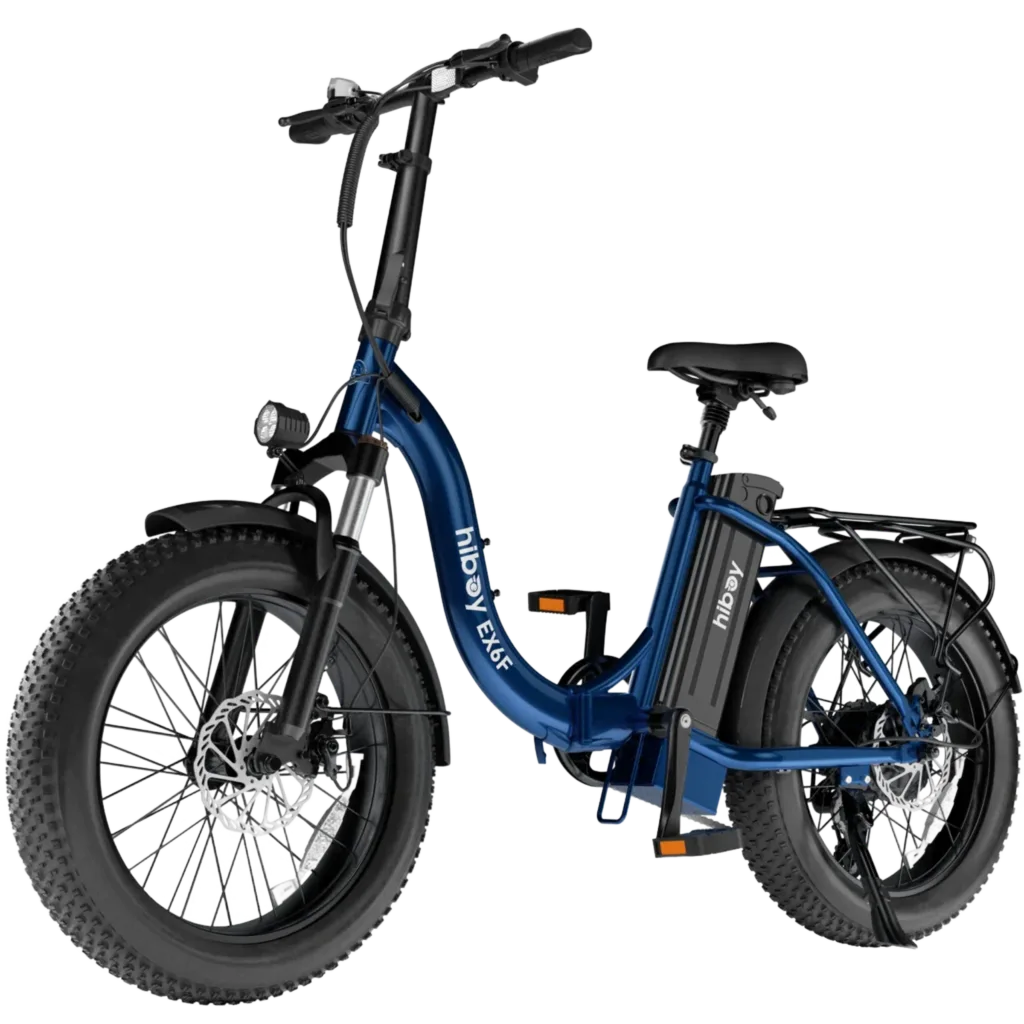
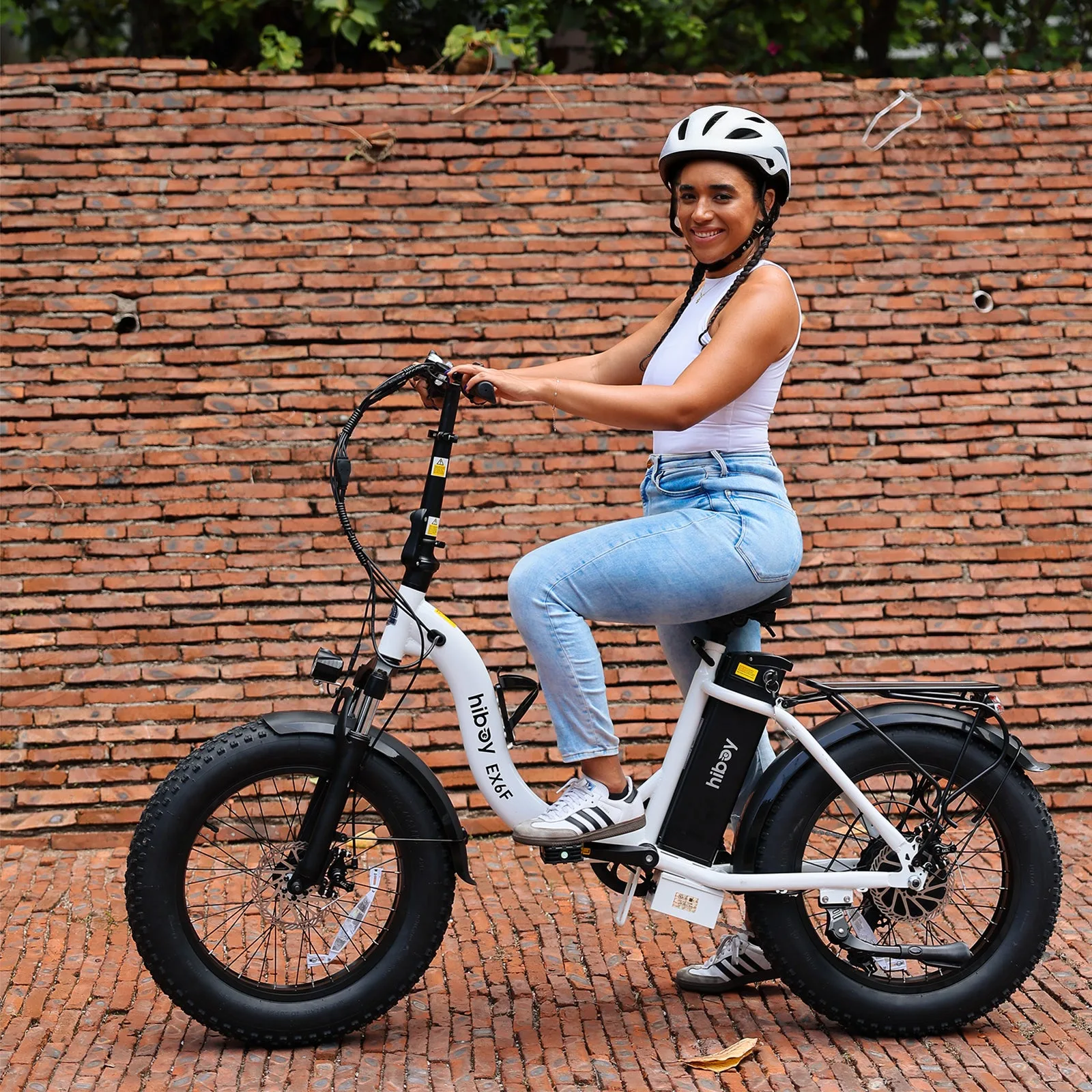
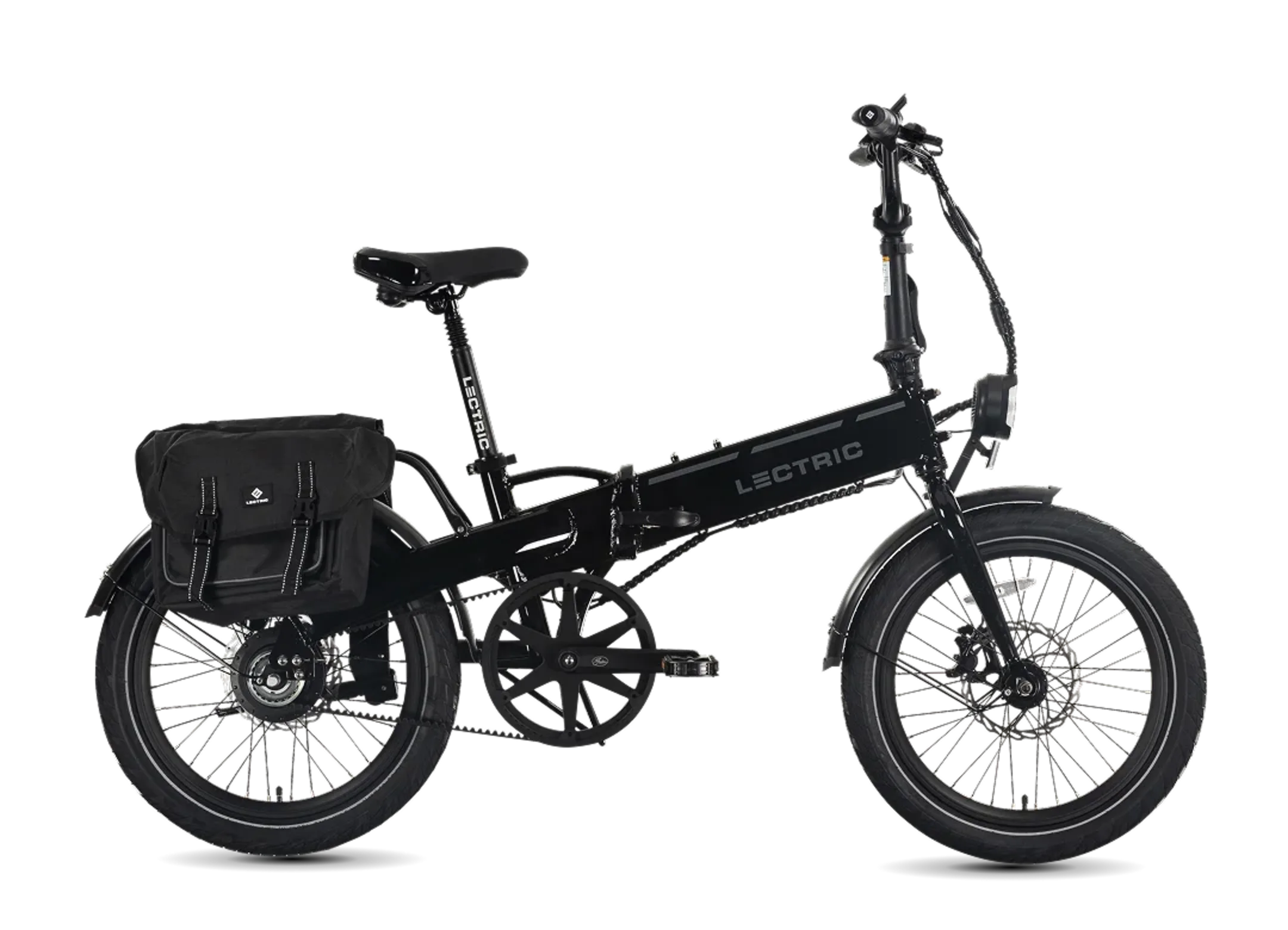
And if the bike has a motor over 750 watts, it is not an e-bike at all in California.7 Our article on e-bikes versus electric motorcycles shows where that line is. Compare classes on our e-bikes page, with models such as the Hiboy EX6F and the Lectric XP Lite 2. We are an authorized Hiboy dealer, so ask us anything about the EX6F.
Watch out
A motor over 750 watts and it is not an e-bike at all in California. No class label on the frame? Skip it.7
Where will you ride your teen e-bike, and with whom?
In one lineShow the real route for your teen e-bike: start, end, streets, crossings and who rides with you, no public parks.
Parents picture the worst road in town. Show them the real route instead: where you start, where you end, which streets, which crossings, and who rides with you.
Know the local rules cold. In Fullerton, the text of Ordinance 3354 bars riding in any public park, sets 10 mph on sidewalks and unpaved trails and 15 mph on paved trails, and makes wheelies, stunts, extra riders and a phone in hand infractions.6
- Start and end points, written down.
- Which streets, and which crossings.
- No public parks on the way: walk the bike through.6
- Slow down on sidewalks, and no friends on the back.6
- Phone in your pocket, not your hand.6
- Who you ride with, and when you’ll be home.
| Item | Value |
|---|---|
| Sidewalks and unpaved trails | 10mph |
| Paved trails | 15mph |
Source6
Go deeperFriends, times and riding the route together first
Then the “with whom”. Riding with friends is half the fun, and parents know it. Show them the group rules you’ll keep: single file on busy streets, no one on the back,6 and a check-in text when you arrive, sent after you stop, not while you ride.
Have a time answer ready too. When will you ride, and when will you be home? A teen e-bike on a set route at set times is a far easier yes than “around”.
Offer to ride the route together on a weekend, at the time you would really ride it. Your parent sees the crossings; you show you know them. A Fullerton example: if the way to a friend’s house cuts through a park, the plan says you walk that part.
Will you wear a helmet on your teen e-bike, every ride?
In one lineA helmet on a teen e-bike is the law under 18; what parents want is the plan: where it lives and who checks the fit.
The law is simple. Everyone under 18 wears a helmet on any e-bike in California.3 On a Class 3, every rider wears one, whatever their age.4
Your parents already know that part. What they want is the plan. Where does the helmet live so you never leave without it? Who checks it still fits? The AAP also suggests a helmet made for higher speeds and lights for dark mornings.2
Make it specific. The helmet hangs on the handlebar when the bike is parked, so it leaves with the bike every time. You check the straps once a month, and you tell your parents when it stops fitting, or after any hard knock. Remember the CPSC number: only 40% of injured e-bike riders it followed up on had a helmet on.10 Be in the other group.
| Item | Value |
|---|---|
| Wearing a helmet | 40% |
Source10
Lights belong in the same plan. Ride to school in winter and you will leave in the dark some mornings. A front light and a rear light on the teen e-bike, switched on before you roll out, answer “can drivers see you?” before anyone asks.
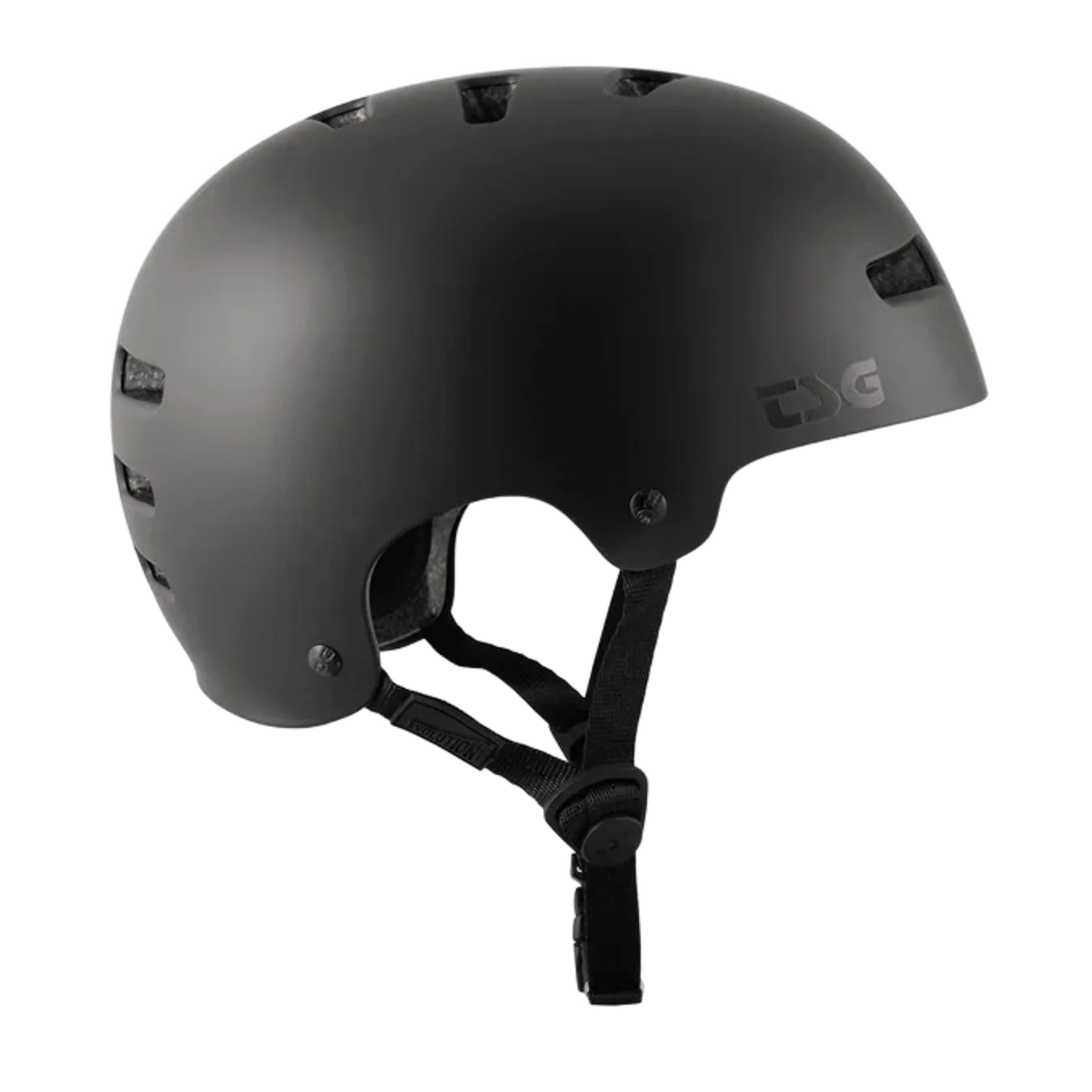
Pick a helmet you actually like wearing. Check out our helmets, such as the TSG Evolution, and try them on with a parent in the store.
Who pays, and what does a teen e-bike cost to run?
In one lineA full charge at home costs cents: roughly 18¢ in Tier 1 and 23¢ in Tier 2 for a 500 Wh battery.
Who pays for the bike is a family decision, and we leave that one to you. What you can bring to the table is the running cost, and it is smaller than most people think.
Charging at home costs pocket change. On Southern California Edison’s tiered plan, a kilowatt-hour is 30¢ in Tier 1 and 39¢ in Tier 2, from October 1, 2026.8 For a 500 Wh battery, with about 15% lost in the charger, a full charge comes to roughly 18¢ in Tier 1 and 23¢ in Tier 2.
| Item | Value |
|---|---|
| Tier 1 | 18¢ |
| Tier 2 | 23¢ |
Tier 1 is 30¢ and Tier 2 39¢ a kilowatt-hour from October 1, 2026, with about 15% lost in the charger. Source8
Try it · Cost of a charge
What does one full charge cost?
00
Pick an answer above.
Source 8 · with 15% lost in the charger
A teen e-bike ridden every day costs cents to charge, and it does have other costs. List them up front, so the numbers on the table are the real ones.
- Charging at home: cents per full charge.8
- A helmet that fits, and a new one after a hard knock.
- Front and rear lights.
- A lock, and a set place to keep the bike.
- Regular checks of brakes and tires.
Then make an offer that is real: cover the charging, chip in for upkeep, look after the lock.
Battery fires were on 36% of parents’ worry lists.1 Read our e-bike battery guide together and agree where the bike charges: on a hard floor, where you can see it, away from the door you would leave by.
What about tickets and school rules?
In one lineSay it before they ask: agree who handles a ticket, offer a safety class, and check your school’s own rule.
Say it before they ask. In Fullerton, breaking the riding rules in the city’s ordinance is an infraction.6 A helmet ticket is possible too, if you ever ride without one.
If you get a helmet ticket, ask the agency that issued the ticket which course it accepts.
Agree now on who handles it and what changes after, for example a week off the bike. Having that deal before anything happens shows you take the whole thing seriously.
Offer to take a safety class before your first solo ride. The AAP suggests one,2 and it is one of the fastest ways to show your parents you mean it.
Then the school. Schools set their own e-bike rules, and they can be stricter than state law. Newport-Mesa Unified, for example, bans e-bikes for grades TK to 8 starting in the 2026-27 school year.9
Go deeperChecking your school now, and college later
Fullerton’s school districts don’t publish an e-bike rule we could find. So ask your school office or check the student handbook, and bring the answer home: where you can park, whether you can lock up on campus, and any rule about riding on school grounds.
Thinking about college too? Campuses have their own rules. Our guide to the electric scooter for college students covers what CSUF and Fullerton College say.
What if your parents still say not yet?
In one line“Not yet” is an answer with a next step: ask what would change it, write it down, and keep your word.
Sometimes the answer is “not yet”, even after a great talk. That is an answer, not the end. Ask what would change it: an age, a class, a route, a safety class you finish, a few months of riding a regular bike well.
Write it down and agree on when you’ll talk again. If the worry is age, the AAP ladder gives you a clear next step: Class 1 until 15, and Class 1 or 2 from 16.2 If the worry is the route, ride it together on a regular bike first.
Ask what would change it
An age, a class, a route, a safety class you finish, or months of riding a regular bike well.
Write it down
And agree on when you’ll talk again.
Work the plan
Class 1 until 15 and Class 1 or 2 from 16, or ride the route together on a regular bike first.2
Keep your word
No riding a friend’s e-bike behind their back.
Don’t push, and don’t ride a friend’s e-bike behind their back. Keeping your word now is the strongest case you can make for a teen e-bike later.
And when the answer is yes, keep the deal: same route, same helmet plan, same check-in. The first month is when your parents learn whether the plan was real. Make the next yes easy.
Keeping your word now is the strongest case you can make for a teen e-bike later.
Put your teen e-bike pitch together
In one lineTick the list, pick a calm moment, let your parents ask everything, then come in together.
Use the list below to get ready. Tick each line as you go; the ticks stay in your browser and nothing is sent anywhere. Then show it to your parents in person.
Try it · Your charging setup
Your pitch
00
Pick an answer above.
Sources 1 to 9 · ticks stay on this device; nothing is sent
Pick your moment: not as someone walks in the door, and not in front of friends. Show the list, ask them to read this page, and let them ask everything. Listening is part of the pitch.
Get ready
Tick each line of the list.
Pick your moment
Not as someone walks in the door, and not in front of friends.
Show and listen
Show the list, ask them to read this page, and let them ask everything.
Come in together
Bring your parents to the store with their questions.
Parents reading this too: our guide Should I let my kid get an e-bike? covers the same ground from your side. For every kind of ride by age in one place, there is our parent’s guide to kids electric rides.
Then come in together. Cyber City is at 932 W Orangethorpe Ave in Fullerton, open every day 10 AM to 8 PM. We answer your parents’ questions straight, including the ones that lead to “not yet”, and a parent can ask for a test ride to feel exactly what the motor does. You can also read our common questions, see why people come to Cyber City, or ask a person first.
More questions people ask about a teen e-bike
Should a 14 year old have an electric bike?
Pediatricians draw a clear line at that age. The AAP recommends Class 1 only for ages 12 to 15: the class that helps only while you pedal and stops helping at 20 mph.27 Class 3 is out until 16, and stores may not sell one to anyone under 16.45 A helmet is required on every ride under 18.3 So at 14, the strongest pitch is a Class 1 teen e-bike with its label on the frame, a helmet plan, a route you have ridden with a parent and an offer to take a safety class. Whether the answer is yes is still your family’s call.
Why are e-bikes becoming illegal?
They aren’t, in California. What changed is the set of rules around them. Since January 1, 2026, stores may not sell a Class 3 e-bike to anyone under 16.5 Fullerton’s ordinance text bars riding in any public park and sets 10 mph on sidewalks.6 Some schools ban them for younger grades, as Newport-Mesa Unified does for TK to 8 from the 2026-27 school year.9 And many rides people call “illegal e-bikes” are not e-bikes at all: with a motor over 750 watts, or help past the class speed, they fall outside the e-bike rules.7 Our guide to California e-bike laws sets out the classes and ages in full.
Can a 16 year old ride an electric motorcycle?
An electric motorcycle is not an e-bike, and that changes the question. In California, an e-bike has a motor of 750 watts or less and stops helping at 20 mph, or 28 mph on a Class 3.7 A ride past those lines may count as a moped or a motorcycle, with license and registration rules of its own, which our article on e-bikes versus electric motorcycles walks through. At 16, the teen e-bike side opens up: you may ride a Class 3, with a helmet on every ride,4 and the AAP list adds Class 2.2 For anything that counts as a motorcycle, check with the DMV before you count on riding it.
What are the downsides of owning an e-bike?
Owning one comes with jobs, and your parents will notice whether you do them. A helmet on every ride, lights for dark mornings, and a lock with a set place to keep the bike. A charging spot you agreed on together, since battery fires were on 36% of parents’ worry lists.1 Brakes and tires that need regular checks. Rules about where you can ride, with an infraction if you break Fullerton’s.6 And a school rule that may be stricter than state law. None of these is a reason to skip a teen e-bike. A plan for each one is the strongest case you can make.
Sources
- C.S. Mott Children’s Hospital poll, “E-bikes: unsafe or uncertain?” (published September 21, 2026) (opens in a new tab)
- American Academy of Pediatrics, HealthyChildren.org: “Are electric bikes (e-bikes) safe for children?” (updated August 21, 2026) (opens in a new tab)
- California Vehicle Code Section 21212 (helmets under 18) (opens in a new tab)
- California Vehicle Code Section 21213 (Class 3: age 16, helmets) (opens in a new tab)
- AB 965 (2025), Vehicle Code Section 21212.5 (no Class 3 sales to riders under 16) (opens in a new tab)
- City of Fullerton, Ordinance 3354 adding Municipal Code chapter 8.90 (text as posted by the city) (opens in a new tab)
- California Vehicle Code Section 312.5 (what an e-bike is, the three classes, the label) (opens in a new tab)
- Southern California Edison, tiered rate plan (Tier 1 30¢, Tier 2 39¢ per kWh from October 1, 2026) (opens in a new tab)
- Newport-Mesa Unified School District, bike and e-bike safety (an example of a school rule) (opens in a new tab)
- U.S. Consumer Product Safety Commission, Micromobility Products-Related Deaths, Injuries and Hazard Patterns 2017–2024 (April 2026; read October 17, 2026) (opens in a new tab)
- CDC, Child Activity: An Overview (ages 6 to 17 need 60 minutes or more a day; December 4, 2025; read October 17, 2026) (opens in a new tab)
Reviewed October 17, 2026. The rules here summarize the Vehicle Code sections, Fullerton’s ordinance and a school rule listed; it is not legal advice.
Who wrote this
Written by
Mahmoud Alsammar
Owner, Cyber City
Runs Cyber City in Fullerton, CA, where the team sells e-bikes, scooters, drones and cameras.
Fact-checked by
Ryan Alali
Fact-checker
Checks every Journal article against the makers’ and the law’s own sources before it goes up.
Cyber City · Fullerton
Want to look at bikes with your parents?
Tell us what you ride or fly, and we answer it in the store, by phone or by email.
The store
DAILY 10 AM – 8 PM
932 W Orangethorpe Ave
Fullerton, CA 92832