
JournalParents & kidsData story
Kids bike helmet: the simple 10-second fit, the label and a happy end to the morning fight
- Written byMahmoud Alsammar, Owner, Cyber City
- Fact-checked byRyan Alali · Reviewed
The 30-second version
A good kids bike helmet is one your child will actually wear and that fits right now: level on the head, two fingers above the eyebrows, the straps in a V under each ear, and no more than two fingers under the buckled chin strap. Look inside for the CPSC certification label; a toddler helmet should say Age 1 and Older (Extended Head Coverage). In California every rider under 18 needs one on a bike, kick scooter, skateboard or motorized scooter. Replace it after any crash.
- Who must wear one in California 17 and under: every rider
- The label to look for Complies with U.S. CPSC Safety Standard for Bicycle Helmets
- The fit check 2 fingers: brow, V at the ears, chin
- After a crash 1 impact: replace it, even with no visible damage
- Lower odds of a serious head injury with a helmet 69% (meta-analysis, 64,000+ injured cyclists)
The kids bike helmet fight, every single morning
In one lineWinning the buckle fight means nothing if the helmet slides back. Fit beats force.
You know the scene. Shoes on, backpack on, bike out of the garage. Then: “Do I have to?” The helmet is “itchy.” It’s “ugly.” It “squishes my hair.” Nobody else at school wears one. You win the argument, the buckle clicks, and two blocks later the whole thing has slid to the back of their head like a halo, and the kids bike helmet you paid for is doing nothing.
That last part is the one that keeps you up at night. A kids bike helmet tipped back doesn’t protect the forehead, the American Academy of Pediatrics warns.9 Which means you can win the fight every morning and still lose the point of it.
Good news: the kids bike helmet fight is fixable. Not with more yelling. With a helmet that fits, a label you can trust and a 10-second check your kid can do alone.
What a kids bike helmet that doesn’t fit is really costing you
In one lineAbout 24,000 kids’ bike brain-injury ER visits a year, and a helmet is linked to 69% lower odds of a serious head injury.
“It’s just a ride around the block,” right? The numbers disagree.
- Bikes send kids’ heads to the ER. The CDC counted an estimated 240,873 emergency visits for bicycle-related brain injuries among kids 17 and under from 2009 to 2018. That is about 24,000 a year.11
- The riskiest age is the one you’re probably raising. Kids 10 to 14 had the highest rate of those ER visits, about three times the rate for adults.11
- Most kids don’t wear one every time. In a national survey, only 42% of parents whose youngest child rode a bike in the past month said that child always wore a helmet.12
The number that matters
240,873
estimated ER visits for bicycle-related brain injuries among kids 17 and under, 2009 to 2018.11
| Item | Value |
|---|---|
| Always wore a helmet | 42% |
Source12
Now the number that makes the morning fight worth it. A 2017 meta-analysis of 40 studies and more than 64,000 injured cyclists found that wearing a helmet was linked to 51% lower odds of a head injury, 69% lower odds of a serious head injury and 65% lower odds of a fatal head injury.13 That’s not a sticker on a box. That’s research, and it is why a kids bike helmet is worth the fight.
But the helmet only does its job when it sits where it’s supposed to. Every CPSC-certified helmet must carry a warning that it has to be fitted and attached to the head the way the maker’s instructions say, for maximum protection.4 A kids bike helmet on the back of the head is a hat.
A helmet on the back of the head is a hat.
California’s kids bike helmet law, in plain words
In one lineUnder 18 on a bike, kick scooter, skateboard, skates or motorized scooter in California? A fitted, fastened helmet.
California doesn’t leave the kids bike helmet up to the morning mood. Vehicle Code Section 21212 says anyone under 18 riding a bicycle, a kick scooter or a skateboard, or wearing in-line or roller skates, on a street, bikeway or public path or trail, must wear a properly fitted and fastened bicycle helmet that meets the CPSC or ASTM standard.1
- The fine: up to $25, and the parent or guardian is on the hook for it together with the child.1
- Clearing it: the citation is not sent to the court if, within 120 days, the parent shows the agency a helmet that meets the rules and proof the child finished a local bicycle safety course, or an e-bike course for an e-bike ticket.1
Go deeperElectric scooters and Vehicle Code Section 21235
Electric scooter? Same idea, its own section. Vehicle Code Section 21235 says a motorized scooter rider under 18 must wear a properly fitted and fastened bicycle helmet that meets the Section 21212 standards.2 It also asks for a driver’s license or permit on public roads, which is why our electric scooter for kids by age guide keeps young riders on private property.2
Try it · Helmet check
Does your kid need a helmet on this e-bike?
00
Pick an answer above.
Vehicle Code Section 21212 · our California e-bike laws guide
Picture it: a kids bike helmet they grab on their own
In one lineThe goal: a helmet they picked, that fits, with a check a second grader can run alone.
Now flip the scene. The helmet hangs on a hook by the door, in the color they picked. They pull it on, click the buckle, open their mouth in a big fake yawn and feel it hug their head. Done. Ten seconds, no speech from you.
That’s the goal: a kids bike helmet that feels like theirs, fits their head and comes with a check a second grader can run. Four moves get you there: fit it, read the label, replace it on time, end the fight.
How to fit a kids bike helmet in 10 seconds
In one lineTwo fingers at the brow, a V at each ear, two fingers under the chin. Then the yawn.
NHTSA calls it the two-finger rule. Parents online call it the 2-2-2 rule. Same thing, and it’s the whole fit in three checks.7
Brow
Two fingers above the eyebrows; the front rim sits right above them, level.7
Yawn
Mouth wide open: the helmet should pull down. If not, tighten the chin strap.8
Shove
Push it up from the front: it should not rock back past two fingers or tip into the eyes.8
Lock
Roll the rubber band down to the buckle.8
- Two fingers above the eyebrows. Lay two fingers flat on the forehead just above the eyebrows. The front rim of the helmet sits right above them, level and straight, not tipped back.7
- Two fingers in a V at each ear. Make a V with two fingers around the ear. The side straps should follow the same path, meeting just under and slightly in front of the ear.78
- Two fingers under the chin. Buckle up. You should fit no more than two fingers between the strap and the chin: snug, not tight.78
Then the two tests that catch a bad fit fast. The yawn: have your kid open their mouth wide, and the helmet should pull down on their head. If it doesn’t, tighten the chin strap.8 The shove: push the helmet up from the front. If it rocks back more than two fingers above the eyebrows, shorten the front strap; if it tips forward into the eyes, tighten the back one.8 Roll the little rubber band down to the buckle so the straps can’t slip.8
One rule parents break all the time: never buy a kids bike helmet to grow into. NHTSA says wear one that fits now.7 Most helmets come with fit pads you can swap for thinner ones as the head grows, the AAP says, so a good fit today can last a few years.9
Try it · Your charging setup
The 10-second kids bike helmet check
00
Pick an answer above.
NHTSA’s two-finger rule · the AAP’s fit check
What to look for on a kids bike helmet label
In one lineSkip the box art. Look inside for the CPSC label; a toddler helmet should say Age 1 and Older.
Forget the box art. Look inside the kids bike helmet. Every bike helmet made for sale in the U.S. since March 1999 must carry a certification label, and it has to say one of two things:39
- “Complies with U.S. CPSC Safety Standard for Bicycle Helmets for Persons Age 5 and Older”, or
- “Complies with U.S. CPSC Safety Standard for Bicycle Helmets for Persons Age 1 and Older (Extended Head Coverage)”.3
Shopping for a toddler helmet? That second line is the one you want: it means the helmet is certified for riders from age 1, with extended head coverage.3 The AAP adds that babies under 1 have weak necks, so neither a helmet nor a bike ride is recommended for them.9
Go deeperWhat the CPSC test checks
What does the label promise? CPSC tests side vision, whether the helmet stays on in a fall, whether the straps hold, and how much force reaches the head in a drop: more than 300 g on any sample is a fail.5 Helmets that meet it protect against skull fractures and severe brain injuries when worn properly, CPSC says.6
Right helmet, right ride
CPSC’s helmet chart is worth a screenshot:6
- Bike and kick scooter: a bicycle helmet (CPSC 16 CFR 1203). A CPSC bike helmet also works for recreational skating.6
- Skateboarding and trick skating: a skate helmet, ASTM F1492.6
- Downhill mountain biking: a downhill helmet, ASTM F1952.6
- Dirt bikes and mini bikes: a motocross or motorcycle helmet (DOT FMVSS 218 and the others it lists). A bike helmet is the wrong tool here.6 Our electric dirt bike size by age guide covers the rest of that gear.
| Ride | Helmet | Standard |
|---|---|---|
| Bike and kick scooter | Bicycle helmet | CPSC 16 CFR 1203 |
| Recreational skating | A CPSC bike helmet works | CPSC 16 CFR 1203 |
| Skateboarding and trick skating | Skate helmet | ASTM F1492 |
| Downhill mountain biking | Downhill helmet | ASTM F1952 |
| Dirt bikes and mini bikes | Motocross or motorcycle helmet | DOT FMVSS 218 and others |
And skip the novelty “toy” helmets made only to look like the real thing: CPSC says they are not made to any standard and can be expected to offer little or no protection.6
Mips and rotational protection, explained straight
In one lineMips is a plus on top of the CPSC label and a good fit, never a replacement for them.
You’ll see a little yellow Mips dot on a lot of helmets now. Here’s the plain version. The CPSC test drops the helmet straight down and measures the hit.5 Real falls usually come in at an angle, and that twists the head. Mips says its low-friction layer lets the head move 10 to 15 mm inside the helmet on impact, designed to help reduce that rotational motion.15
Worth it? Two facts. No helmet has been proven to prevent concussions, and CPSC says beware of any claim that one does.6 Yet two helmets that both pass the standard can perform differently: Virginia Tech’s lab has rated 308 bike helmets on linear and rotational forces together, and recommends 4 or 5 stars.14
Concussion claims
No helmet has been proven to prevent concussions. Beware of any claim that one does, CPSC says.6
So on a kids bike helmet, treat Mips, or any rotational system, as a plus on top of the CPSC label and a good fit, never instead of them.
When to replace a kids bike helmet
In one lineReplace it after any crash where it hit, at the age limit, at the first wear or when it stops fitting.
- After any crash where the helmet hit. Bike helmets are built for one impact: the foam crushes to soak up the hit and won’t protect again. CPSC says replace it even if you see no damage.6 The label on every certified helmet says the same.4
- Every 5 years, or sooner if the maker says so. That’s the AAP’s rule, because materials break down over time.9 CPSC gives 5 to 10 years when the maker gives no guidance,6 and TSG says 3 to 5 years of normal use, 6 at most from the date on the label.20
- When you see wear. Cracks, a loose shell, crushed foam, worn straps or missing pads all mean it’s time.6
- When it no longer fits. Thinnest pads in and still tight? Size up.9
Two more: don’t buy, donate or resell a used kids bike helmet, since it may be too old or may have been in a crash.9 Keep cleaners like bleach and ammonia away from it: they can damage a helmet in ways you can’t see.4 And in an Orange County summer, don’t leave it in the car: TSG warns a car’s interior or trunk can get hot enough to damage a helmet.20
How to end the kids bike helmet fight for good
In one lineLet them pick it, wear yours, and make it no helmet, no ride, every single time.
The AAP has a playbook, and it’s simpler than you think:10
- Let them pick it. If they like the design, they are more likely to wear it. You check the label and the fit.10
- Wear yours. The single biggest factor in kids wearing helmets, the AAP says, is riding with an adult who wears one.10
- No helmet, no ride. Every time. If it’s optional some days, they’ll learn it doesn’t matter.10
- Start early. Helmets from the first trike or scooter make it a habit for life.10
- Recruit the friends. When a few families on the street do it together, peer pressure works for you.10
One note on decorating: the AAP likes reflective stickers for visibility,10 but CPSC warns that stickers or add-ons that didn’t come with the helmet can affect how it performs.6 Our counter call: let them choose the color and style, and keep the kids bike helmet shell clean.
Every kids bike helmet we carry, and who it fits
In one lineOur two TSG helmets start at 54 cm: older kids, teens and adults, not toddlers. Measure first.
Straight talk first: the two helmets on our helmets page are TSG models sized from 54 cm. They fit older kids, teens and adults, not toddlers. Measure around the head just above the eyebrows before you choose a kids bike helmet.
TSG Evolution: the everyday hardshell
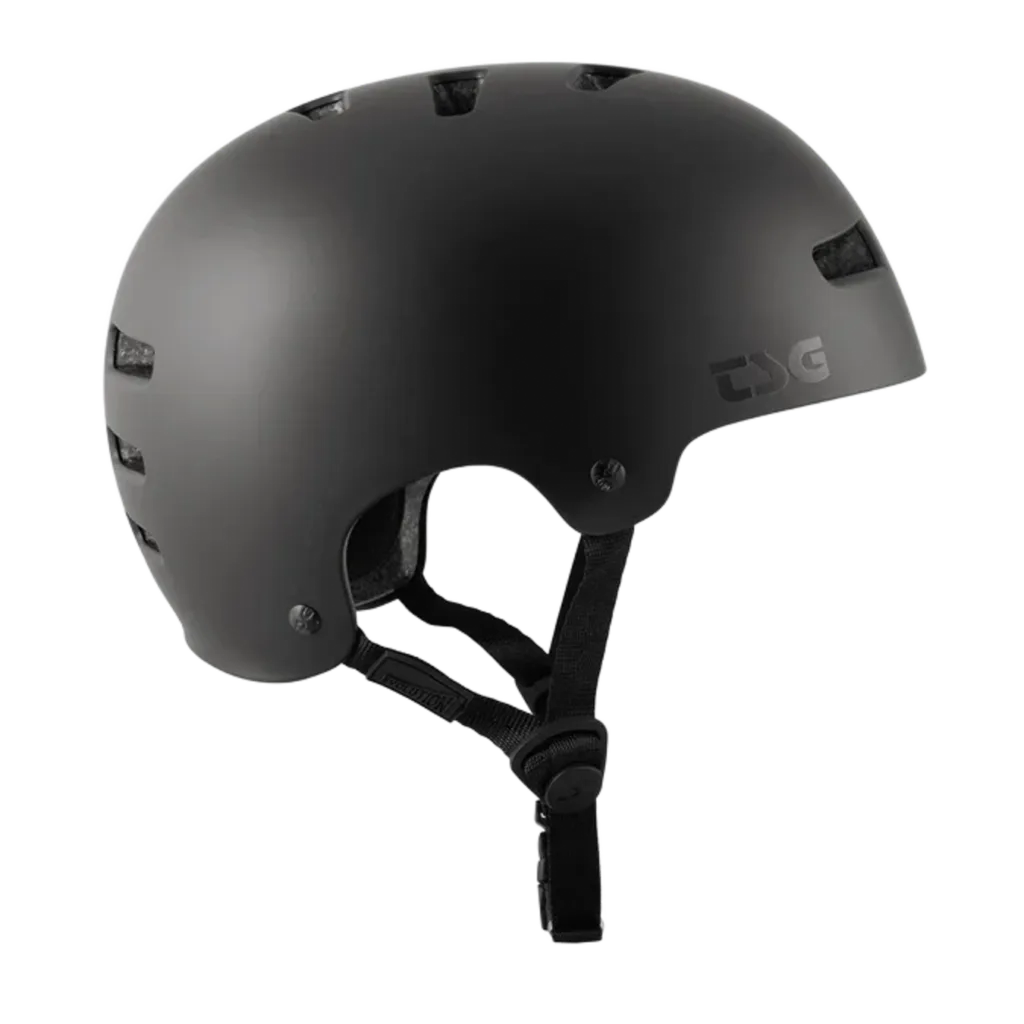
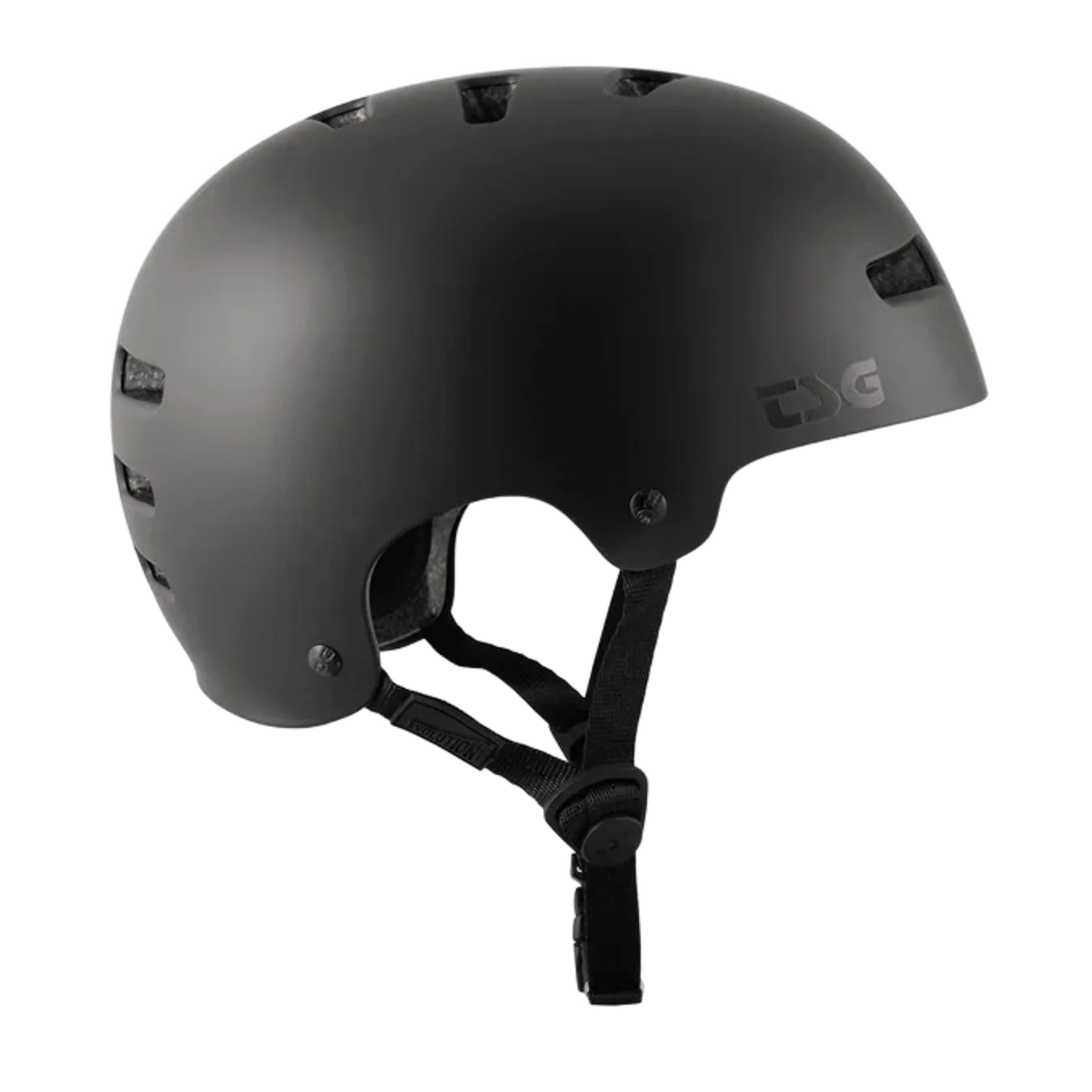
A slim skate-style hardshell with a low, snug fit. TSG lists it as certified to EN 1078, CPSC and ASTM F1492, the skateboard standard, so one helmet covers the bike, the kick scooter and the skatepark.166 Sizes S/M (54 to 56 cm) and L/XL (57 to 59 cm), 460 g, with TSG’s Tuned Fit System of swappable pads in two thicknesses.16 TSG makes it in a dozen solid colors; ask which ones are in the store today so your kid can pick. See the TSG Evolution.
TSG Sentinel: full face, for trails and jumps
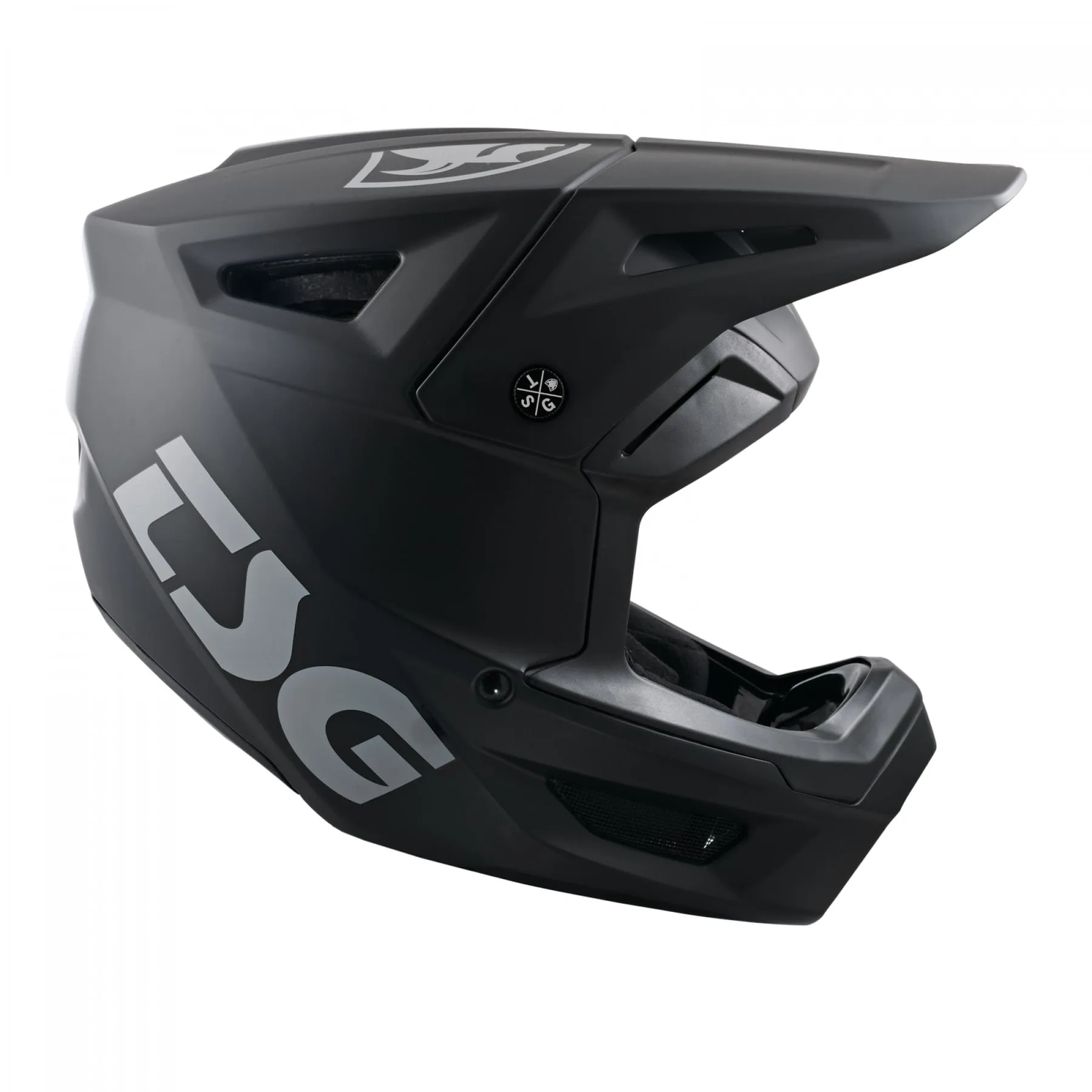
For the teen who rides dirt trails and jumps. TSG lists the Sentinel for downhill biking, certified to EN 1078, ASTM F1952 (the downhill standard), ASTM F1446 and CPSC, sizes XS to XXL from 52 to 63 cm (we stock S, M and L), at 1,290 g.17 It is not a motorcycle helmet. See the TSG Sentinel.
Go deeperA helmet for an electric scooter or e-bike
Riding an electric scooter or e-bike? Read the helmet maker’s own rules first. TSG says all its bike and skate helmets are for biking and skateboarding only,20 so we don’t hand you one for a motor. California asks for a CPSC or ASTM bicycle helmet on an under-18 rider either way,12 and CPSC’s chart says a bicycle helmet may be appropriate for a powered scooter under 20 mph used like a bike or kick scooter.6 Bring the ride, or its model name, and we sort it out with you. Our e-bike for kids parents’ checklist and California e-bike laws guide cover the rest.
Bring your kid in for a kids bike helmet fit
In one lineCPSC says bring the child when you buy. We fit it on their head and teach them the yawn test.
CPSC’s own advice: when you buy a helmet for a child, bring the child so it can be tried for a good fit.6 That’s exactly what our counter is for. Come to 932 W Orangethorpe Ave in Fullerton, any day from 10 AM to 8 PM. We fit it on their head and teach them the yawn test, so tomorrow they do it themselves.
Shopping for the ride too? See our kids’ rides and electric scooters, and our guide to kids’ electric rides by age. Old enough for an e-bike? Ask for a test ride: we lend you a helmet, and kids come with a parent.
First weekend out? Ted Craig Regional Park in Fullerton has bicycle trails across its 124 acres,19 and the Juanita Cooke Greenbelt is a 2.5-mile dirt trail each way from the Fullerton Loop trailhead.18 Two fingers, a V, a yawn, go.
More questions people ask about a kids bike helmet
What is the 2-2-2 rule for bike helmets?
It’s NHTSA’s two-finger rule: two fingers between the eyebrows and the helmet’s front rim, the side straps in a two-finger V around each ear, and no more than two fingers between the buckled chin strap and the chin.7
What kind of bike helmet is best for kids?
The one that carries the CPSC certification label, fits your child’s head right now and that your child likes enough to wear every ride.3710 Hard-shell or soft-shell both pass the CPSC test; the AAP says the difference is mainly style and comfort, with soft shells lighter and hard shells more durable.9 A rotational system such as Mips is a plus on top of that, not a replacement.615
What size helmet does a 7 year old need?
For a kids bike helmet, measure, don’t guess by age. Measure around the head just above the eyebrows and match it to the maker’s size chart, since sizes vary between makers.8 Then try it on and run the fit check. If the head is under 54 cm, the two TSG helmets we carry are too big.
How much should a good bike helmet cost?
Less than you’d think. The CDC notes that helmets meeting safety requirements can be bought for under $20.12 Paying more can buy lighter weight, more vents, a rotational system or a better fit system, and independent ratings show helmets do perform differently.14 But the CPSC label is the line every bike helmet has to clear.3
Are cheap helmets from big-box stores safe?
Is there a link between bike helmets and brain injury?
Do kids need a helmet for a kick scooter or an electric scooter?
Can my kid wear a bike helmet on the playground?
No. CPSC says children should not wear helmets on playgrounds or when climbing trees: the chin strap can catch and strangle, and the helmet can trap their head in an opening.6 Kids bike helmet on for the ride, off for the slide.
Sources
- California Vehicle Code Section 21212 (helmets under 18 on bicycles, kick scooters, skateboards and skates; the label; the $25 fine; read October 17, 2026) (opens in a new tab)
- California Vehicle Code Section 21235 (motorized scooter riders: a fitted, fastened bicycle helmet under 18; read October 17, 2026) (opens in a new tab)
- 16 CFR 1203.34, CPSC Safety Standard for Bicycle Helmets: the certification label, Age 5 and Older or Age 1 and Older (Extended Head Coverage) (read October 17, 2026) (opens in a new tab)
- 16 CFR 1203.6, CPSC Safety Standard for Bicycle Helmets: labeling and instructions, replace after an impact (read October 17, 2026) (opens in a new tab)
- U.S. Consumer Product Safety Commission, Bicycle Helmets Business Guidance: the four tests and the 300 g limit (read October 17, 2026) (opens in a new tab)
- U.S. Consumer Product Safety Commission, Which Helmet for Which Activity? (Publication 349; read October 17, 2026) (opens in a new tab)
- NHTSA, Fitting a Bicycle Helmet: the two-finger rule (2024; read October 17, 2026) (opens in a new tab)
- NHTSA, Fitting Your Bike Helmet (DOT HS 811 568; read October 17, 2026) (opens in a new tab)
- HealthyChildren.org (American Academy of Pediatrics), Bike Helmets for Kids: Parent FAQs (read October 17, 2026) (opens in a new tab)
- HealthyChildren.org (American Academy of Pediatrics), How to Get Your Child to Wear a Bike Helmet (read October 17, 2026) (opens in a new tab)
- CDC, MMWR: Emergency Department Visits for Bicycle-Related Traumatic Brain Injuries Among Children and Adults, United States, 2009 to 2018 (May 14, 2021; read October 17, 2026) (opens in a new tab)
- CDC, MV PICCS Intervention: Bicycle Helmet Laws for Children (read October 17, 2026) (opens in a new tab)
- Olivier and Creighton, Bicycle injuries and helmet use: a systematic review and meta-analysis, International Journal of Epidemiology, 2017 (read October 17, 2026) (opens in a new tab)
- Virginia Tech Helmet Lab, Bicycle Helmet Ratings (STAR, linear and rotational; read October 17, 2026) (opens in a new tab)
- Mips, What is Mips? The low-friction layer (the maker’s own page; read October 17, 2026) (opens in a new tab)
- TSG, Evolution solid color helmet: specs and certifications (maker’s product page; read October 17, 2026) (opens in a new tab)
- TSG, Sentinel solid color full-face helmet: specs and certifications (maker’s product page; read October 17, 2026) (opens in a new tab)
- OCTA, Fullerton by bike: the Fullerton Loop and the Juanita Cooke Greenbelt trail (read October 17, 2026) (opens in a new tab)
- OC Parks, Ted Craig Regional Park, Fullerton (read October 17, 2026) (opens in a new tab)
- TSG, Frequently Asked Questions: what its helmets are for, how often to replace one, heat and storage (read October 17, 2026) (opens in a new tab)
The helmet rules here are California Vehicle Code Sections 21212 and 21235 as written on October 17, 2026. General information, not legal advice.
Who wrote this
Written by
Mahmoud Alsammar
Owner, Cyber City
Runs Cyber City in Fullerton, CA, where the team sells e-bikes, scooters, drones and cameras.
Fact-checked by
Ryan Alali
Fact-checker
Checks every Journal article against the makers’ and the law’s own sources before it goes up.
Cyber City · Fullerton
Want us to check the fit on your kid’s head?
Tell us what you ride or fly, and we answer it in the store, by phone or by email.
The store
DAILY 10 AM – 8 PM
932 W Orangethorpe Ave
Fullerton, CA 92832