
JournalLife outsideField guide
Exercise for bad knees: the simple, low-impact way to move again and love it
- Written byMahmoud Alsammar, Owner, Cyber City
- Fact-checked byRyan Alali · Reviewed
The 30-second version
The best exercise for bad knees keeps them moving without pounding them: cycling, swimming, brisk walking and water workouts, plus strength work for your thighs and hips. The CDC, NIH, Mayo Clinic and the Arthritis Foundation all name cycling as joint-friendly, and a study with sensor knee implants measured lower knee forces on a bike than on foot. An e-bike adds motor help on hills and starts, so you ride farther while your knees work less.
- US adults with diagnosed arthritis 53.2 million (21.2%)
- US adults with osteoarthritis 33 million (about)
- Weekly goal (CDC) 150 minutes , moderate
- Knee bend at the bottom of the pedal stroke 25 to 30 degrees (about)
- First rides (Arthritis Foundation) 10 minutes , low resistance
Exercise for bad knees: why stopping feels safe and isn’t
In one line53.2 million US adults have diagnosed arthritis, so if your knees made you stop, you are in a very big crowd.
You used to run. Now the first mile tells you exactly how the next three will feel. Stairs make that grinding sound. Getting out of the car takes a little speech. So you did what made sense: you stopped. No more runs, no more pickup games, no more long walks on weekends, and no plan for exercise for bad knees.
Here is the problem. Stopping feels like protection, but it is the trap. And you are far from alone in it. During 2019 to 2021, 53.2 million US adults, 21.2%, had diagnosed arthritis.1 About 33 million have osteoarthritis, the wear-and-tear kind that loves knees.2 If you are searching for exercise for bad knees, you are standing in a very big crowd.
Stopping feels like protection, but it is the trap.
What sitting it out really costs your knees
In one lineMoving less weakens the muscles that protect the knee, and about 3 in 10 adults with arthritis did no activity at all.
Pain makes you move less. Moving less makes the pain worse. That is the NIH talking: with joint pain you may be less active, that can lead to muscle weakness, and the weakness may cause more stress on the joint.5 Weak thighs, louder knees, fewer steps. Round and round.
The CDC sees the same loop from the other side. Adults with arthritis who are more physically active have less pain, better physical function and better quality of life than less active adults with arthritis.3 Yet in 2019, the state median share of adults with arthritis who did no physical activity at all in the past month was 29.6%.3 About 3 in 10, doing nothing, while the thing that helps sits in the garage.
| Item | Value |
|---|---|
| No physical activity | 29.6% |
State median, 2019 Source3
And the cost spreads. The NIH notes that if you are overweight, losing weight can reduce pain and increase mobility, especially in weight-bearing joints like your knees.6 Less movement also shrinks your world. The Saturday ride you skip, the trip you sit out, the park you watch from a bench. That is the real price of skipping exercise for bad knees.
Now picture the other version
In one lineSmooth circles, a quiet motor on the hills and no jolt on every step: that is the ride to aim for.
Saturday morning. The street tilts up and you barely notice, because a quiet motor picks up the part your knees used to dread. Your legs turn in smooth circles. No jolt on every step. Forty minutes later you are by the river, sun on your back, and the only thing aching is your face from grinning.
That is what low-impact cycling, plus a little electric help, is built to give you. Here is why it works as exercise for bad knees.
The best exercise for bad knees has no pounding in it
In one lineCycling makes every major joint-health list, and sensor implants measured lower knee forces on a bike than on foot.
Ask the people who study joints for a living and you get the same short list of exercise for bad knees. The CDC calls brisk walking, cycling, light gardening, dancing, tai chi, swimming and water exercise joint-friendly, because they put no or low stress on the joints.4 The NIH lists walking, cycling, swimming, tai chi, water aerobics and low-impact aerobics classes.6 Mayo Clinic names walking, bicycling, swimming and water aerobics as aerobic exercise that is low impact and easy on joints.7
The Arthritis Foundation calls cycling one of the most effective workouts for people with arthritis: you get a good workout without pounding on joints, and it strengthens the muscles that help support the knees.9 Strong muscles matter. Mayo Clinic says strengthening the muscles around your knee makes it more stable.8
Go deeperThe knee-force and knee-pain studies
Now the research. A 2012 study measured real knee forces with sensor implants in people who had knee replacements. Within the power range tested, knee forces while cycling were smaller than while walking.14 Compare that with what most people do to “stay fit”: a 2018 study found lunges, single-leg hops and walking stairs all put higher forces through the knee than plain walking.16 No wonder the stairs feel loud, and no wonder they make poor exercise for bad knees.
And it works on pain. A review of 11 trials with 724 people found that stationary cycling reduced pain in people with knee osteoarthritis compared with no exercise.12 A 2024 study of 2,607 adults found that people who had cycled during their life were 17% less likely to have frequent knee pain and 21% less likely to have symptomatic knee osteoarthritis than people who never cycled.13 It links cycling with healthier knees rather than proving cause, and it is still a strong nudge toward the bike as exercise for bad knees.
Why an e-bike makes exercise for bad knees easier to keep doing
In one lineKnee force rises with pedal power, and electric assist takes over the hardest part: starts and hills.
Regular cycling has two knee-killers: the start from a stop and the hill. That is where you push hardest, and where an e-bike helps most.
Two findings explain why. Knee force on a bike rises with the power you put into the pedals: the 2012 sensor study found forces increased linearly with cycling power.14 And electric assist cuts the power you have to make. A 2022 review of 14 studies found riders put out about 31 fewer watts with assist than on a regular bike.17 Less power from your legs, less force through your knees. The motor carries the hard part of exercise for bad knees.
The number that matters
31
About 31 fewer watts: that is how much less power riders put out with assist than on a regular bike, in a review of 14 studies.17
Go deeperWhat the e-bike studies measured
You still get real exercise for bad knees, not a free ride. The same review found that e-cycling still reached moderate intensity, the level that counts toward health guidelines, and with moderate assist it tended to raise heart rate more than walking did.17 A small 2026 pilot study at Curtin University put people with knee osteoarthritis on an e-bike: nobody reported pain at the no-assist or low-assist settings, and only one rider reported minimal pain (1 out of 10) at high assist, while the effort they felt dropped as assist went up.18 The Arthritis Foundation itself calls e-bikes a great option for hilly ground and long rides.9
Then there is getting on. Swinging a leg over a high bar is exactly the move bad knees hate. A step-through frame lets you step in. Hiboy says its step-through frame lets riders get on and off without swinging a leg over, and names older riders and riders with limited mobility among the people it helps most.22 If balance worries you too, the Arthritis Foundation points to trikes for stability.9
Set up an e-bike for bad knees: saddle, gears, cadence
In one lineSet the saddle for a 25 to 30 degree knee bend, pick a light gear, spin fast and sit upright.
The bike is half the story of exercise for bad knees. Get these four right and your knees feel it on the first ride.
1. Saddle height: a slight bend at the bottom
A saddle that is too low makes your knee fold deep on every stroke. The Arthritis Foundation’s rule: set the seat so that with your leg extended on the down pedal, your knee is slightly bent.10 Researchers put a number on it: a review of saddle height studies suggests setting it so the knee bends about 25 to 30 degrees at the bottom of the stroke, to reduce the risk of knee injuries.15 The sensor study adds that the lowest knee forces came with low power, a high cadence and a high seat height.14 High, not sky-high: you still want that slight bend.
2. Low gear, more assist, especially at first
Pick a light gear before you stop so the restart is easy, and lean on assist when you set off and climb. The Curtin pilot found the effort people felt fell as assist went up.18 As your legs get stronger, turn the assist down a notch and let your muscles take more.
3. Spin, don’t grind
Turn the pedals quickly in an easy gear instead of mashing a heavy one slowly. The sensor study found the lowest knee forces with a high cadence and low power.14 The Arthritis Foundation adds a technique tip: push down and pull up through the full circle, because only pushing can overwork the front of your thighs and lead to a flare.11
4. Sit up, cushion the bumps
An upright riding position takes stress off your back, shoulders and arms, and a wide seat with suspension softens the bumps.9 Avoid a handlebar that makes you hunch.10
Try it · Your charging setup
Knee-friendly setup before your first ride
00
Pick an answer above.
Sources 9, 10, 11, 14, 15 and 18 · our counter list
Your first four weeks of leg exercise for bad knees
In one lineStart with 10 easy minutes, build toward 150 a week, and let your 0 to 10 pain number set the pace.
Start smaller than your ego wants: exercise for bad knees rewards patience. The Arthritis Foundation suggests beginning with 10 minutes of cycling at low resistance, then building time, resistance and how often you ride, aiming for at least 30 minutes most days.9 The CDC says even 5 or 10 minutes at a time counts, and the target is at least 150 minutes a week of moderate activity plus two days of muscle strengthening.4 One line before you start: got a fresh injury, swelling or a knee that gives way? See your doctor or a physical therapist first.
Before the first ride
Got a fresh injury, swelling or a knee that gives way? See your doctor or a physical therapist first.
| Item | Value |
|---|---|
| First rides | 10min |
| Weekly goal | 150min |
The 10-minute first ride is the Arthritis Foundation’s advice (source 9). The 150 minutes a week is the CDC’s target. Source4
Week 1
three rides of 10 minutes on flat ground, high assist, easy gear. Rate your knee from 0 to 10 before and after.
Week 2
four rides of 15 to 20 minutes. Add one gentle slope and let the motor do the climb.
Week 3
20 to 30 minutes most days. Drop assist one level on the flats.
Week 4
one longer weekend ride, 40 minutes or more, plus two short strength sessions off the bike.
Use the pain number as your guide for exercise for bad knees. The Arthritis Foundation’s stationary-bike advice: if your pain climbs more than two points after a ride, take two days off, then come back at half the effort.11 Mayo Clinic agrees: if pain gets worse or keeps going after exercise, you may be pushing too hard, so try shorter or fewer sessions.7 Some stiffness at the start is normal, and the CDC says arthritis pain from activity should get better over time.4
The two-point rule
Pain up more than two points after a ride? Take two days off, then come back at half the effort.11
Go deeperThe strength moves AAOS lists
For the strength days, the off-the-bike half of exercise for bad knees, AAOS’s knee conditioning program includes seated leg extensions, straight-leg raises, hamstring curls, calf raises, half squats and leg presses, and it opens with 5 to 10 minutes of low-impact warm-up such as riding a stationary bike.19 Its rule fits everything here: you should not feel pain during an exercise.19
Try it · Trip check
Will this bike make my weekend loop?
00
Pick an answer above.
Makers’ range figures · our two-thirds counter rule
Step-through e-bikes we carry for knees that hate climbing on
In one lineA low frame you step into and motor help on demand: three rides on our floor fit knees that hate climbing on.
Three rides on our floor stand out when you want exercise for bad knees on wheels. All three are low to get on and give you motor help on demand. See them all on our e-bikes page.
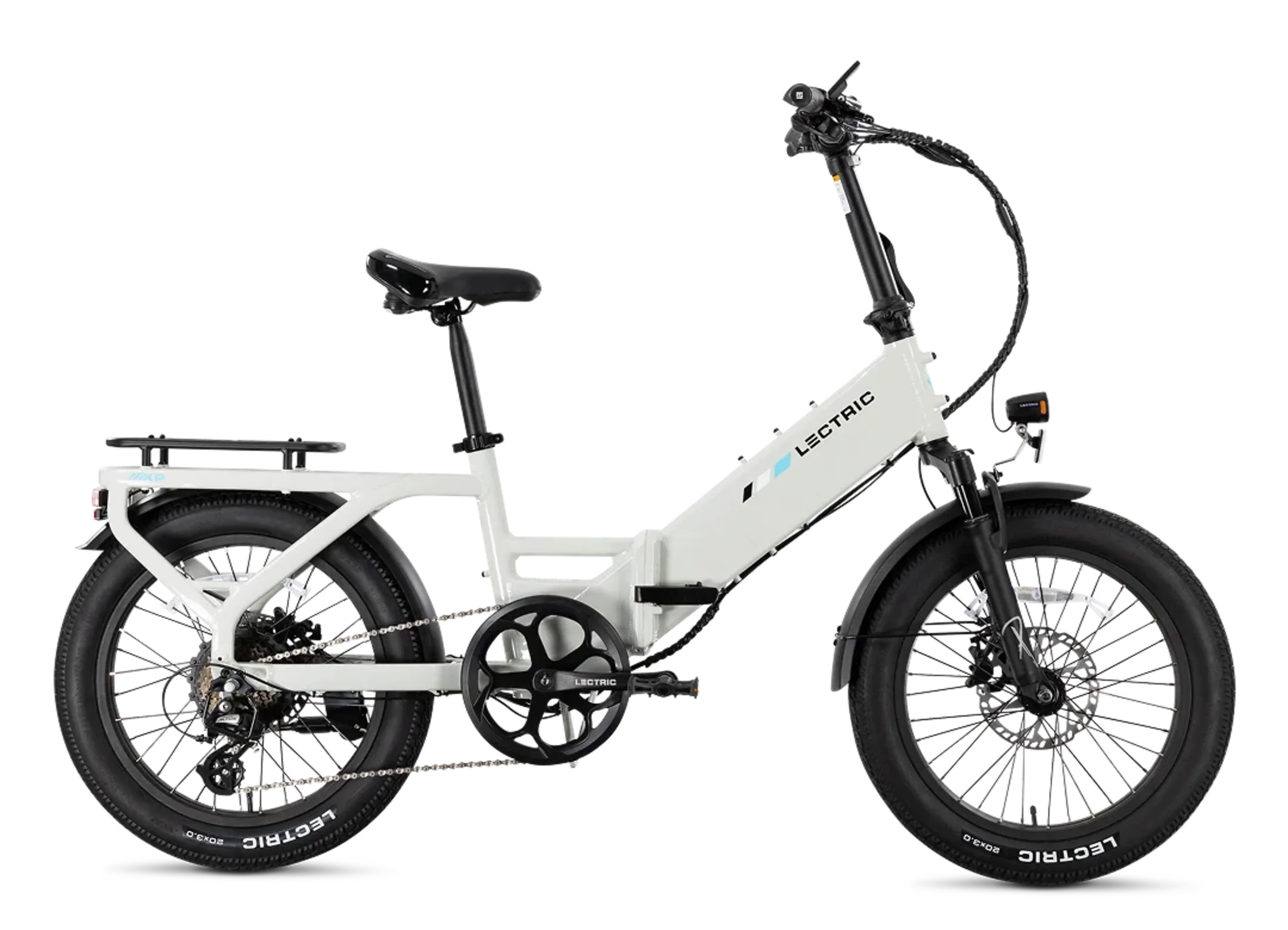
Lectric XP4 750 Step-Thru: low frame, lots of adjustment
- A 19-inch stand-over height and a telescoping seat post, so we can set the saddle to your knee bend.21
- Five riding modes, from Eco to Turbo, plus a thumb throttle for starts.21
- Fits riders 4’10” to 6’3”, and it folds to fit small spaces.21
Pick it if you want one bike for errands and weekend rides. See the Lectric XP4 750 Step-Thru.
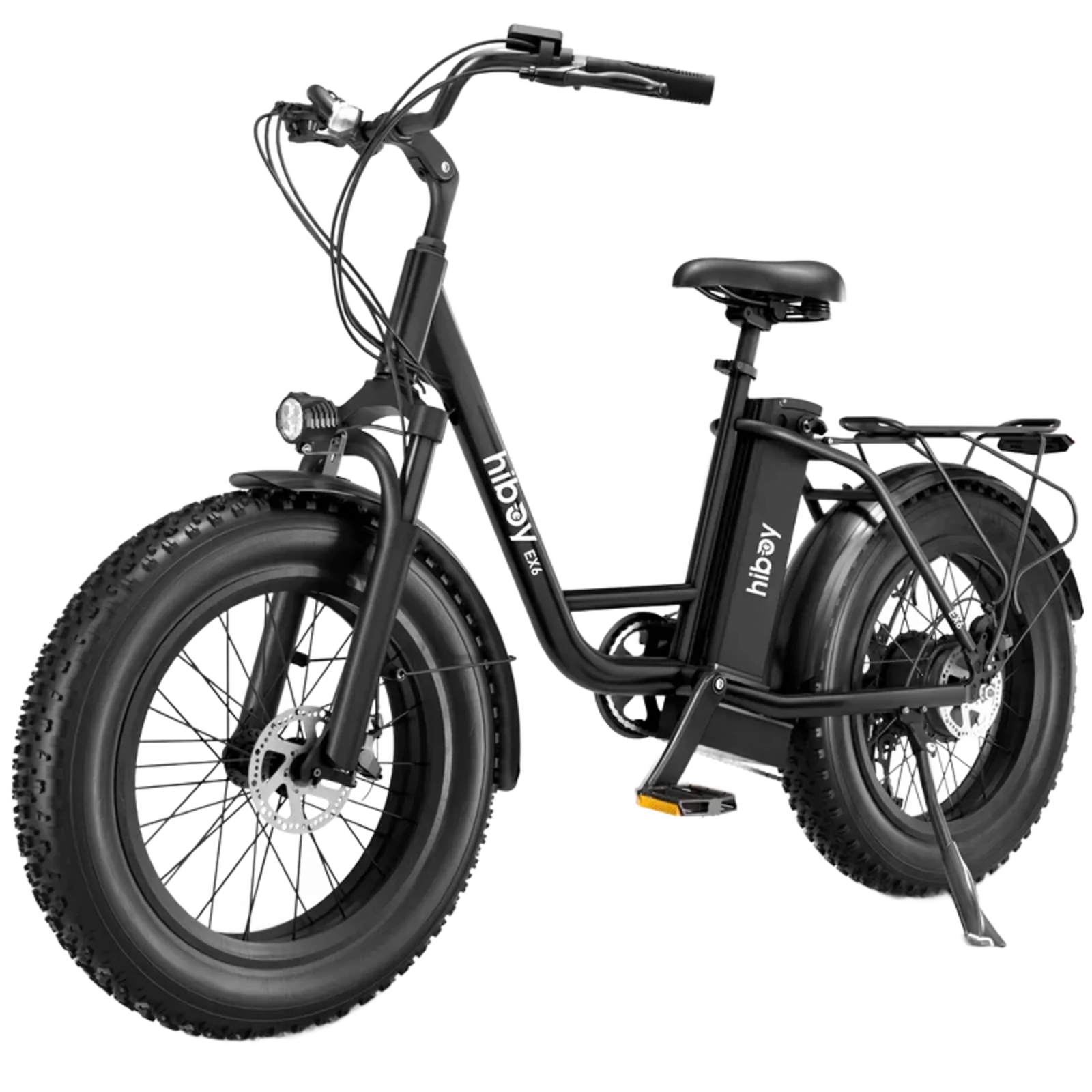
Hiboy EX6: step-through with fat tires
- A step-through frame Hiboy recommends for older riders and riders with limited mobility.22
- Fat 20 x 4-inch tires, front suspension and Shimano 7-speed gears, and Hiboy rates it to climb 20% grades.22
- Hiboy recommends it for riders 5’0” to 5’9”.22
Pick it if your routes include rough pavement. We are an authorized Hiboy dealer. See the Hiboy EX6.
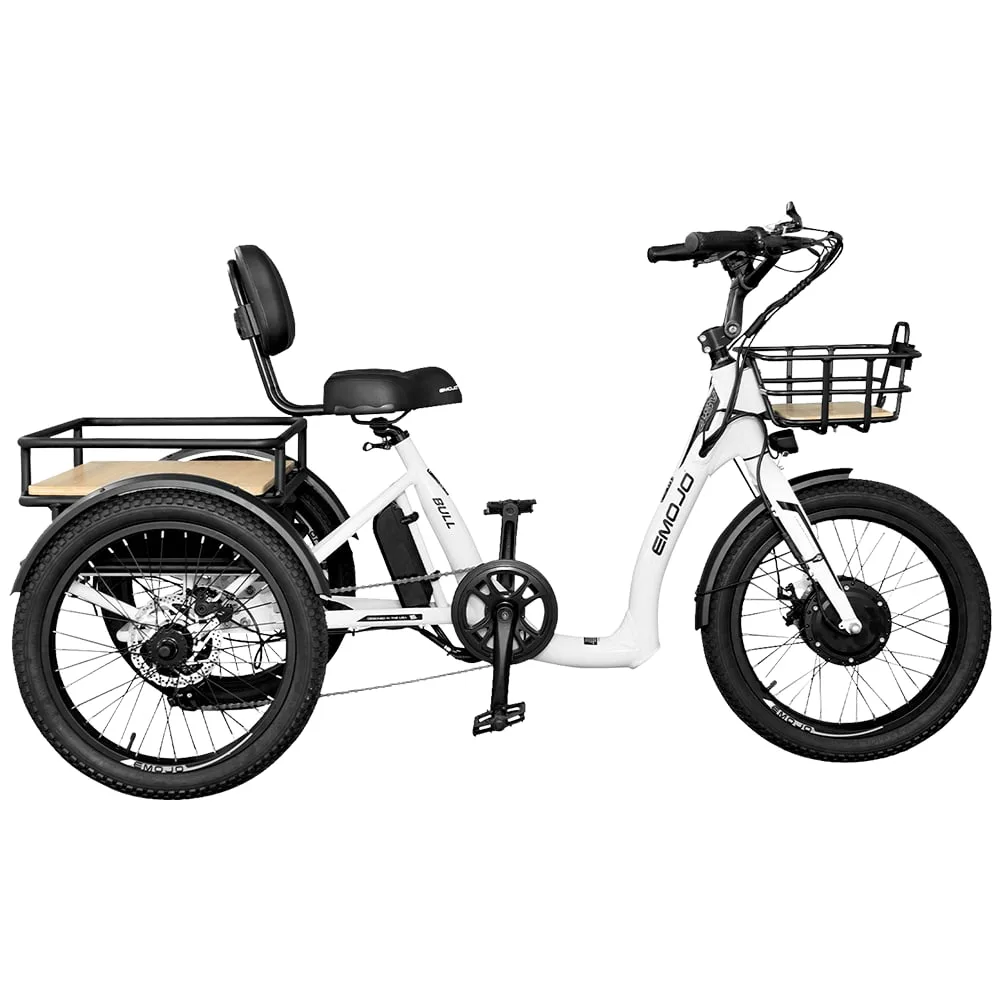
Emojo Bull: the trike for knees and balance
- An 8.5-inch stand-over, the lowest in Emojo’s lineup, and three wheels that stand on their own at a stop.2324
- Emojo’s own guide points riders with knee or hip stiffness who find mounting hard to the Bull.24
- Seat to ground from 25 to 35 inches and a 330 lb load capacity.23
Pick it if putting a foot down at every stop is part of what worries you. See the Emojo Bull.
Not sure what to look for beyond the frame? Our guide to e-bikes to stay away from covers the red flags, and lease-to-own is there if paying all at once is the hurdle.
Where to ride in Orange County when your knees want flat
In one lineThe Santa Ana River Trail is paved and open to Class 1 and 2 e-bikes, with a 10 mph limit on OC Parks bikeways.
Flat, smooth and car-free is the dream route for exercise for bad knees, and Orange County has a long one. The Santa Ana River Trail is a paved OC Parks bikeway where Class 1 and Class 2 e-bikes are allowed.20 OC Parks sets a 10 mph limit on its bikeways, requires helmets for riders under 18 and keeps all e-bikes off unpaved trails in regional and wilderness parks.20
One setup note: the Lectric XP4 can run as a Class 1, 2 or 3 e-bike, so set it to Class 1 or 2 before you take it on those bikeways.2120 Our California e-bike laws guide explains the classes in two minutes. Grab a helmet while you are at it.
Try it in Fullerton: we set the saddle with you
In one lineTell us about your knees and we set the saddle with you, then you try more than one frame before you decide.
Feel the motor take a start for you: exercise for bad knees, without the dread. Come to our store at 932 W Orangethorpe Ave in Fullerton, open every day from 10 AM to 8 PM, or ask for a test ride. Tell us about your knees. We set the saddle height with you, show you the assist modes and the gears, and you try more than one frame before you decide.
Already have a bike and it hurts to ride? Check the saddle height and the handlebar reach first; the maker’s manual shows how.
More questions people ask about exercise for bad knees
How do you work out when you have bad knees?
What is the #1 mistake that makes bad knees worse?
Two, really: stopping completely, and doing too much too fast. The NIH notes that moving less can lead to weak muscles and more stress on the joint,5 and Mayo Clinic warns that doing too much too fast can increase pain.7 The fix is the middle road of exercise for bad knees: a little every day, more each week.
What is the single best exercise for knee pain?
What knee exercises are recommended by Mayo Clinic?
Mayo Clinic recommends three kinds: range-of-motion exercises, strengthening exercises with bands, weights or your own body weight at least two days a week, and low-impact aerobic exercise such as walking, bicycling, swimming and water aerobics, working up to 150 minutes a week.7
What exercises should I avoid with knee pain?
Anything that hurts while you do it: AAOS says you should not feel pain during an exercise.19 Moves that load the knee hard, like lunges, single-leg hops and stair walking, put more force through the knee than walking,16 and the Arthritis Foundation notes that walking downhill can stress the knees.10 Ease into those, or swap them for the bike, the gentler exercise for bad knees.
How can I naturally lubricate my knee joints?
Keep them moving. In the Arthritis Foundation’s cycling article, sports doctor Joseph Garry explains that the more a joint moves through its full range of motion, the more synovial fluid is produced, which lubricates the joint.9 That is why steady pedaling is such a good fit: hundreds of smooth, full circles with very little impact.
What are some good knee extension exercises I can do at home?
The seated leg extension from AAOS’s knee conditioning program: sit up straight on a chair, then straighten one knee and lower it, 3 sets of 10, four to five days a week.19 Straight-leg raises lying down work the same front-of-thigh muscle without bending the knee.19 Warm up first with 5 to 10 minutes of easy movement.19
Will knee pain go away with exercise?
For many people it eases. The CDC says physical activity can help people with arthritis reduce joint pain and improve function and mood, and that pain from activity should get better over time.4 Cycling has trial evidence behind it for knee osteoarthritis pain.12 The CDC is clear that osteoarthritis has no cure,2 so the goal is less pain and more life, ride by ride.
Sources
- CDC, MMWR: Prevalence of Diagnosed Arthritis, United States, 2019 to 2021 (53.2 million adults, 21.2%) (read October 17, 2026) (opens in a new tab)
- CDC, Osteoarthritis: about 33 million US adults, symptoms, risk factors and ways to manage it (read October 17, 2026) (opens in a new tab)
- CDC, Chronic Disease Indicators: Arthritis (physical inactivity among adults with arthritis, 29.6% state median in 2019) (read October 17, 2026) (opens in a new tab)
- CDC, About Physical Activity and Arthritis: joint-friendly activities, 150 minutes a week, start slowly (read October 17, 2026) (opens in a new tab)
- NIH, National Institute of Arthritis and Musculoskeletal and Skin Diseases (NIAMS): Osteoarthritis overview, symptoms and causes (read October 17, 2026) (opens in a new tab)
- NIH, NIAMS: Osteoarthritis diagnosis, treatment and steps to take (low-impact activities, weight) (read October 17, 2026) (opens in a new tab)
- Mayo Clinic: Exercise helps ease arthritis pain and stiffness (read October 17, 2026) (opens in a new tab)
- Mayo Clinic: Knee pain, diagnosis and treatment (strengthening the muscles around the knee) (read October 17, 2026) (opens in a new tab)
- Arthritis Foundation: Biking Is Great for Your Joints (low impact, synovial fluid, e-bikes and trikes, first rides) (read October 17, 2026) (opens in a new tab)
- Arthritis Foundation: 14 Ways to Work Out With Arthritis (cycling seat height, walking downhill) (read October 17, 2026) (opens in a new tab)
- Arthritis Foundation: The Benefits of Stationary Biking (low intensity, push and pull, the pain scale) (read October 17, 2026) (opens in a new tab)
- Luan L. et al., Stationary cycling exercise for knee osteoarthritis: a systematic review and meta-analysis, Clinical Rehabilitation, 2021 (read October 17, 2026) (opens in a new tab)
- Lo G.H. et al., Bicycling over a Lifetime Is Associated with Less Symptomatic Knee Osteoarthritis, Medicine & Science in Sports & Exercise, 2024 (read October 17, 2026) (opens in a new tab)
- Kutzner I. et al., Loading of the knee joint during ergometer cycling: telemetric in vivo data, Journal of Orthopaedic & Sports Physical Therapy, 2012 (read October 17, 2026) (opens in a new tab)
- Bini R., Hume P.A., Croft J.L., Effects of bicycle saddle height on knee injury risk and cycling performance, Sports Medicine, 2011 (read October 17, 2026) (opens in a new tab)
- van Rossom S. et al., Knee Joint Loading in Healthy Adults During Functional Exercises, Journal of Orthopaedic & Sports Physical Therapy, 2018 (read October 17, 2026) (opens in a new tab)
- McVicar J. et al., Systematic review and meta-analysis evaluating the effects electric bikes have on physiological parameters, Scandinavian Journal of Medicine & Science in Sports, 2022 (read October 17, 2026) (opens in a new tab)
- Curtin University, A Pilot Study on Whether Cycling with Different Levels of Electronic Assistance Changes Muscle Activity of the Lower Limb in People with Knee Osteoarthritis, Applied Sciences, 2026 (read October 17, 2026) (opens in a new tab)
- American Academy of Orthopaedic Surgeons, OrthoInfo: Knee Conditioning Program (read October 17, 2026) (opens in a new tab)
- OC Parks, E-bikes in OC Parks: Class 1 and 2 on paved bikeways, 10 mph, no e-bikes on unpaved trails (read October 17, 2026) (opens in a new tab)
- Lectric eBikes, XP4 750 Step-Thru, maker’s product page (read October 17, 2026) (opens in a new tab)
- Hiboy EX6 Step-thru Fat Tire Electric Bike, maker’s product page and FAQ (read October 17, 2026) (opens in a new tab)
- Emojo Bull electric trike, maker’s product page (read October 17, 2026) (opens in a new tab)
- Emojo blog, Dexter vs Bull vs Bull Trail: which Emojo electric trike is right for you (read October 17, 2026) (opens in a new tab)
Reviewed October 17, 2026. Health facts come from the CDC, NIH, Mayo Clinic, the Arthritis Foundation, AAOS and the peer-reviewed studies listed; bike figures come from each maker’s page; trail rules from OC Parks.
Who wrote this
Written by
Mahmoud Alsammar
Owner, Cyber City
Runs Cyber City in Fullerton, CA, where the team sells e-bikes, scooters, drones and cameras.
Fact-checked by
Ryan Alali
Fact-checker
Checks every Journal article against the makers’ and the law’s own sources before it goes up.
Cyber City · Fullerton
Want us to set the saddle height with you?
Tell us what you ride or fly, and we answer it in the store, by phone or by email.
The store
DAILY 10 AM – 8 PM
932 W Orangethorpe Ave
Fullerton, CA 92832